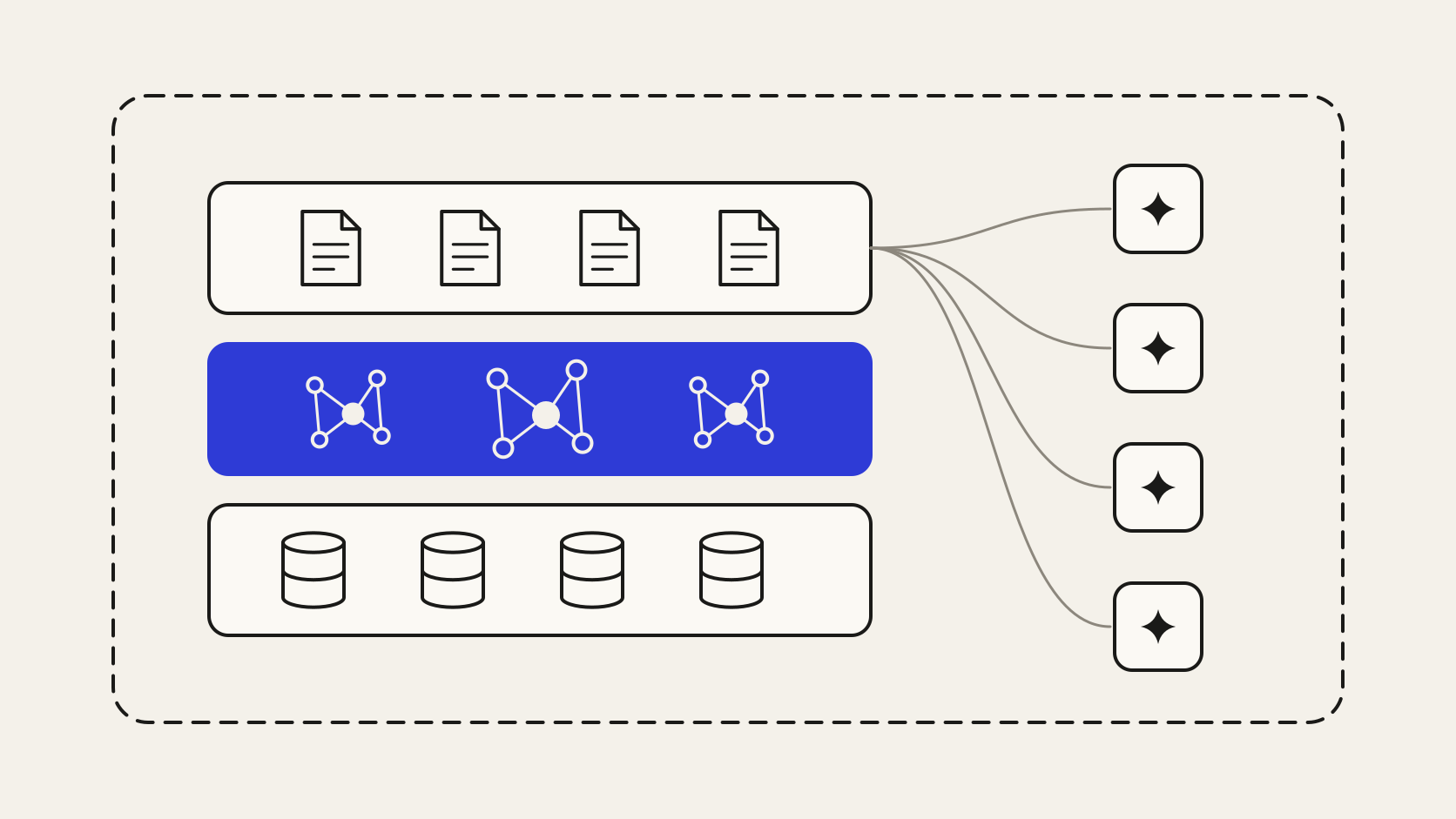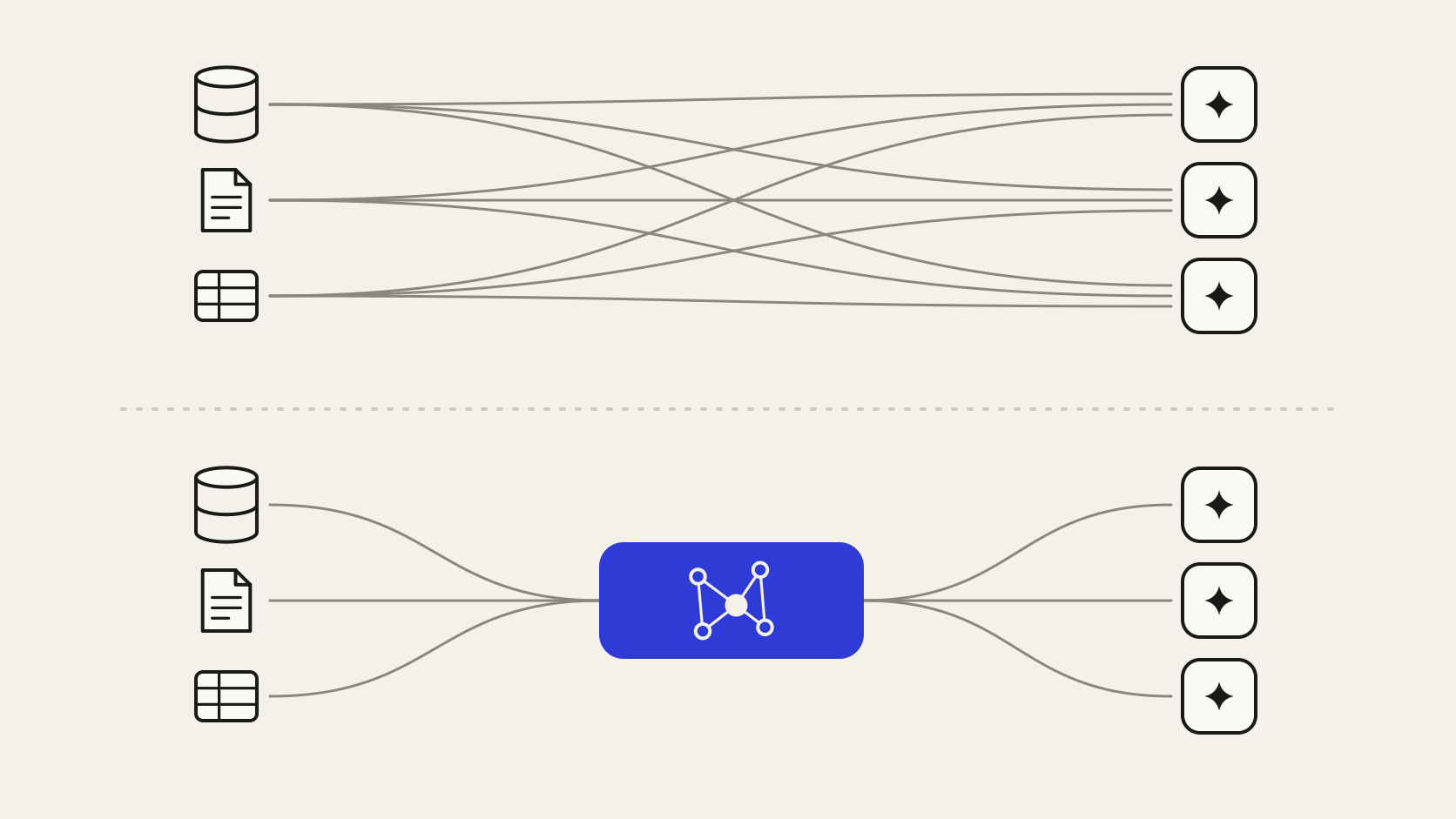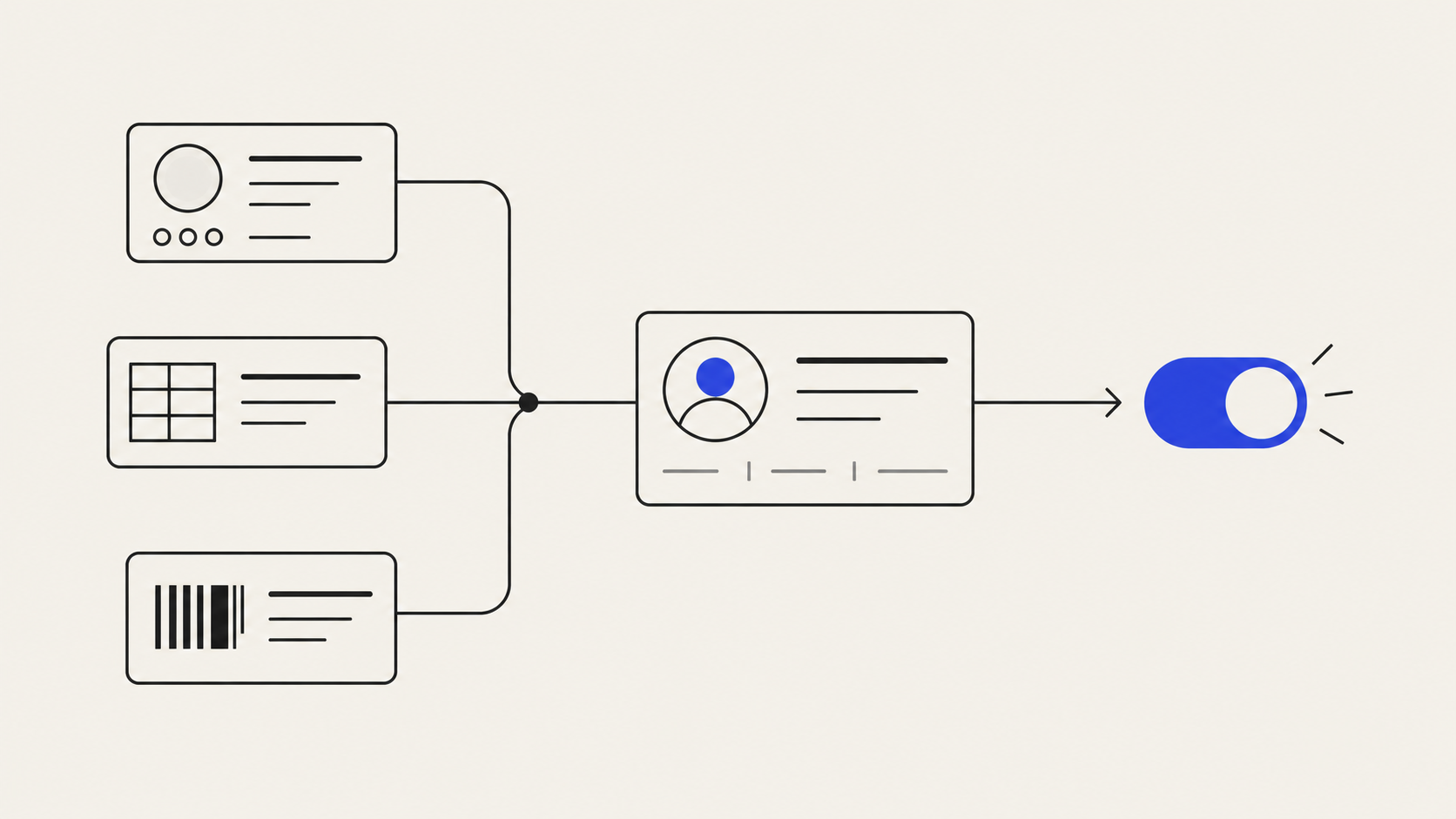
What the Company Brain is, how it is built, how it is governed and how it reaches any AI. Explainers, architecture and cases, all in one place.
Explainers, architecture decisions and cases, published by the Strattum team.
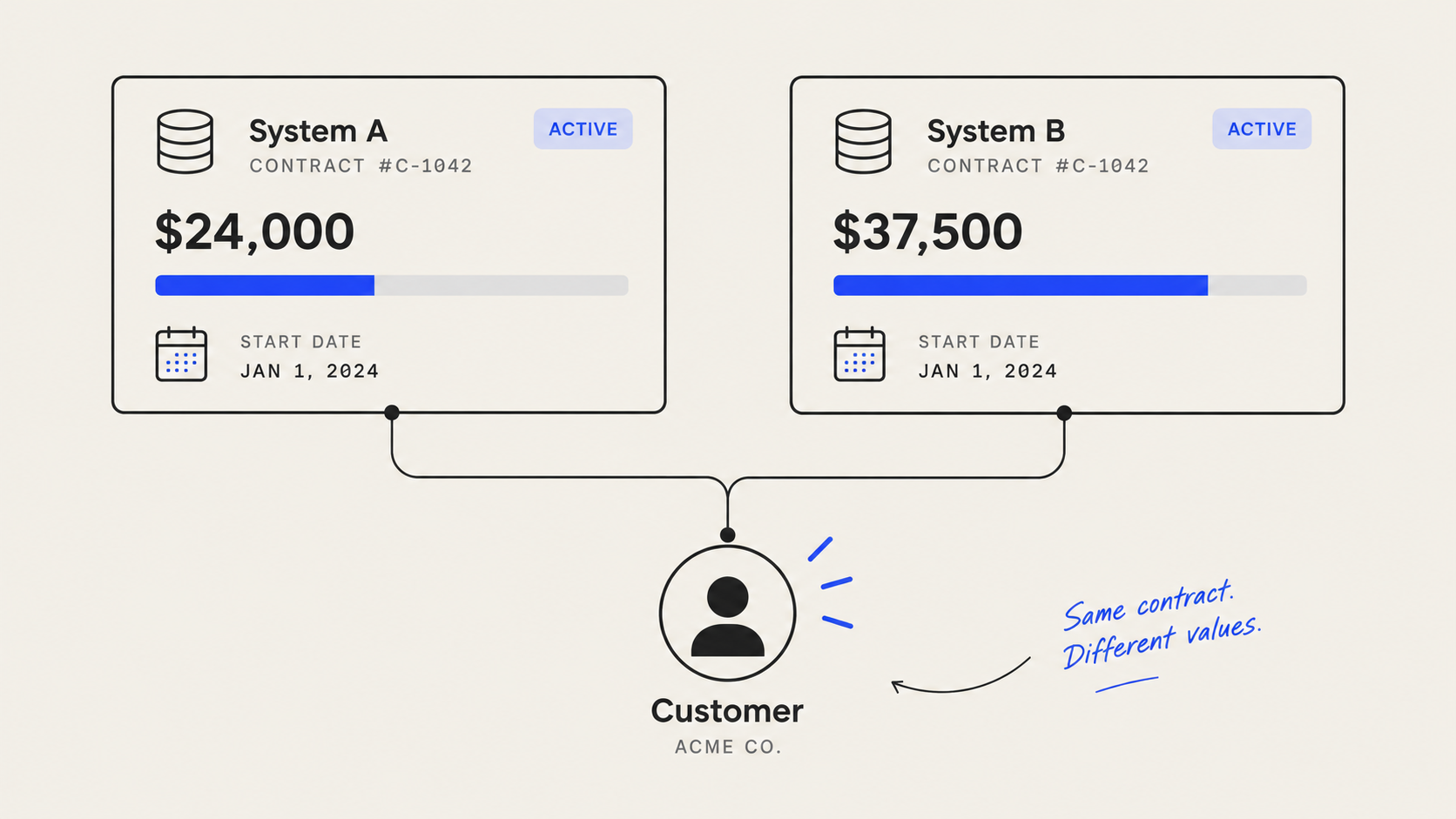
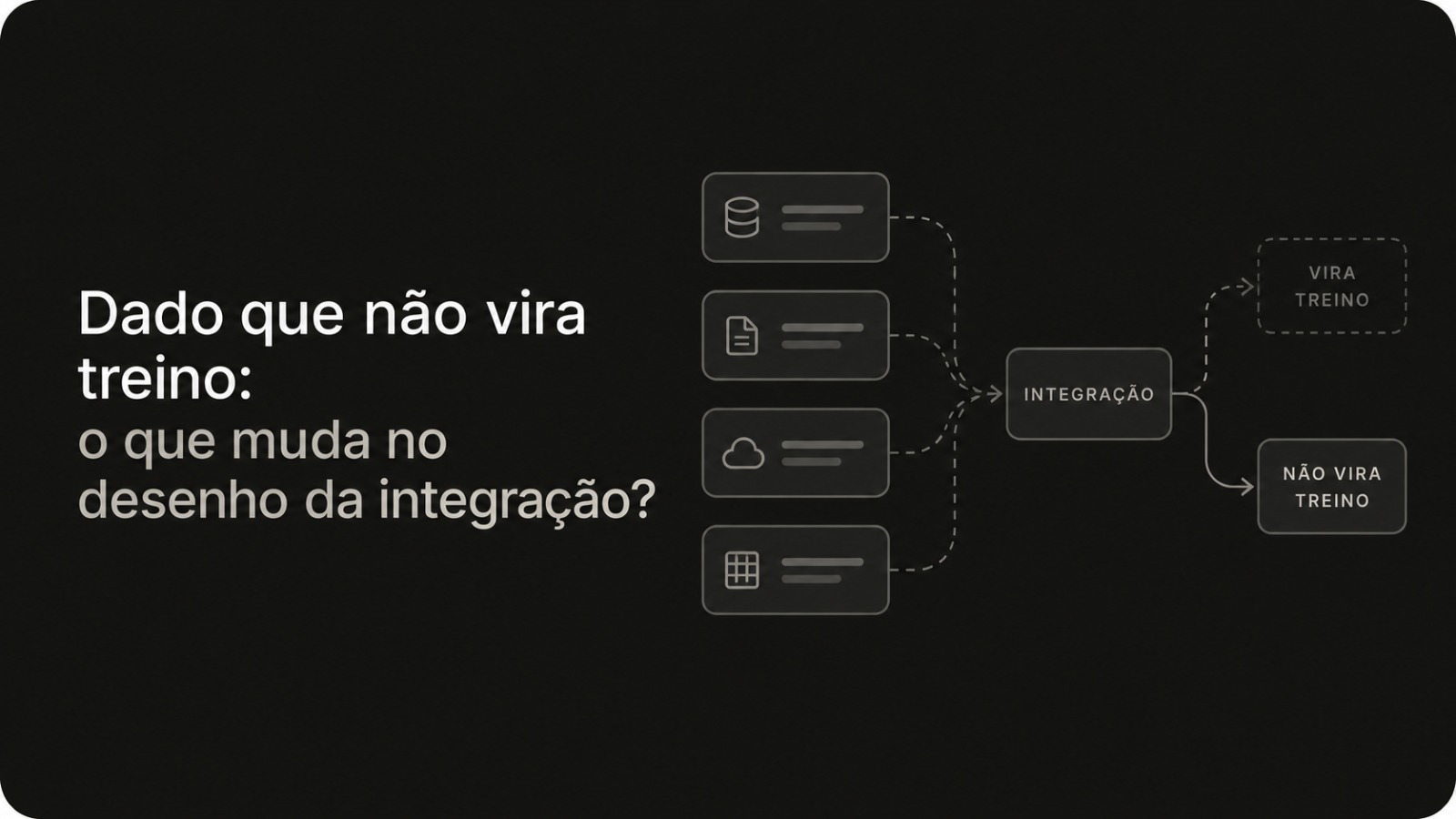
 Arthur Guttilla · · 6 min Architecture Agentic loop: what it is and how an AI agent's cycle works The cycle that runs an AI agent, the stop criteria that end it, the cost that grows with every turn and the context that reduces the number of turns. Arthur Guttilla · · 6 min Governance and trust AI hallucination: what it is and why it comes from missing context Why a language model produces fluent, wrong answers, what forms this takes inside a company and what reduces the problem and makes it verifiable. Arthur Guttilla · · 6 min Governance and trust AI audit: how to prove where each answer came from The independent review of AI systems and of each AI answer, what the evidence trail needs to record and how the architecture produces it. Arthur Guttilla · · 6 min Implementation Build vs buy in AI: what weighs on the decision to build or buy What building and buying AI mean, the seven criteria that weigh on the choice, when each path makes sense and where the context layer fits into the math. Arthur Guttilla · · 6 min Fundamentals Context layer: what it is and why it comes before agents The layer between a company's systems and AI models that connects the sources once, resolves entities, defines terms, applies permissions and serves the right slice for each question. Arthur Guttilla · · 6 min Fundamentals Semantic layer: what it is and how AI reaches the right data The piece that translates a natural language question into the right query, with the permissions of whoever asked and without copying the database to the model. Arthur Guttilla · · 5 min Fundamentals Data catalog: what it is and what it lacks to serve AI The inventory of data assets with their metadata, what it already gives AI agents and what is missing to answer about specific records, with per-person permissions. Arthur Guttilla · · 5 min Fundamentals Corporate digital brain: what it is and how it works in practice What the term has to mean to be useful: connected live data, relationships between records, the meaning of each company's terms, per-person permissions, delivery to agents over MCP and data kept inside the company's perimeter. Arthur Guttilla · · 6 min Governance and trust Data classification: what it is and why it comes before AI Levels, categories, who classifies, and why the label has to be read by systems before AI agents reach the sources. Arthur Guttilla · · 6 min Fundamentals How to build a Company Brain: the steps before the first agent The steps, requirements and frequent mistakes on the way from a business question to the first AI agent with context, permissions and sources. Arthur Guttilla · · 6 min Fundamentals Context graph: what it is and why it records the why behind decisions The structure that links decision traces (exceptions, approvals and precedents) to business entities and to time, and why it only forms where the decision happens. Arthur Guttilla · · 6 min Governance and trust Access control in AI agents: who sees what in each answer Who can see or change each piece of data, the RBAC, ABAC and record-level models, and what changes when an AI agent queries several systems on someone's behalf. Arthur Guttilla · · 6 min Fundamentals AI agents without structured data get the answer wrong AI agents without structured data return wrong numbers that look right, and this article shows what needs to be defined and recorded before the first question. Arthur Guttilla · · 6 min Architecture Context engineering: what it is and how it changes the prompt The discipline of deciding what goes into the model's window on every call, why agents made it a topic, and how cost per token is set when the context is assembled. Arthur Guttilla · · 6 min Fundamentals Enterprise knowledge graph: what it is and how it supports AI in the company The corporate knowledge graph built for AI: the layers it models, how it is built and maintained, why permissions are part of it and how the Company Brain implements it with documents and transactional data. Arthur Guttilla · · 14 min Governance and trust AI vendors: what to assess before you sign Why assessing an AI service calls for questions an ordinary SaaS review does not ask, the six blocks of due diligence and how to reduce the data each vendor receives. Arthur Guttilla · · 6 min Implementation Forward deployed engineer: what an FDE is and what they do The engineer who works inside the customer to take the vendor's technology all the way to a working process, and why the role grew with AI. Arthur Guttilla · · 6 min Governance and trust Data governance: what it is and what changes with AI agents The roles, pillars and rules that decide the owner, definition, access, quality and retention of each piece of data, and why AI agents require those rules to be applied at query time. Arthur Guttilla · · 6 min Fundamentals Knowledge graph: what it is and why AI needs one Entities, relationships and why the link between records in different systems is what gives an AI agent context. Arthur Guttilla · · 5 min Implementation AI implementation: the work that comes after choosing the model The execution steps between the demo and a working process, why switching models solves none of them, and how reused context speeds up every project that follows. Arthur Guttilla · · 6 min Governance and trust Prompt injection: what it is and how to reduce the risk in agents Why models treat content as instructions, why agents with tools widen the damage, and how layered defence and permissions enforced outside the model limit the reach of an injection. Arthur Guttilla · · 6 min Architecture Context window: what it is and how agents use that space well The space the model receives on each call, why a bigger window does not solve things on its own, and the techniques that keep only what each step needs. Arthur Guttilla · · 6 min Governance and trust LGPD and generative AI: what changes in the processing of personal data Where personal data enters a project with models, which principles, legal bases and data subject rights become technical requirements, and how the Company Brain helps apply the law in the architecture. Arthur Guttilla · · 6 min Governance and trust Data lineage: how to audit the path of every piece of data in the company Where each piece of data came from, which systems and calculations it went through and where it ended up, and why an AI answer only passes an audit with that path on record. Arthur Guttilla · · 5 min Architecture Agent memory: what it is and where it should live Types of memory, how it is usually implemented, the problems that show up in production and why the link to business entities decides where memory should live. Arthur Guttilla · · 6 min Architecture GraphRAG: what it is and when it beats traditional RAG Retrieval that follows relationships between entities, the kinds of question where it beats passage search, and why a graph built from the source systems is the most reliable starting point. Arthur Guttilla · · 6 min Architecture MCP: what the Model Context Protocol is and how it works The open protocol that standardises the link between AI applications and systems, the host, client and server architecture, and what it leaves for the context layer to solve. Arthur Guttilla · · 6 min Architecture RAG: what it is, how it works and where it hits its limits The technique that retrieves document passages before the model answers, and what it leaves unanswered when the question depends on records and permissions. Arthur Guttilla · · 5 min Governance and trust Shadow AI: what it is, the risks, data leaks and how to deal with it The use of AI without company approval, why it grows, how data leaks and why the official alternative has to deliver more context than the parallel tool. Arthur Guttilla · · 10 min Architecture AI agents: what they are, how to build them and how to run them What AI agents are, what it takes to build one that reaches production and the operating work that starts after launch. Arthur Guttilla · · 10 min Architecture Embeddings: what they are and how vector search works How numeric vectors represent the meaning of texts and records, how vector search finds the closest content and what these representations leave out. Arthur Guttilla · · 5 min Fundamentals Data ontology: what it is and how it gives each term a single meaning What each term means in this company, and why AI gets it wrong when two departments use the same word with different meanings. Arthur Guttilla · · 5 min Implementation AI pilot: three patterns that stall the move to production Hand-prepared data, no owner and improvised access: how each pattern keeps the project stuck in testing, what it costs in the next pilot and how the Company Brain changes the starting point. Arthur Guttilla · · 6 min Governance and trust AI use policy: what it should contain and how to apply it The document that defines which AI tools may be used, with which data, by whom and with what oversight, and how to turn the written rule into a rule the systems enforce. Arthur Guttilla · · 6 min Fundamentals Entity resolution: what it is and why it comes before AI How to identify which records represent the same supplier, product or person, and why a wrong link contaminates an AI agent's answers. Arthur Guttilla · · 6 min Implementation AI ROI: how to measure the return by the capacity the company gains Why measuring only by headcount reduction distorts the return, how to build the math with a baseline and total cost, and how reused context improves both sides of it. Arthur Guttilla · · 5 min Fundamentals Second brain and Company Brain: what is the difference The personal knowledge management method and the company's context layer compared on seven axes, with the path for bringing individual notes and decisions into the Company Brain with an owner and permissions. Arthur Guttilla · · 6 min Governance and trust Information security in the age of AI: what changes and what to protect The triad of confidentiality, integrity and availability in the face of models and agents, the new risk surfaces and the controls security teams need to add to the ones they already apply. Arthur Guttilla · · 6 min Implementation Data silos: why AI ignores the company org chart How data silos grow out of the split into departments, why department-level AI projects reproduce them, and how the context layer links data by entity and by process. Arthur Guttilla · · 5 min Fundamentals Systems of record: what changes when AI agents arrive What the official source of each piece of information is, how companies organised that truth and why agents that cross systems need an explicit hierarchy per attribute. Arthur Guttilla · · 6 min Governance and trust Data sovereignty: what it is and where company data should live Jurisdiction and control, how sovereignty differs from data residency and localisation, and why generative AI moves the topic into the context architecture. Arthur Guttilla · · 6 min Fundamentals Taxonomy and ontology: what the difference is and when to use each The hierarchical classification every company already maintains, what an ontology adds to it and why an existing taxonomy shortens the path to the Company Brain. Arthur Guttilla · · 5 min Architecture Text-to-SQL: what it is and where it fails in production How a language model turns a question into a SQL query, where the technique works, and which errors, risks and costs appear once it leaves the pilot. Arthur Guttilla · · 5 min Architecture Context platforms for enterprise AI agents: a 2026 comparison Seven context platforms for AI agents compared on deployment, type of context, permissions, audit trail and MCP access. Arthur Guttilla · · 10 min Governance and trust How to evaluate a private context platform for AI in regulated sectors Seven criteria for evaluating private context for AI in banking, insurance, healthcare and legal, with questions to take to the vendor. Arthur Guttilla · · 6 min Implementation What to evaluate in an AI context infrastructure before you implement it Eight points to check in a unified context infrastructure before the first agent: sources, ontology, freshness, latency, scale and governance. Arthur Guttilla · · 5 min Fundamentals Company Brain: governed enterprise context for AI agents, in the customer's cloud What the Company Brain is, how it works and how agents reach the context: CRM, ERP and documents connected once, governed and in the customer's cloud. Arthur Guttilla · · 4 min Governance and trust Six audit questions to ask an AI context platform Where the data lives, when the permission applies, what gets cited, who reads the log, whether data becomes training and how stale context is caught. Arthur Guttilla · · 3 min Implementation Integration, latency and scale: the context layer's requirements before the first agent Four groups of requirements to set before the first AI agent, and what to measure in the proof of concept: integration, latency, scale and governance. Arthur Guttilla · · 3 min Fundamentals Company Brain: every AI agent starts as a new hire A new hire takes months to work with confidence, and an agent starts over every session. What a Company Brain gives both of them on day one. Arthur Guttilla · · 5 min Context quality Company Brain: when the CRM and the ERP report different values The CRM holds the negotiated amount, the ERP holds the invoiced one, and both are correct in their own context. What has to be defined for an agent to know which of them answers the question. Arthur Guttilla · · 5 min Governance and trust Company Brain: the context an agent needs before it acts A wrong answer is corrected by whoever reads it. A wrong action becomes a record and steers the decisions after it. What an agent has to have settled before it executes. Arthur Guttilla · · 4 min Fundamentals Company Brain: AI answers carrying each customer’s data A standard company text covers tone of voice and product naming, and never reaches the contract of the customer who just called. What changes once the general rules point at each individual record. Arthur Guttilla · · 5 min Fundamentals The anatomy of AI Mouth, eyes, ears and hands have already been bought. The brain is the part still missing, and it is what makes the other three get things right. Arthur Guttilla · · 7 min Architecture Data that never becomes training: what changes in integration design With no copy into the model, the integration retrieves at query time. The impact on latency, caching policy and data that changes often. Arthur Guttilla · · 5 min Architecture The graph engine decision: cost and capacity at volume Two graph engines under the same 300M-element target: load time, RAM, disk, latency and the AWS bill. The cutover line between in-memory and hybrid.
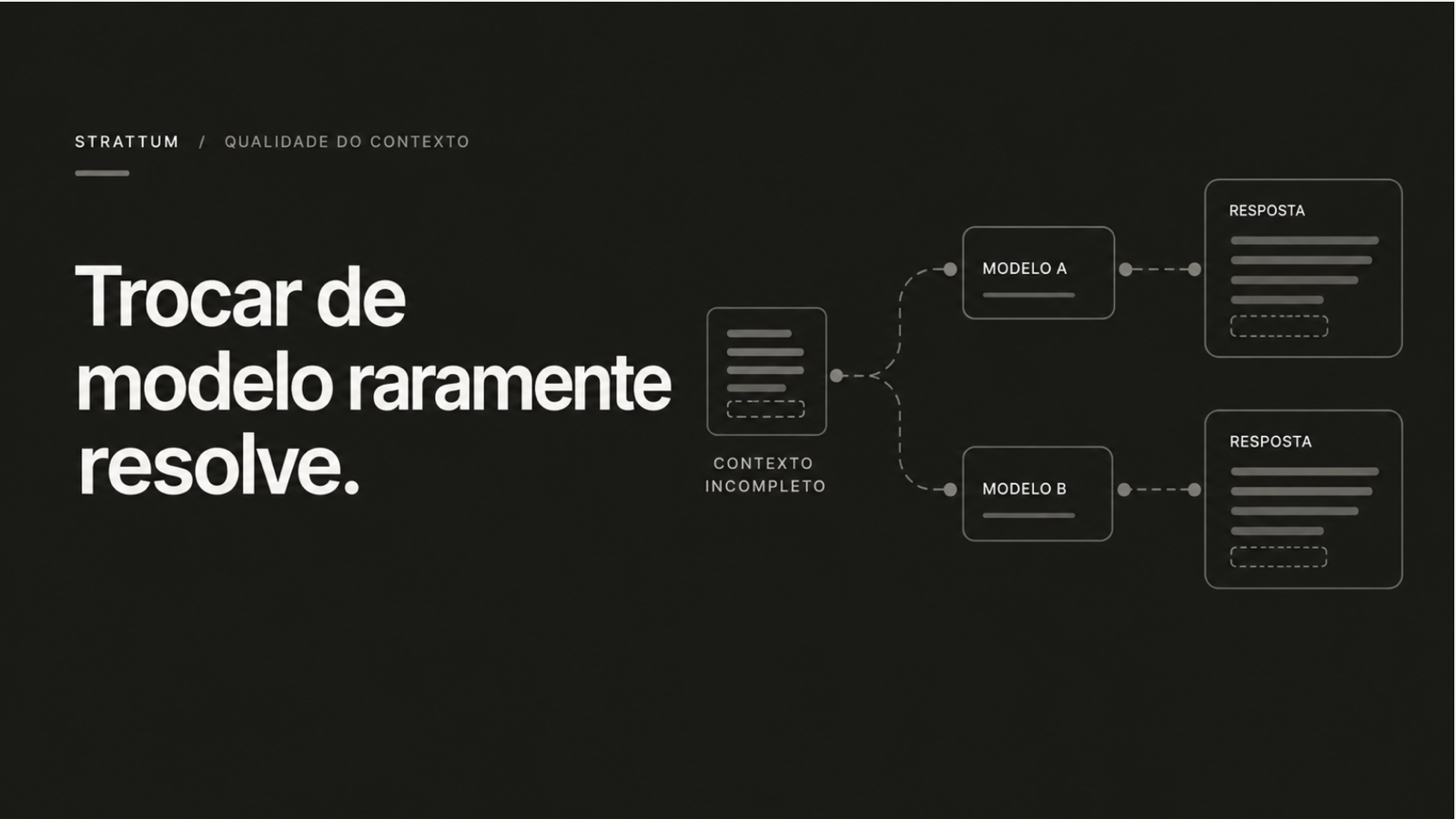
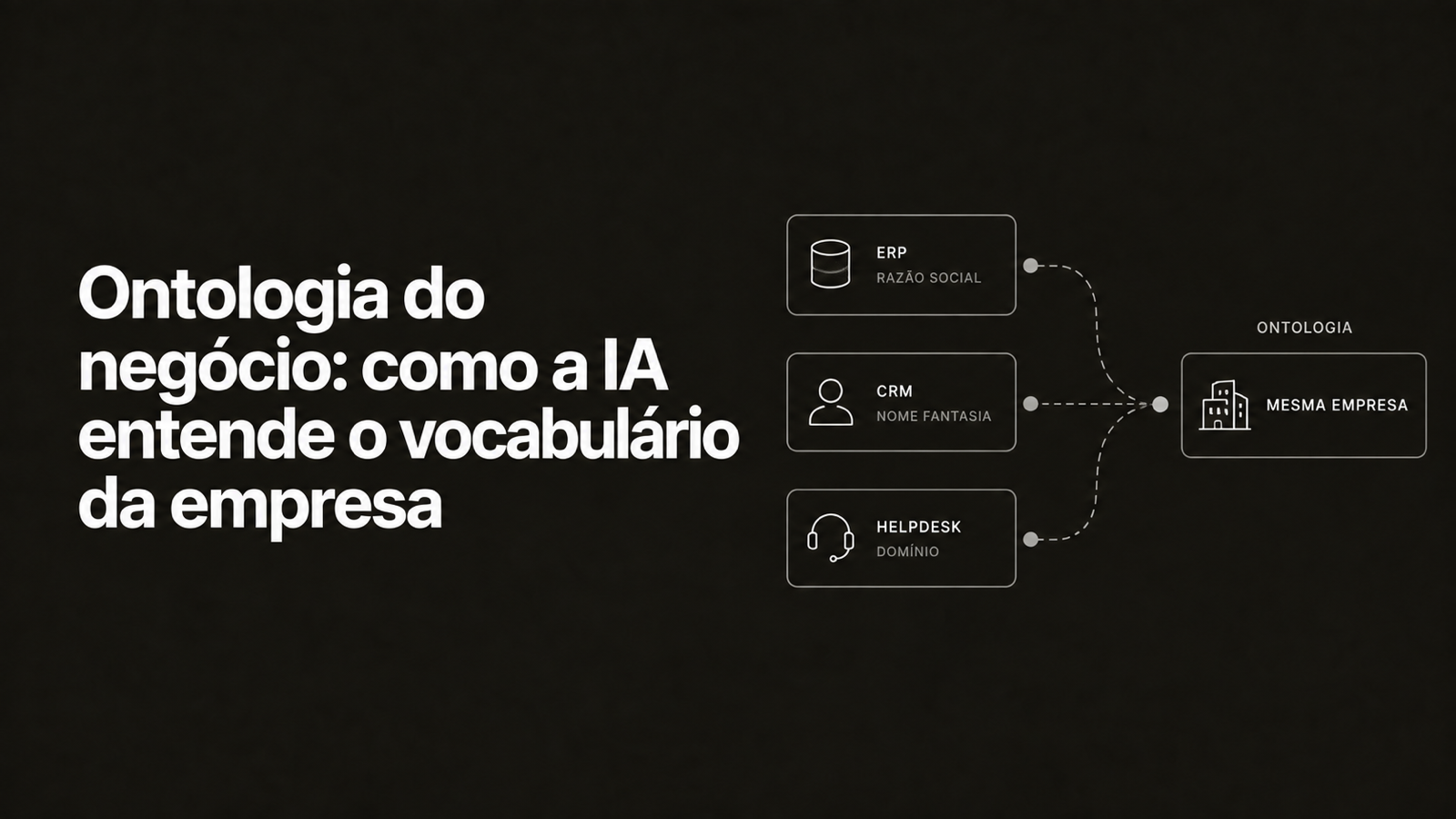
 Allan Fraga · · 12 min Context quality Switching models rarely fixes it: what changes and what stays the same A pricier model writes better, but it still answers from the same context it always had. The ten-minute test that tells a model problem apart from a data problem. Arthur Guttilla · · 5 min Architecture Business ontology: how AI understands your company's vocabulary The same company becomes three different customers to the model if it exists three times, in the ERP, the CRM and the helpdesk. The layer that resolves entities, verbalizes the relationship and gives the data meaning.
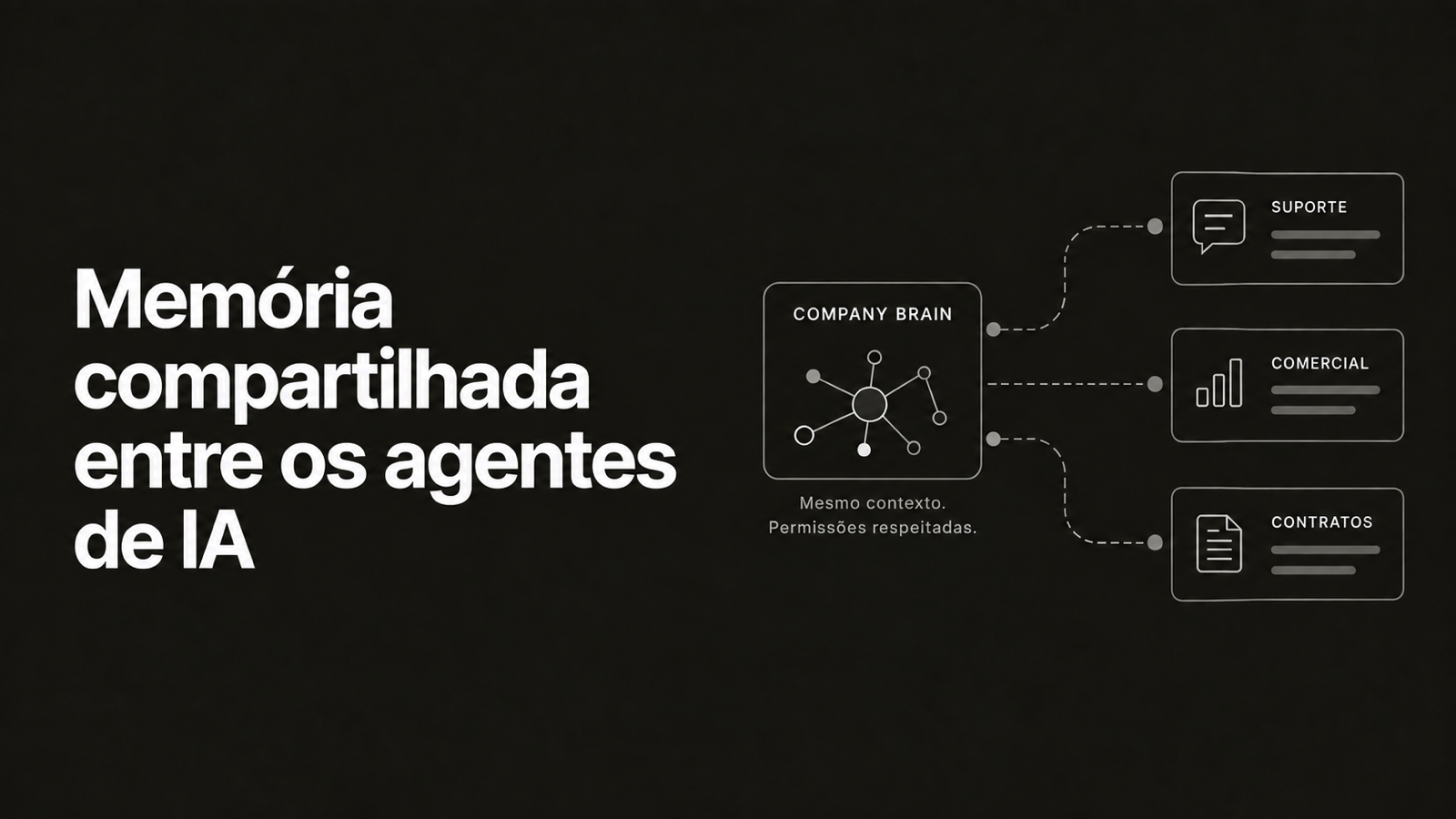
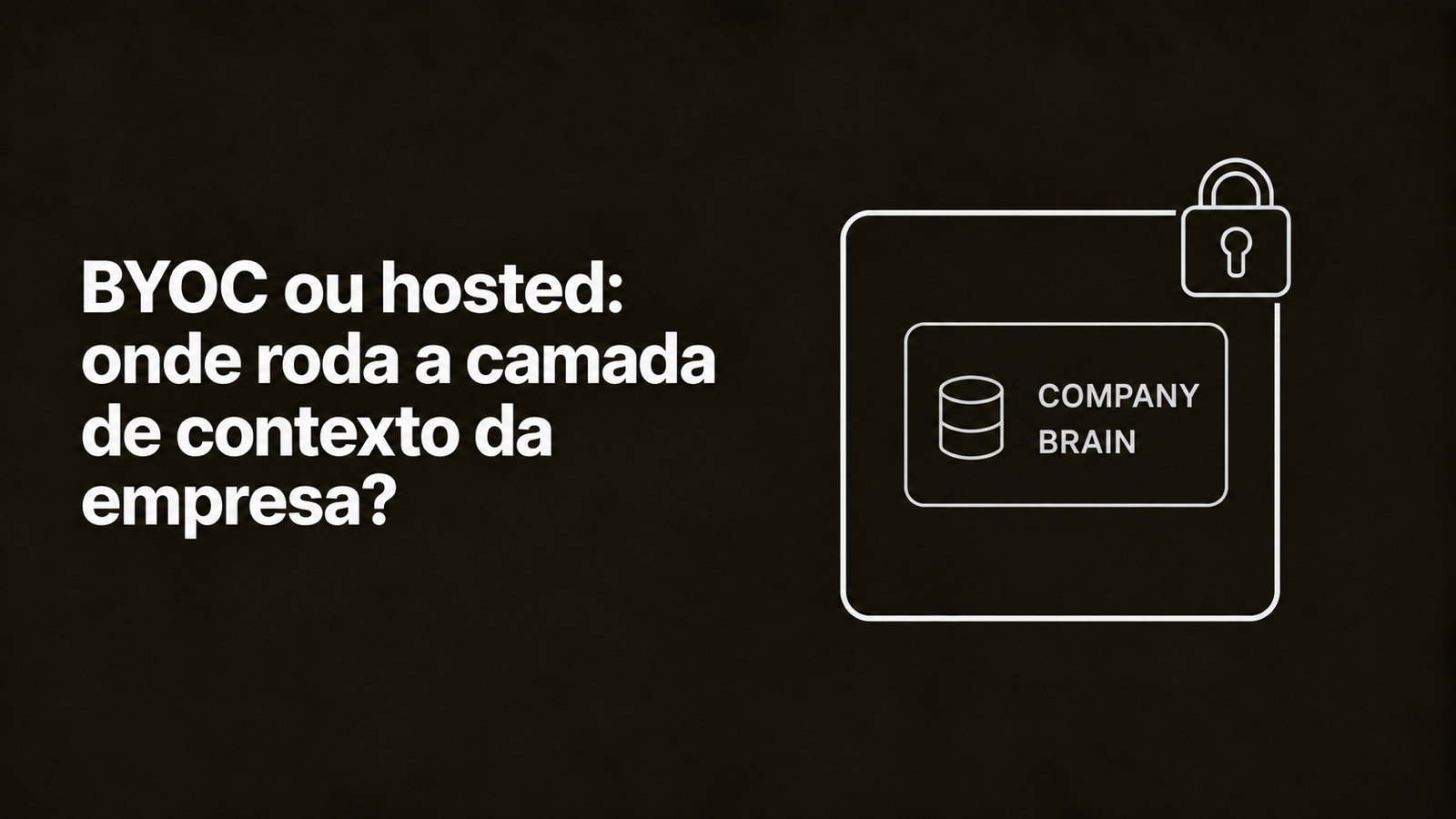
 Matias Schimuneck · · 5 min Architecture Company Brain: shared memory across your AI agents Each agent keeps its own memory and learns on its own what the others already know. The graph, the ontology and the semantic layer that make that learning common, served over MCP. Arthur Guttilla · · 4 min Governance and trust BYOC or hosted: where your company's AI context layer runs BYOC or vendor cloud: what changes in data, network and cost across the two deploy models for an AI context layer. Understand the concept.
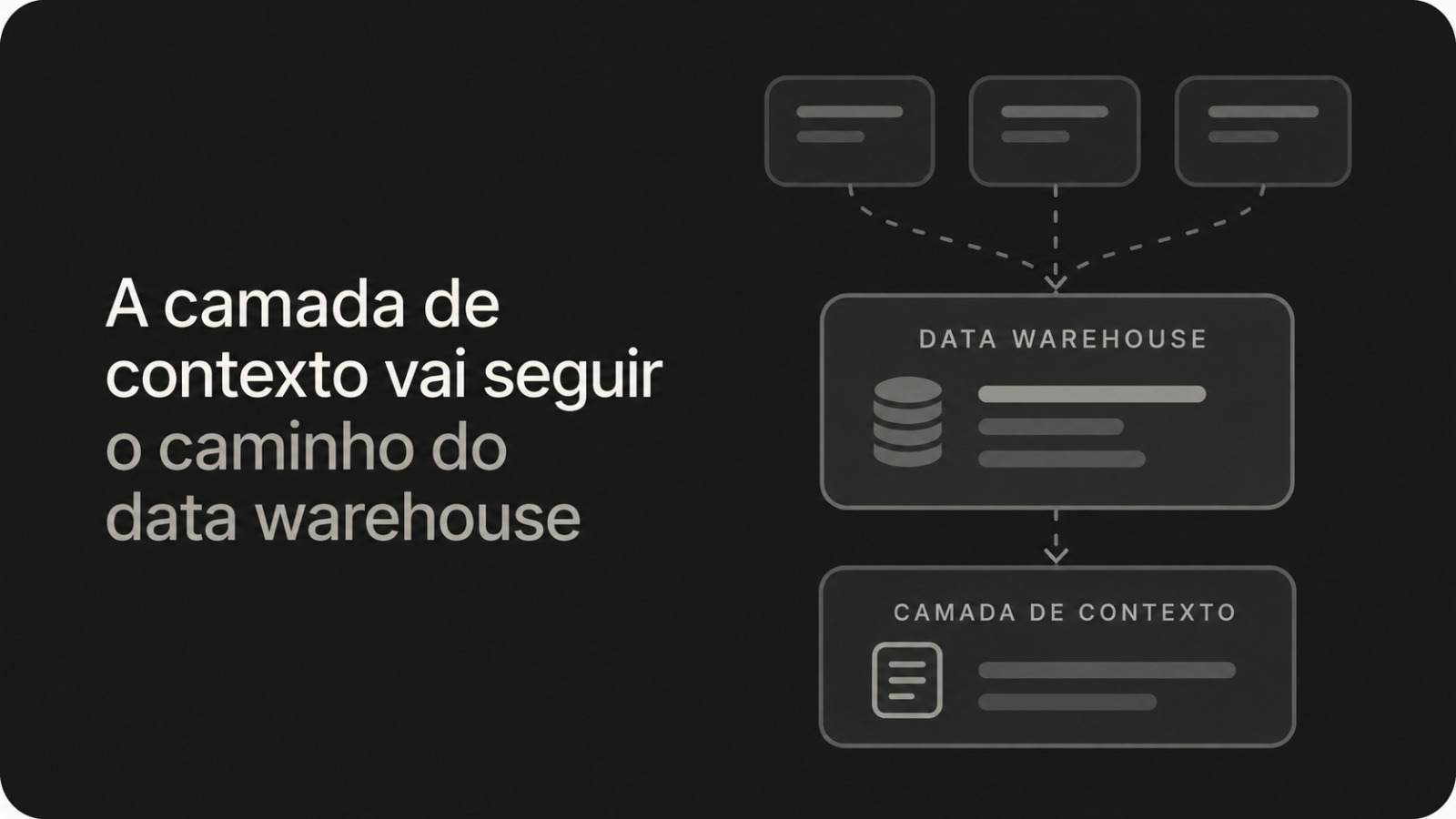
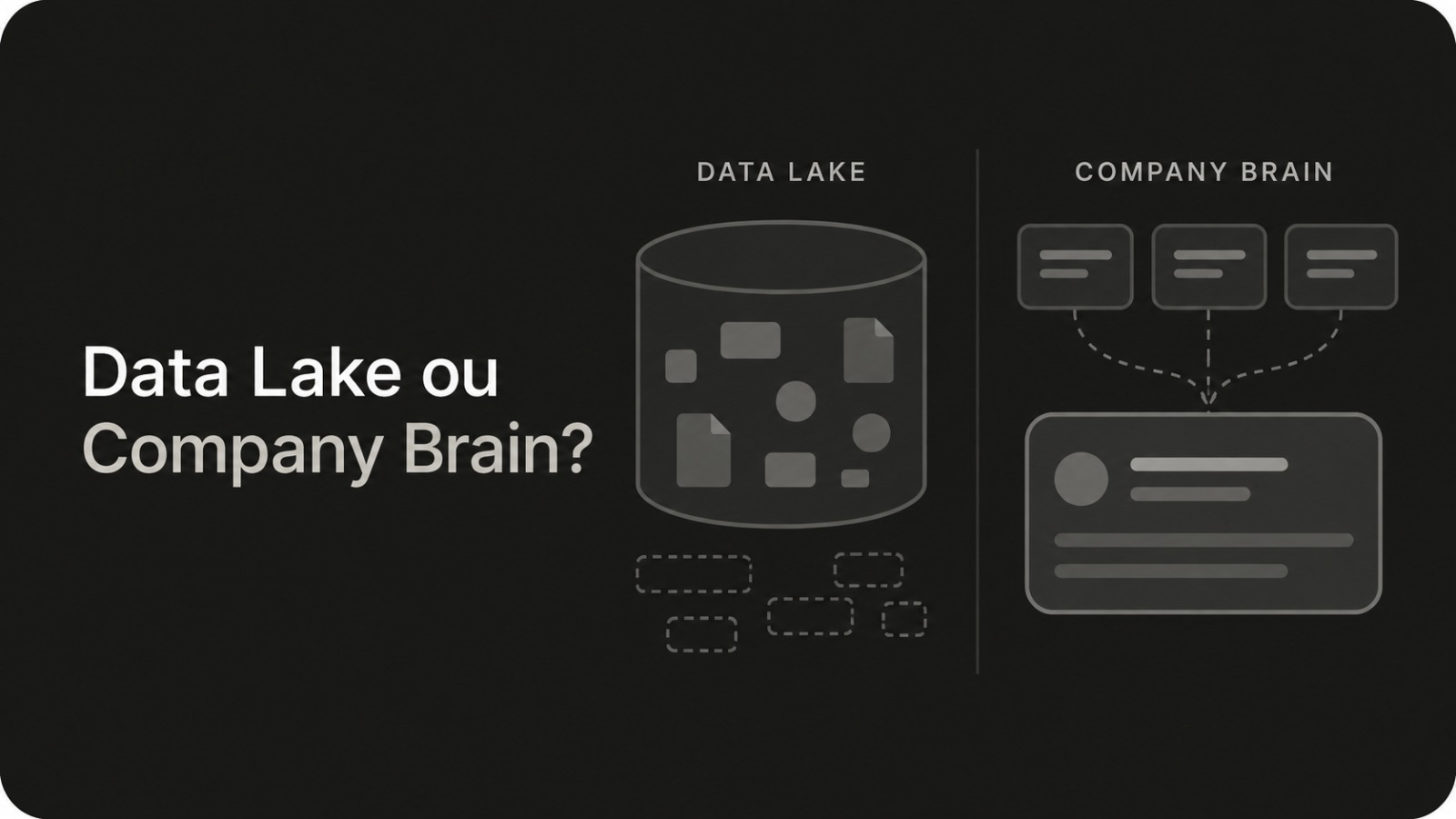
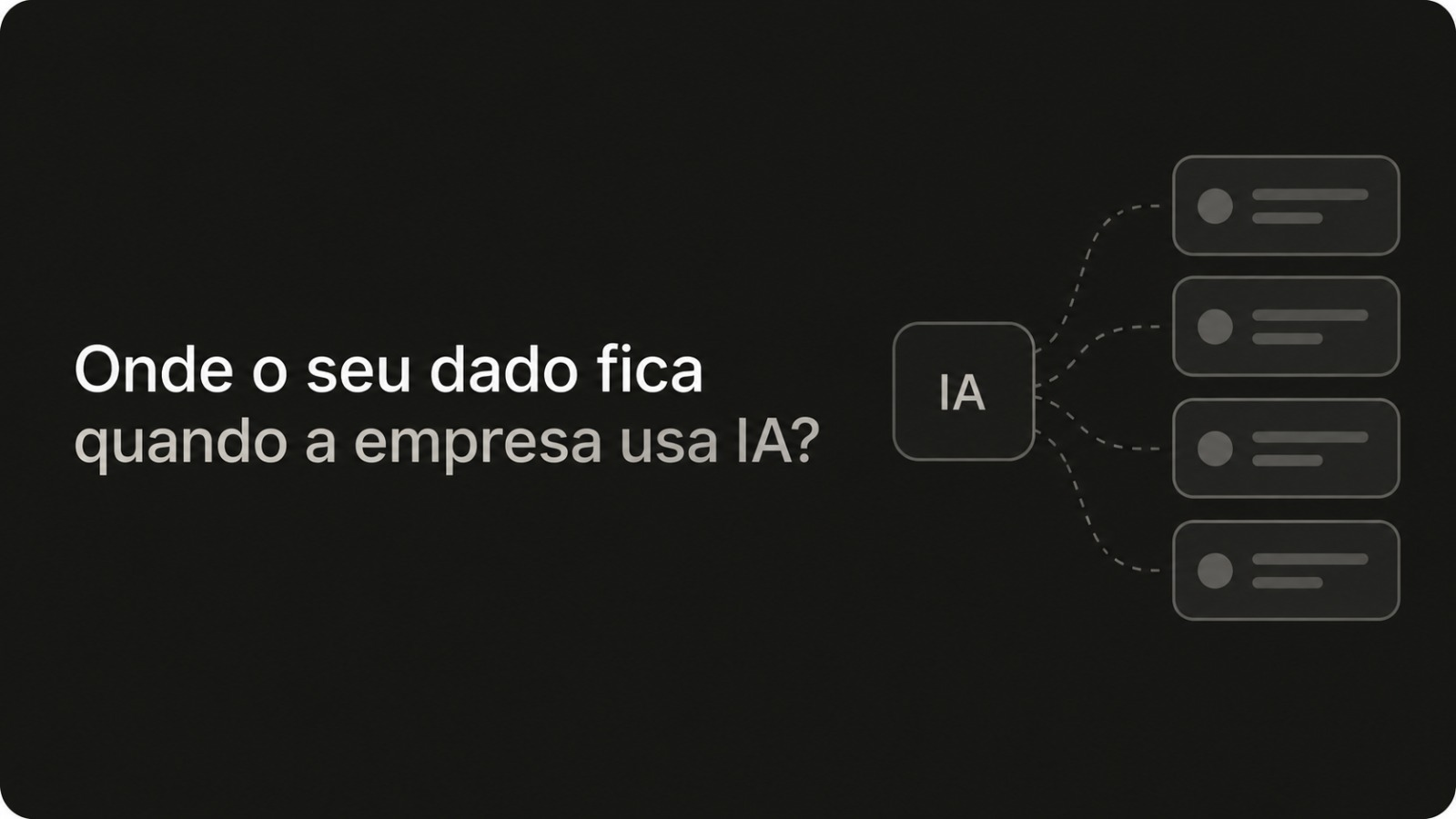
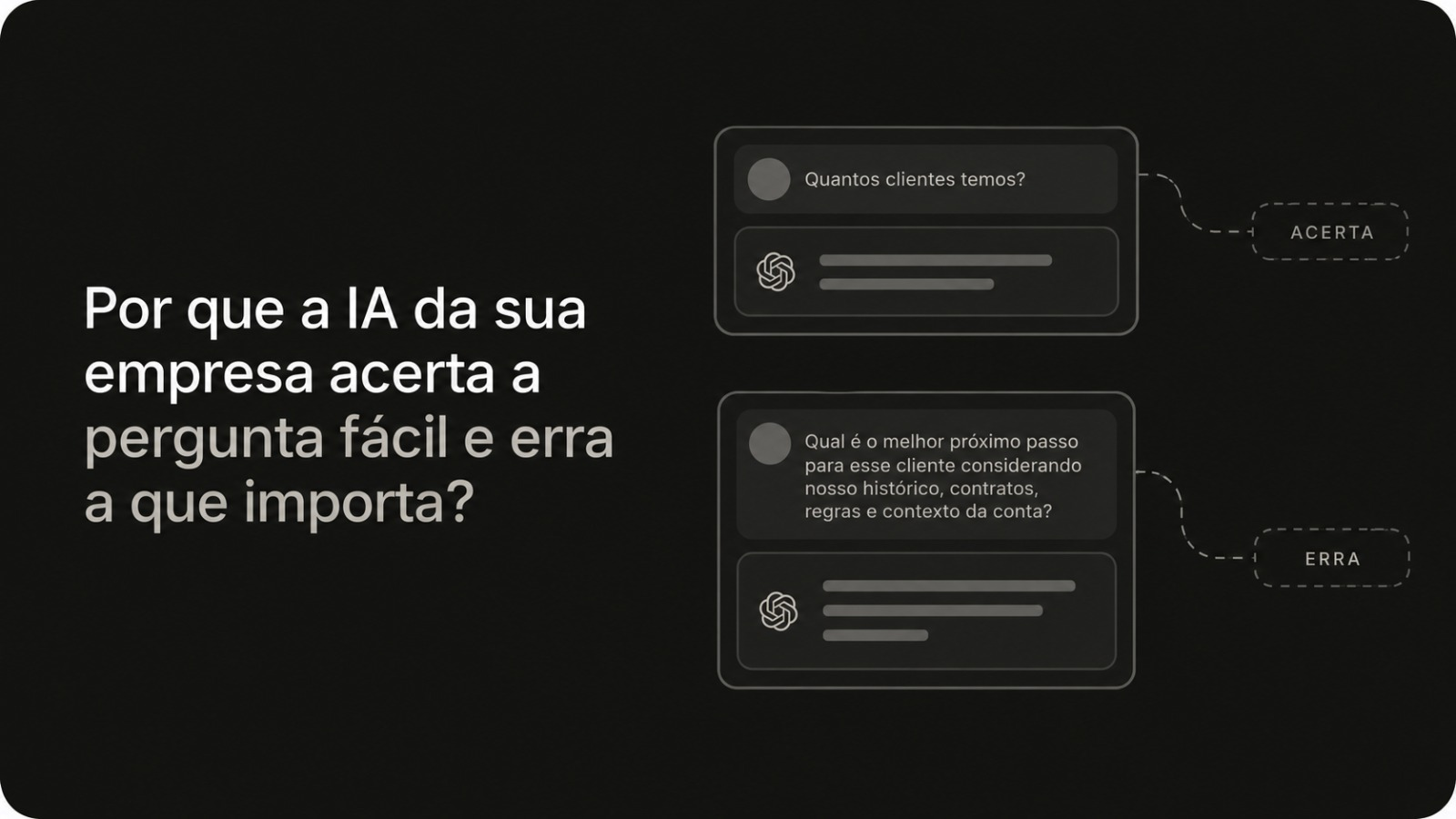
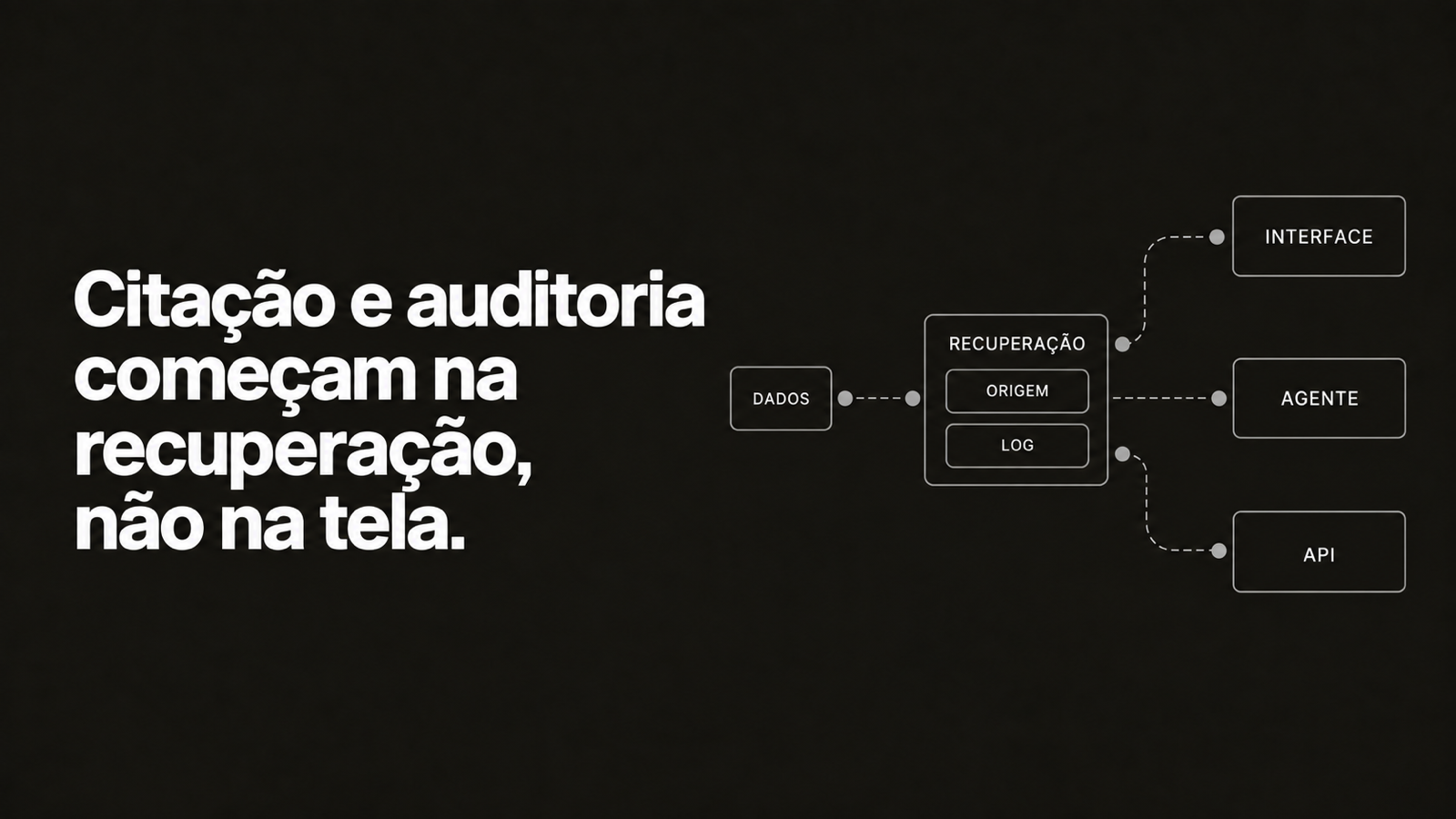
 Marcos Ribeiro · · 5 min Fundamentals The context layer will follow the same path as the data warehouse Infrastructure components follow a known pattern: special project, competitive edge, standard item. The context layer is halfway through it, and the data warehouse already showed where it ends. Arthur Guttilla · · 5 min Fundamentals Data lake or Company Brain A data lake solves storage. Connectors, ontology, memory and governance solve context. Why gathering data is not the same as giving AI context. Arthur Guttilla · · 9 min Context quality The sources left out of the pipeline that carry the business rule Contracts, internal policy, team spreadsheets and support history rarely make it into the analytics pipeline. That is where the rule that never became a table lives. Arthur Guttilla · · 5 min Governance and trust Where your data lives when the company uses AI What leaves the environment on each query, what the provider retains and which topologies exist. The map that unblocks AI projects in regulated industries. Arthur Guttilla · · 5 min Context quality Why your company's AI nails the easy question and misses the one that matters Summarizing an email works, prioritizing a customer does not. The three signals that separate a lack of context from a model limitation. Arthur Guttilla · · 5 min Architecture Source citation and audit are an architecture requirement, not a UI one A control built into the screen stops holding at the first consumer that arrives over the API. Why citation and logging need to be born in the layer that retrieves the data. Arthur Guttilla · · 5 min Fundamentals What context engineering is Given a finite context window, what is the best combination of information for the task at hand. Source selection, compression and ordering, and long-term memory. Arthur Guttilla · · 4 min Fundamentals What is a Company Brain? Giving an AI access to your systems does not make it understand your company. What enterprise context is: what the company knows, how the work actually happens and what is allowed.
 Rafael Viana · · 11 min
Nothing matches those filters. Clear the selection to see everything.