
A new hire takes months to work with the confidence of an experienced colleague. Along the way they consult manuals, lean on the people who have been there longest and learn, case by case, which rules apply to which customers. A newly deployed AI agent is in the same position, with one important difference: it accumulates no learning between one conversation and the next, and starts over at every session. The Company Brain, the layer that knows the company (what data exists, where it lives, how it relates and who is allowed to see what), shortens that period for people and for agents alike.
Onboarding a person tends to follow a predictable order. First they learn the documented policies and processes. Then they learn where each customer’s information sits and which system to look in. Over time they come to understand how those pieces relate: that a customer with a renewal coming up and a critical ticket open, for instance, calls for different handling.
The first two layers can be passed on through documentation and training. The third is rarely written down and depends on working alongside more experienced colleagues.
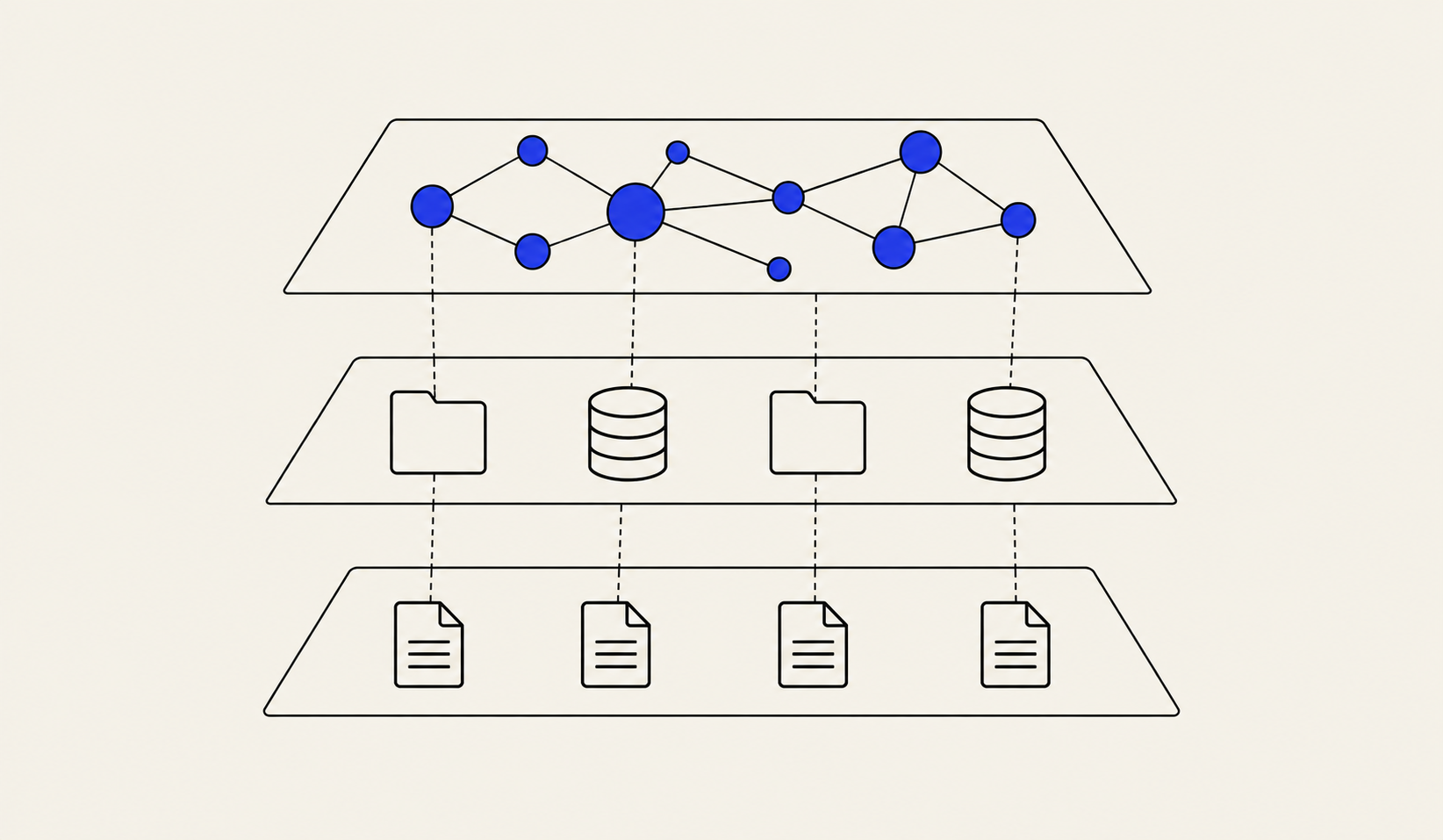
Knowledge bases with natural-language search serve the first layer well. A person or an agent asks about the refund policy and gets the matching passage back, with the source document named. For companies whose processes are scattered across folders and versions, that alone is real progress.
The limit shows up on the next question. Knowing the refund policy does not answer whether that particular customer is entitled to a refund past the deadline, because the answer depends on the contract, the plan they bought and any approved exceptions. Document search reaches none of that: the customer’s record is in another system.
The Company Brain organises precisely the knowledge a new hire takes longest to acquire. The knowledge graph models customers, contracts, orders, tickets and people, and the relationships between them. The business ontology records what each term means inside the company, including the criteria only the longest-serving staff used to know. The semantic layer turns the question into the right query, under the permissions of whoever asked.
With that structure, the newly hired analyst and the AI agent start from the same place: access to the relationships that used to take years of experience. The refund question now takes in that customer’s contract, their ticket history and the exception recorded last year.
For the AI agent the difference matters even more. A person accumulates experience over months, while the agent depends entirely on the context it receives on each query. Without a Company Brain, every session begins as uninformed as the one before it. With one, every query arrives with the relationships already modelled, and the agent answers from the repertoire the company took years to build.
When each AI project builds its own base to query, the company ends up maintaining several versions of the same knowledge. The support assistant, the sales agent and the onboarding material for new hires describe the same processes in different ways, and the discrepancies surface at the least convenient moment.
In the Company Brain, the connection to the sources is made once and serves every consumer. Context reaches the models over MCP, an open protocol that connects models to data sources. The same graph that guides a support agent answers the questions of an analyst still being onboarded, and each new use case starts from what already exists.
That sharing also cuts the maintenance effort. When a policy changes, the update happens at the source and flows into the Company Brain, which then serves the current version to the support agent, to the sales agent and to the material new hires consult. The review, once repeated in every tool, concentrates on a single point of reference for each piece of information.
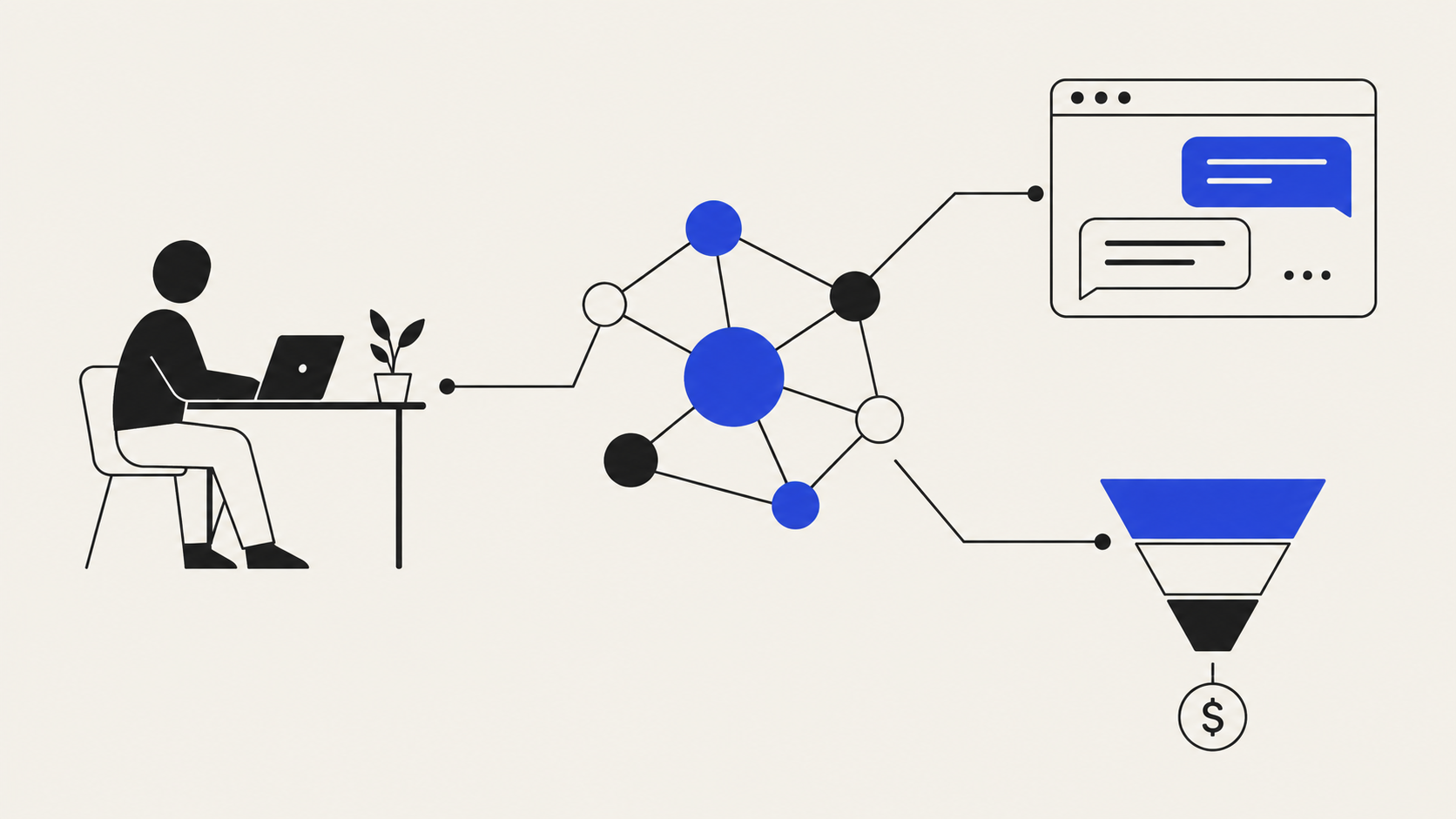
When an experienced professional leaves, the relationship context they accumulated tends to go with them. The exceptions negotiated, the reasoning behind each decision and the history of each account live in the memory of the person who left, and their successor rebuilds that context bit by bit.
The Company Brain reduces that loss to the extent the knowledge was recorded in some system. An exception approved over email and tied to the contract stays reachable after the person who negotiated it is gone. An exception agreed only over the phone stays dependent on one person’s memory.
The Company Brain does not replace the formation of professional judgement. Deciding when an exception makes sense, handling a delicate negotiation or reading a customer’s reaction remains the work of people. What shrinks is the time spent hunting for information before exercising that judgement.
Nor does the context layer make up for an absence of records. Part of the initial work is identifying which recurring decisions rest only on people’s memory, and moving them into a source system.
As a starting point, list the questions new hires ask colleagues most often in their first months, and separate the ones that depend on a specific record. Those questions point to the entities and the sources that should make up the first slice of the Company Brain.
Talk to a Strattum expert about the Company Brain, business ontology and the context your agents consume on every question.