In short
Every AI agent that goes into production needs to read data from somewhere: the CRM, the ERP, the helpdesk, the code repository. For a long time, each link was written to measure, for one specific application and one specific system. MCP, short for Model Context Protocol, standardises that link. It is an open protocol that defines how AI models and agents connect to data sources and tools. For a non-technical reader, it works like a common socket between AI applications and the company's systems. It is also the channel through which the Company Brain, the layer that knows the company (what data exists, where it lives, how it relates and who may see what), reaches the models.
MCP was launched as an open standard in November 2024, with a public specification, development kits in several languages and reference servers. Since then, it has been supported by assistants, development environments and agent platforms from different vendors.
The practical consequence is portability. A connector written once for the ticketing system serves any application that speaks the protocol, and switching models leaves the integrations intact.
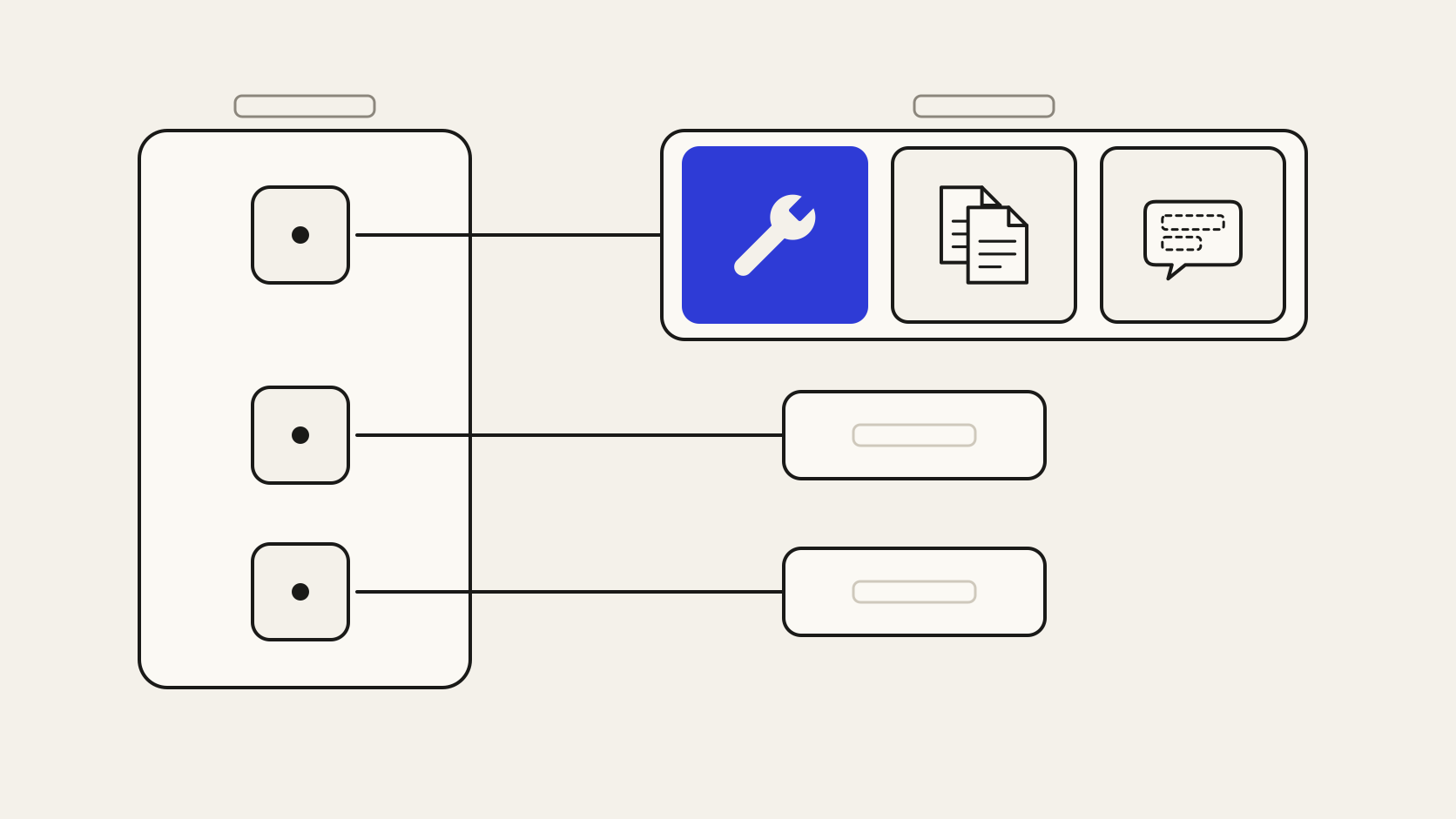
The official documentation describes a client-server architecture with three participants. The host is the AI application, such as an assistant or a development environment. For each source, the host creates a client, which keeps a dedicated connection to a server. The server is the program that exposes a system's data and actions.
Each server offers three primitives:
The client discovers what each server offers through listings, and the host decides what goes into the call to the model. Messages follow the JSON-RPC 2.0 standard and travel over standard input and output when the server runs on the same machine, or over HTTP when the server is remote.
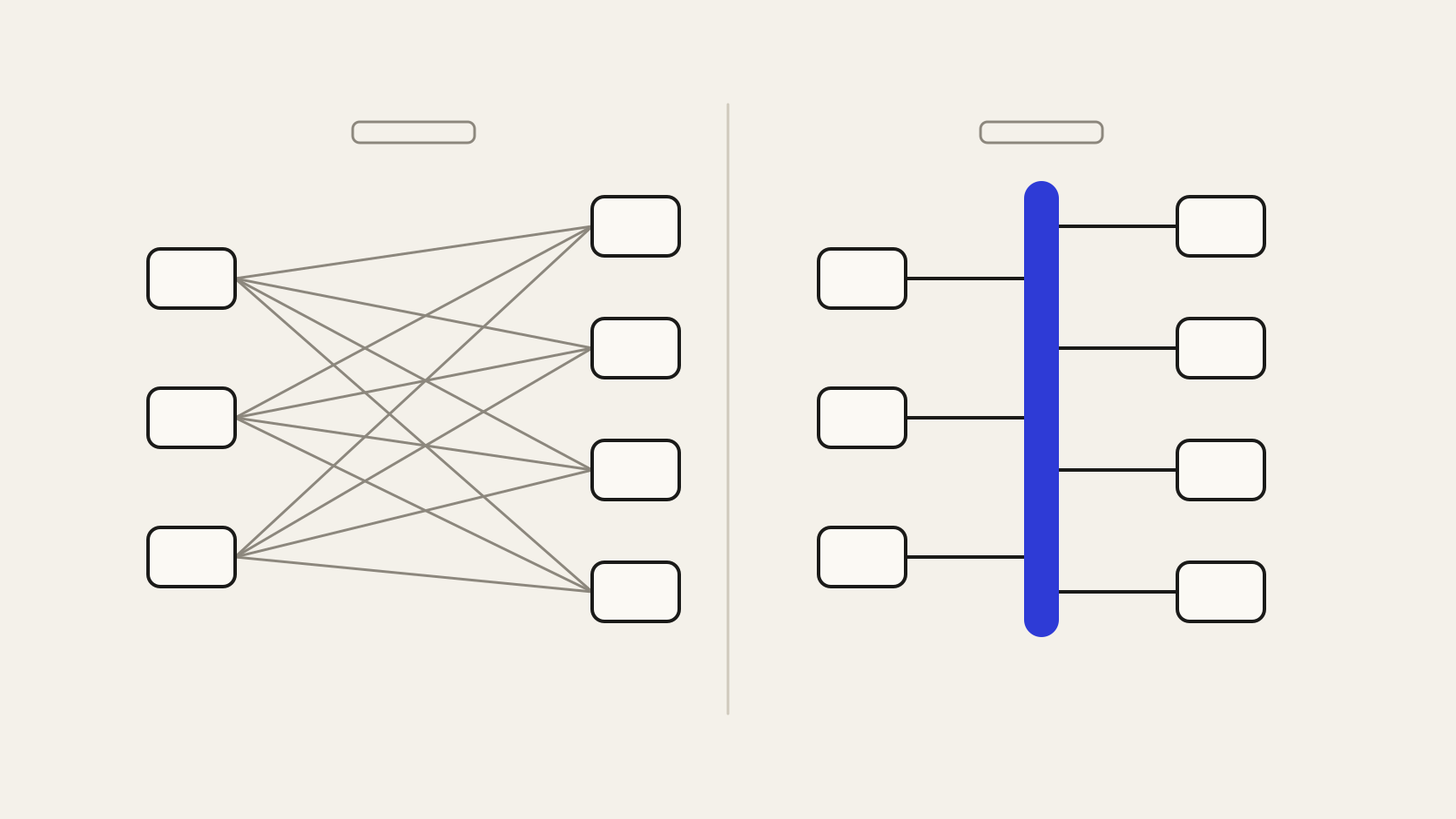
Without a standard, each AI application needs its own connector for each system. With N applications and M systems, the company maintains N times M integrations, each with authentication, data format and error handling written separately.
With MCP, each system gets a server and each application implements a client. The total drops to N plus M, and the ERP server written for the first agent also serves the second. That is where the gain in implementation speed comes from: the next project starts from connections that already exist.
MCP standardises how context is transported. The documentation itself states that it does not define how applications use models or how they manage the context they receive. What the data means and how it links to data in another system is left to whoever implements each side.
In practice, an agent connected to ten raw servers receives ten partial views of the company. The e-commerce server returns the order by its store number, the ERP server by the invoice and the carrier's server by the tracking code. None of them knows that the three records describe the same delivery. Three gaps follow:
There is also the cost. Each server adds tool descriptions to the model's window, and the agent spends calls and tokens piecing things together before it answers.
In the Company Brain, sources are connected once and organised before they reach the protocol. The knowledge graph links the store order, the ERP invoice and the carrier's tracking to the same delivery. The business ontology defines what each status means. The semantic layer translates the natural language question into the right query.
The agent connects to a single server and receives the slice the question needs, with entities already resolved and the source of every piece of information. A new agent or a different model only needs another client of the protocol, and the context stays the same.
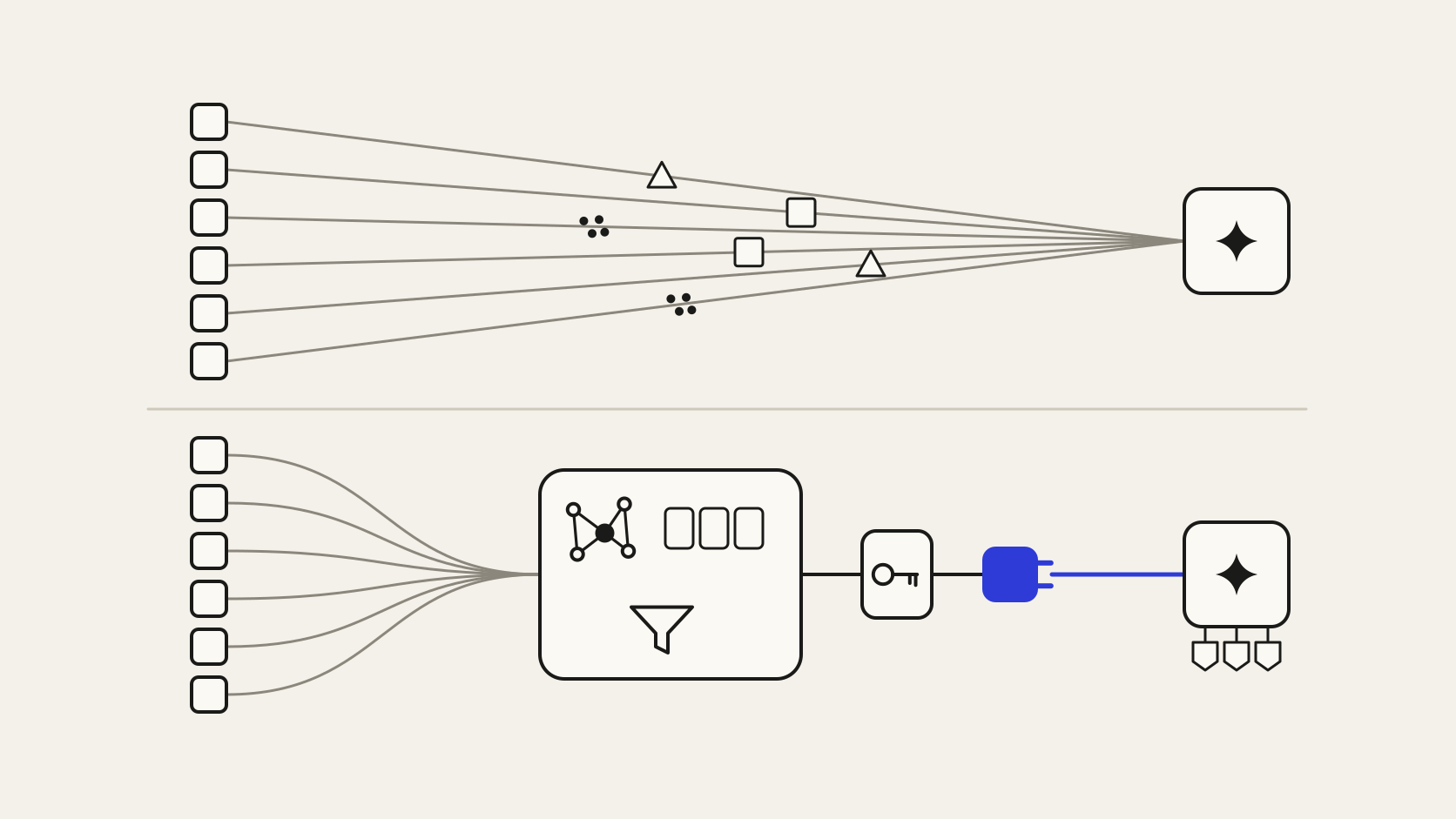
MCP handles authentication of the connection, and the specification recommends OAuth for remote servers. The decision about which record each person may see happens in the Company Brain. Each query carries the identity of the person who asked, and permission is inherited from the source system: the logistics analyst gets the deliveries for her own region, and the operations director gets all of them.
The data stays in the company's systems, and on each call the model receives only the authorised slice. Third-party servers installed without review remain a point of exposure, so the security team needs to keep the list of approved servers and of the credentials each one uses.
The practical starting point is to take stock of the AI integrations that already exist and those in the plan. When two or more depend on the same systems, the rework is already locked in.
The next step is to pick a recurring question that spans two or three systems, such as the full status of a late delivery, and serve it through a single point of context. The agents that follow connect to the same server and reuse the sources, entities and permissions already resolved.