In short
Every company maintains hierarchical classifications, even without calling them that. The chart of accounts separates assets, liabilities and income. The catalogue divides products into lines and families. The helpdesk organises tickets by category and subcategory. Each of these structures is a taxonomy, and it is almost always the shortest starting point for the Company Brain, the layer that knows the company: what data exists, where it lives, how it relates and who can see what.
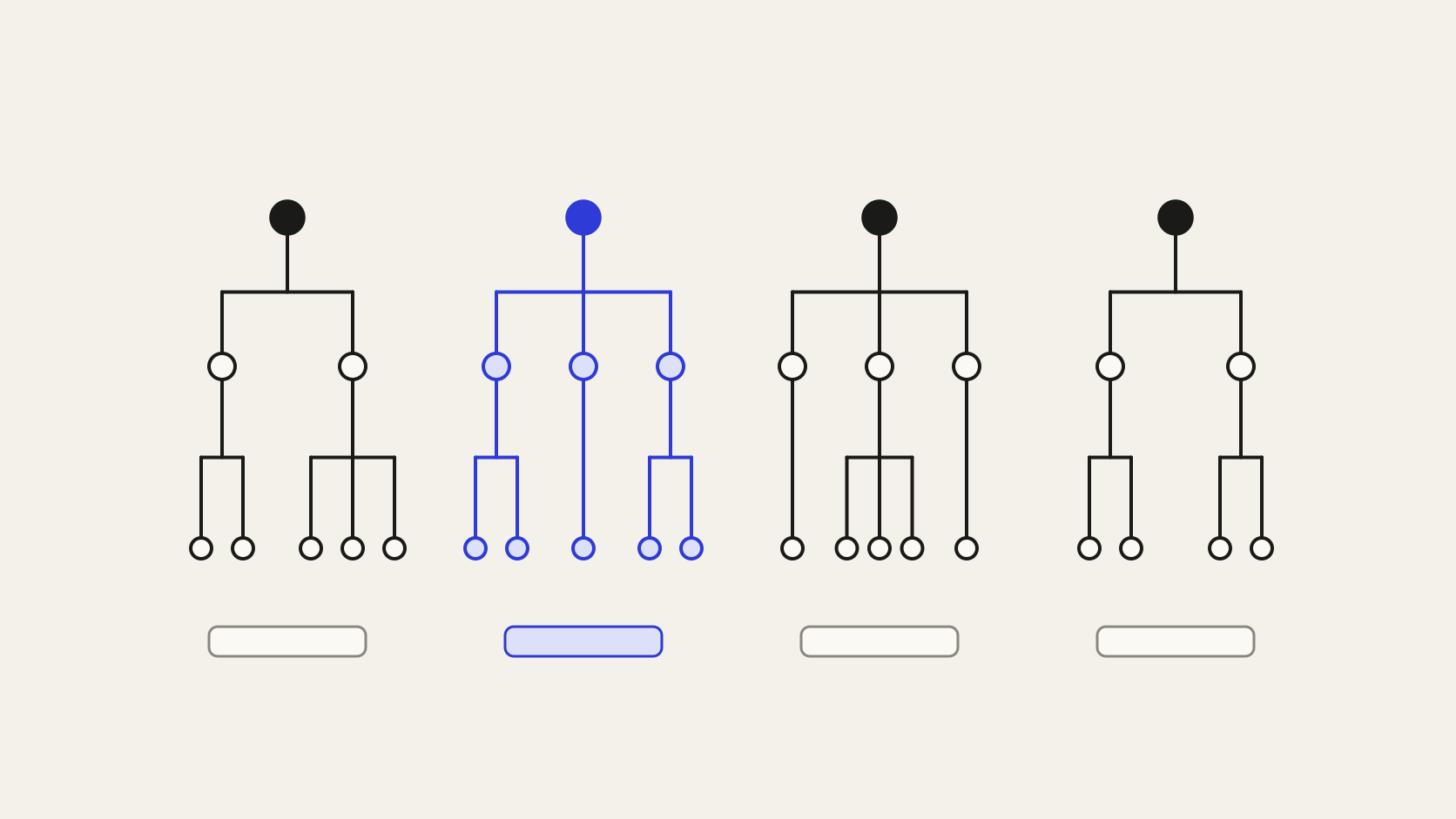
The term comes from biology, where it names the classification of living things into kingdom, phylum, class and so on. In information management, a taxonomy is a hierarchical classification of terms into category, subcategory and item. The only relationship between them is "is a type of": a laptop is a type of computer, which is a type of IT equipment.
Each term usually has a single parent, and each record in the system is placed at one point in the tree. The corporate examples are familiar:
An ontology is the specification of the concepts in a domain, the attributes of each one, the relationships between them and the rules that apply. It contains the hierarchy and goes beyond it.
In the hierarchical classification, the product sits in the printer family. In the ontology, the same product is also supplied by a vendor, covered by a warranty contract and serviced by a technical team. It has attributes, such as warranty period and service level, and it follows rules, such as the one stating that a defect within warranty means a free replacement.
A side by side comparison shows where each structure stops:
Between a list of terms and an ontology there are intermediate structures. A controlled vocabulary is the list of authorised terms for a field, such as the possible statuses of an order, with no hierarchy. A taxonomy adds the tree. A thesaurus adds the preferred term, synonyms and related terms, so that PO and purchase order point to the same concept.
In 2009 the W3C published the SKOS standard for representing thesauri, classification schemes and taxonomies in a format that different systems can read. A taxonomy described in this standard can be reused by other tools, which makes the next step easier.
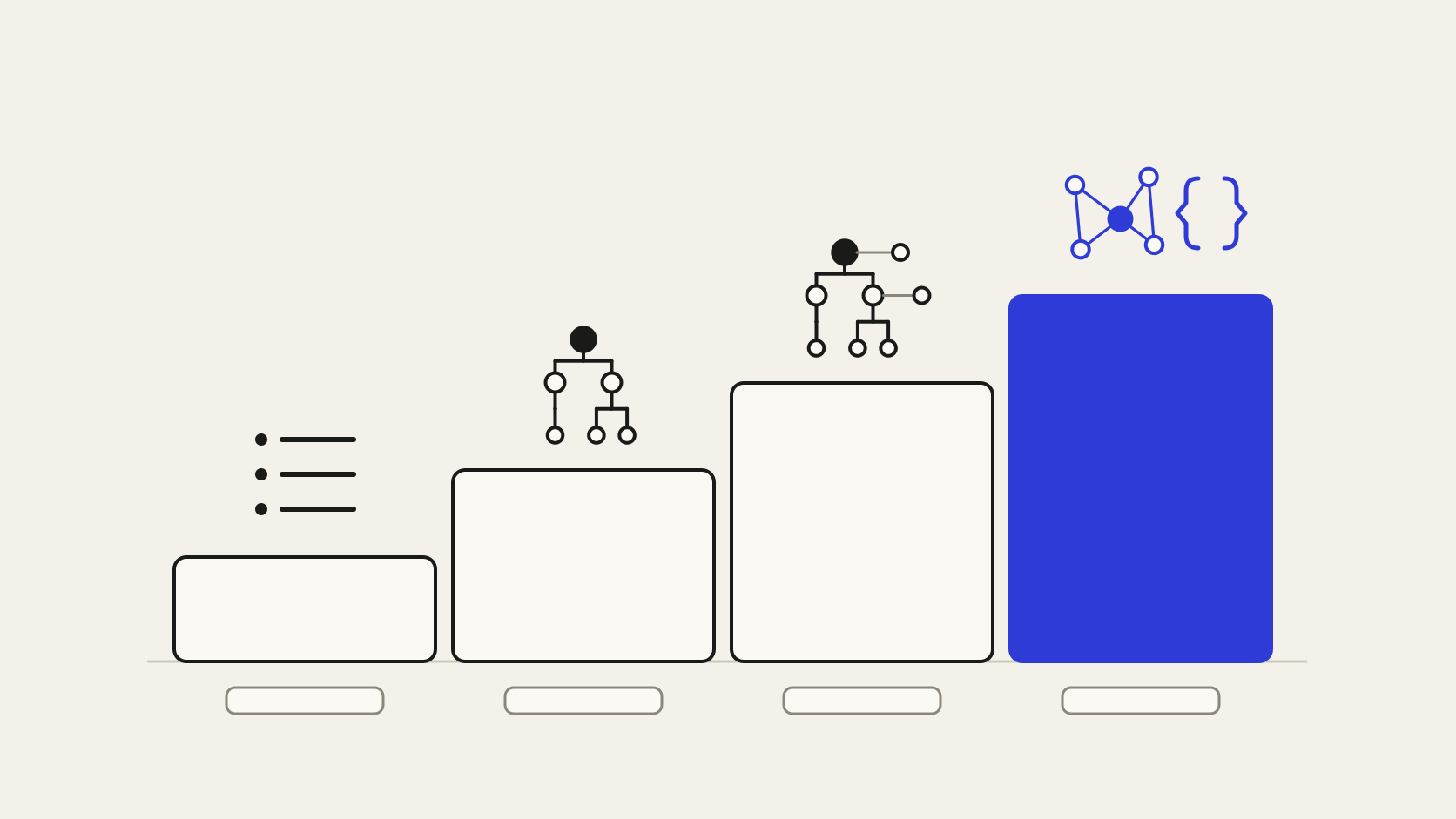
The limit appears when the question requires a relationship between branches or between systems. An agent that has to decide whether a printer ticket means a free replacement needs to know which contract covers that equipment, for which customer and until when. The tree only says that the equipment is a printer.
Without those relationships, the model receives the product category and fills the gap with the most likely continuation. The answer sounds right and applies the wrong rule. Questions that cross ERP, helpdesk and contract management call for the network of relationships that the ontology records.
The business ontology rarely starts from scratch. In the Company Brain, each taxonomy the company already maintains becomes the initial skeleton: categories become classes, items become entities in the knowledge graph and the "is a type of" relationship is preserved. The cross-branch relationships, attributes and rules are added on top of that base.
The thesaurus feeds the semantic layer, which recognises the synonyms used in questions. The cost centre tree can also reflect the permissions inherited from the source system, in which each manager sees their own team and the teams below it. The context is served to any model via MCP, and each answer points to its source.
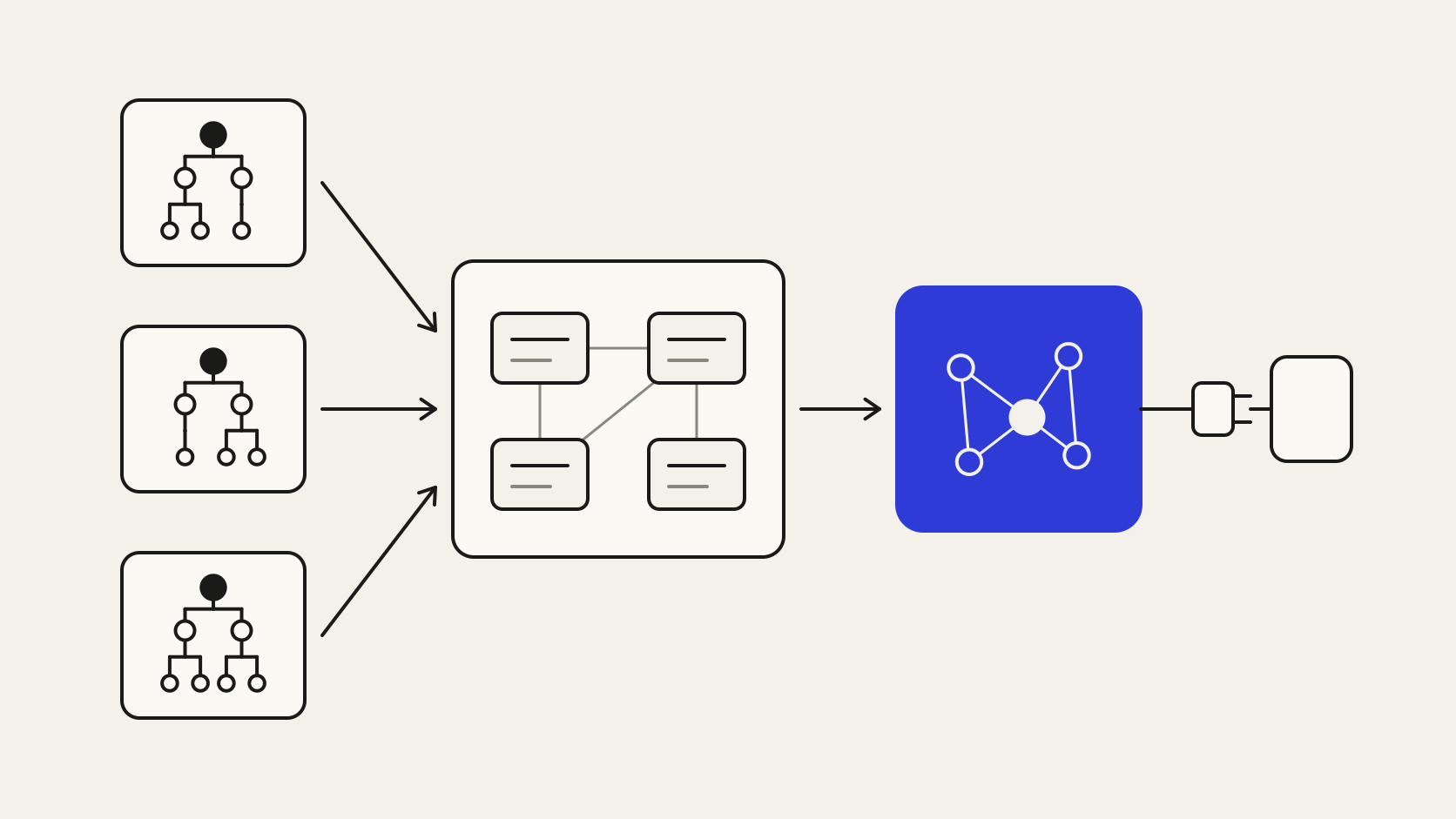
Reuse shortens deployment, because the departments validate structures they already know.
A tree maintained for years builds up problems: duplicated categories, an Other category holding half the records and different catalogues for the same product in the ERP and in the online store. Before it can serve as a base, the taxonomy needs an owner, a mapping between systems and a review of the branches nobody uses.
The practical step is to inventory the classifications the company already maintains and pick one tied to a recurring question, such as the warranty coverage of a ticket. That taxonomy, mapped to the second system and extended with its first relationships, forms the first slice of the business ontology.