Strattum's Company Brain connects a company's CRM, ERP, warehouses, documents and conversations once and delivers that context to any AI agent, over MCP or API, with each person's permissions applied before the answer. The whole platform runs in the customer's cloud, on AWS, Azure, GCP, OCI or on-premises.
Company Brain (the business's operational brain): the layer that connects a company's systems once, organises data, memory and knowledge, and delivers that context to any AI agent with each person's permissions.
AI agents get the easy question right and the one that matters wrong, because the right answer depends on information scattered across several systems: the contract in the ERP, the history in the CRM, the policy in a document, the agreed exception in a conversation. Every new AI project redoes the same integration, with another permission rule and another index. Switching models does not fix it, because the missing context is still missing.
Data Foundation: everything the company has. Connects the sources and keeps the data up to date. CRM and ERP (Salesforce, HubSpot, TOTVS, SAP), customer service (Zendesk, Intercom, Freshdesk), databases and warehouses (PostgreSQL, MongoDB, Snowflake, Databricks), documents (SharePoint, Google Drive, OneDrive, Notion, Confluence, Jira) and conversations (Slack, Outlook).
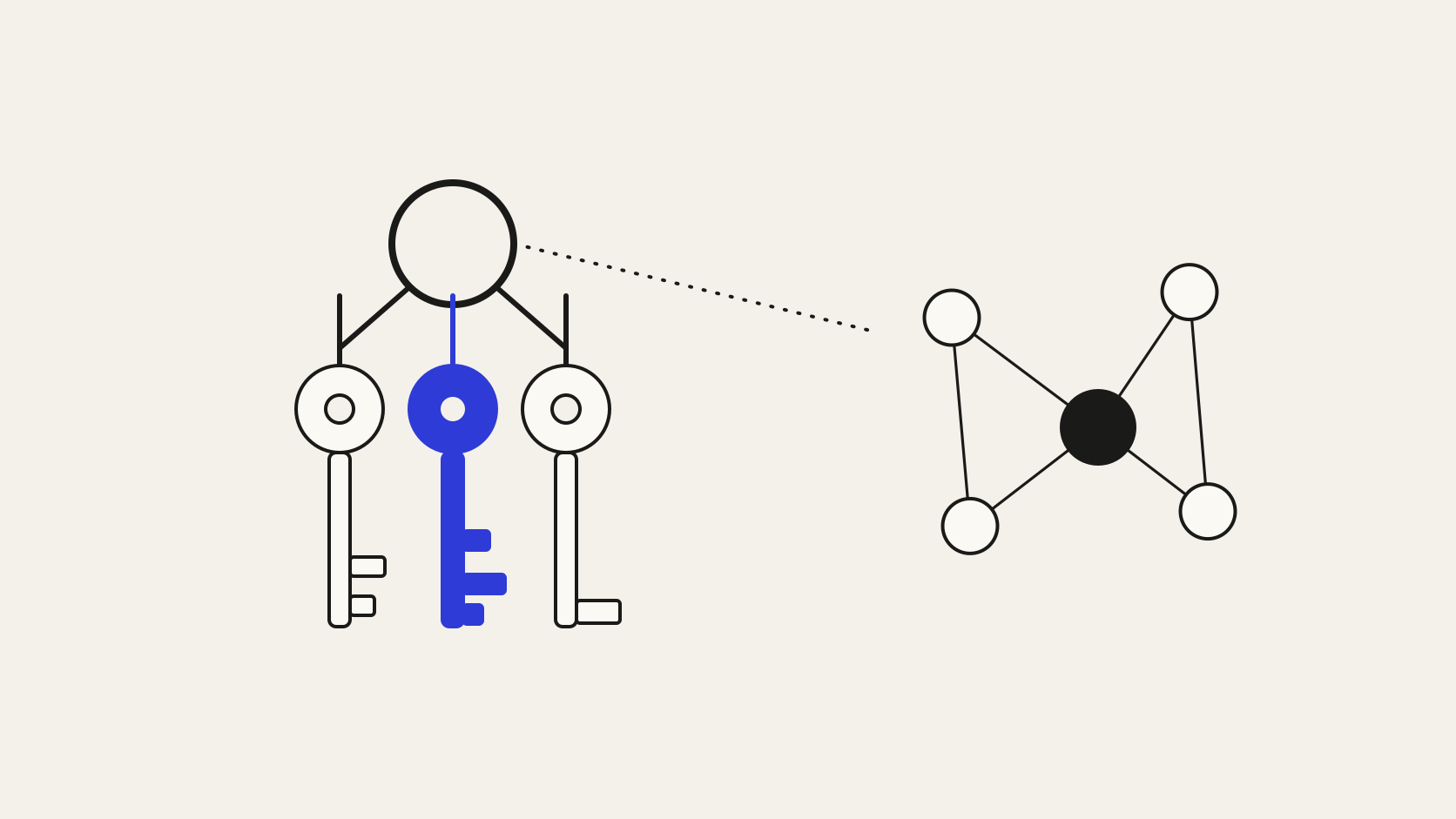
Memory Graph: how the company connects. The business ontology is written in YAML and versioned in Git, reviewed in pull requests. The Memory Worker resolves the same entities across different systems and writes customers, contracts, products, tickets and the relationships between them to a graph updated without a nightly load. Every attribute has lineage back to its source.
Knowledge: everything the company knows. Documents, decisions and runbooks come in with source, version, author and classification. Hierarchical chunking preserves each document's structure. Answers validated by the team go back into the base, and a coverage lint flags recurring questions that still have no answer and fragments that contradict each other.
The graph is exposed as three MCP tools: search_entity, get_entity_context and run_cypher. Any MCP-compatible agent can then query the same context, and internal applications use the APIs. Because the context arrives organised, the company uses smaller models for most tasks, cuts token consumption and switches models without redoing the integration.
In the Bring Your Own Cloud model, the whole platform runs in the customer's account, in the region they choose. Records, credentials and secrets, encryption keys and network access stay in the company's environment. Customer data is never used to train models. AES-256 encryption at rest and TLS 1.2 or higher in transit, MFA, RBAC and SSO over SAML or OIDC are part of the platform. The security and privacy controls are described in the Strattum Trust Center.
Strattum FDE (Forward Deployed Engineering) puts senior engineers inside the customer's operation from the start of the project. They model the business ontology with the company's team, connect the sources and structure the first use case.
Engineering, customer service, sales, marketing, people, finance, legal and supply. The same connected data feeds every team's agents, with no new integration for each project. Strattum serves companies in retail, consumer goods, manufacturing, financial services, insurance, telecommunications, logistics, healthcare and education.
It is the layer that connects a company's organisational structure, knowledge and operations and delivers that context to AI agents inside the customer's environment. The Company Brain is Strattum's private context platform.
The systems stay where they are. The Company Brain connects to them, resolves the entities they share and delivers the context to the agents.
The whole platform runs in the customer's cloud, on AWS, Azure, GCP, OCI or on-premises. Records, credentials, keys and network access stay in the company's tenant.
Any agent or application that is MCP-compatible or can call an API. The Company Brain is independent of the AI model.
Permissions are read from the source through the OAuth of the customer's tenant and the filter is applied before ranking. The agent only receives context the person asking can already see in the source system.
It depends on the number of sources and on the first use case. Strattum's FDE engineers work inside the customer's operation from the start, modelling the ontology, connecting the sources and building the first use case.