In short
A company connects its collections agent to an external model. Months later, negotiations with customers and renegotiation rules are stored on the vendor's infrastructure, in another country, under terms that legal read once. When it is time to switch models, that history stays on the old platform. Data sovereignty deals with these questions: where the data is, under which law and who decides about it. With AI, the answer depends on how context reaches the model, the role of the Company Brain, the layer that knows the company: what data exists, where it lives, how it relates and who can see what.
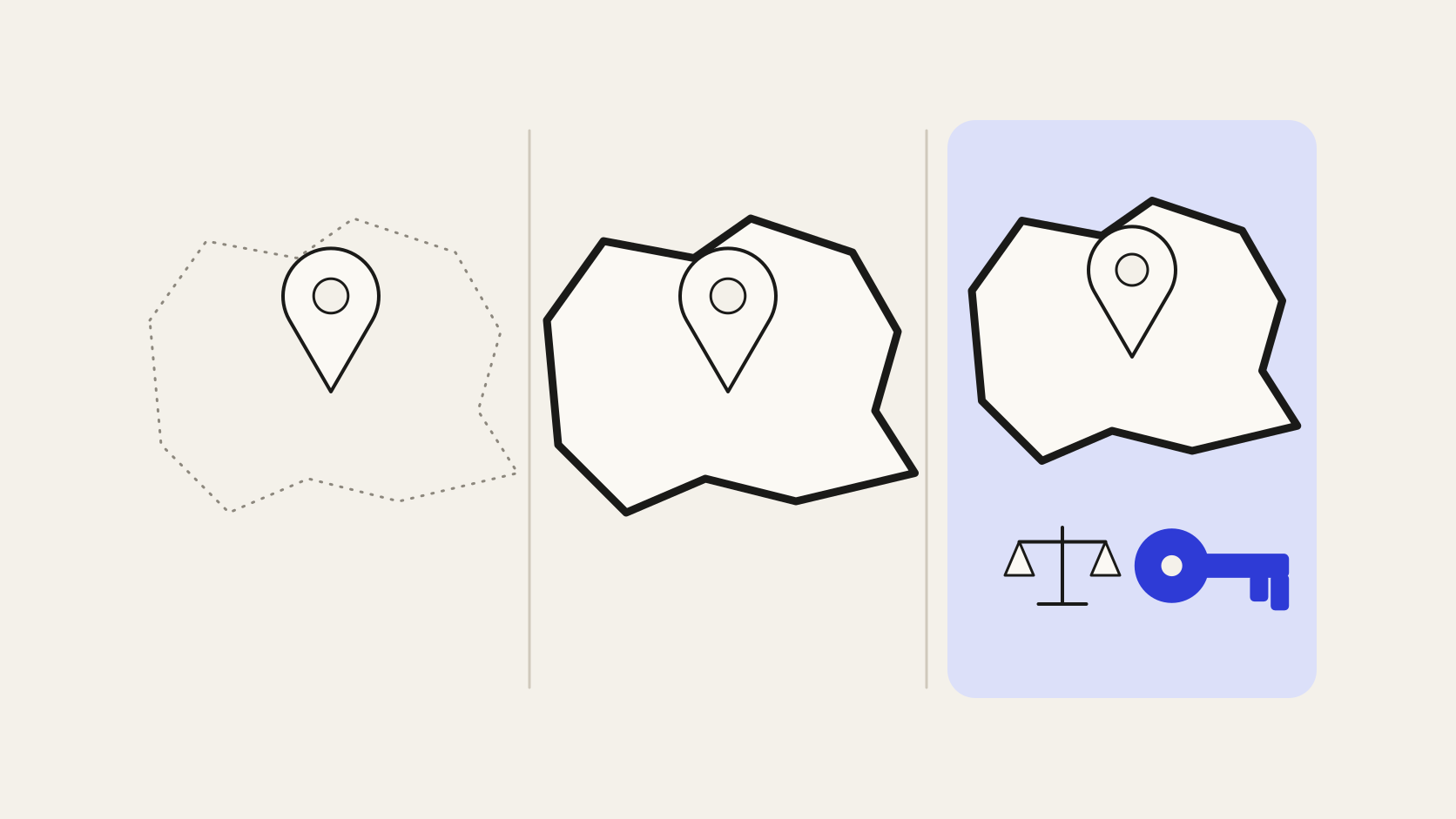
Data sovereignty is the condition in which data is subject to the applicable laws and to the decisions of those with legitimate authority over it. It has two layers:
The second layer usually weighs more in AI projects, because data stored in Brazil may sit under terms that allow retention, review by third parties or model training.
Data residency is the requirement, whether legal, contractual or internal, that data be stored in a defined geographic region.
Data localisation is the stricter version: data must be stored and processed inside the country, usually by legal mandate.
Data sovereignty covers both and adds control. A company can meet residency with its data in a local data centre and still depend on a vendor that decides on the retention, access and use of that data.
Models and agents open new routes:
Each route comes from a design decision, such as turning on memory or indexing a folder. That is why data sovereignty belongs in the design of the architecture.
Customer history, commercial rules, prices and approved exceptions describe how that company sells and decides. Competitors cannot buy this knowledge.
Organised inside a third party's tool, that asset ends up living in an environment the company does not govern. Data sovereignty protects this knowledge in two ways: the data stays out of another company's product, and the company can take it along when it changes vendors.
In the European Union, the Data Act, in application since 12 September 2025, created rules for customers to switch data processing providers, treating portability as part of control.
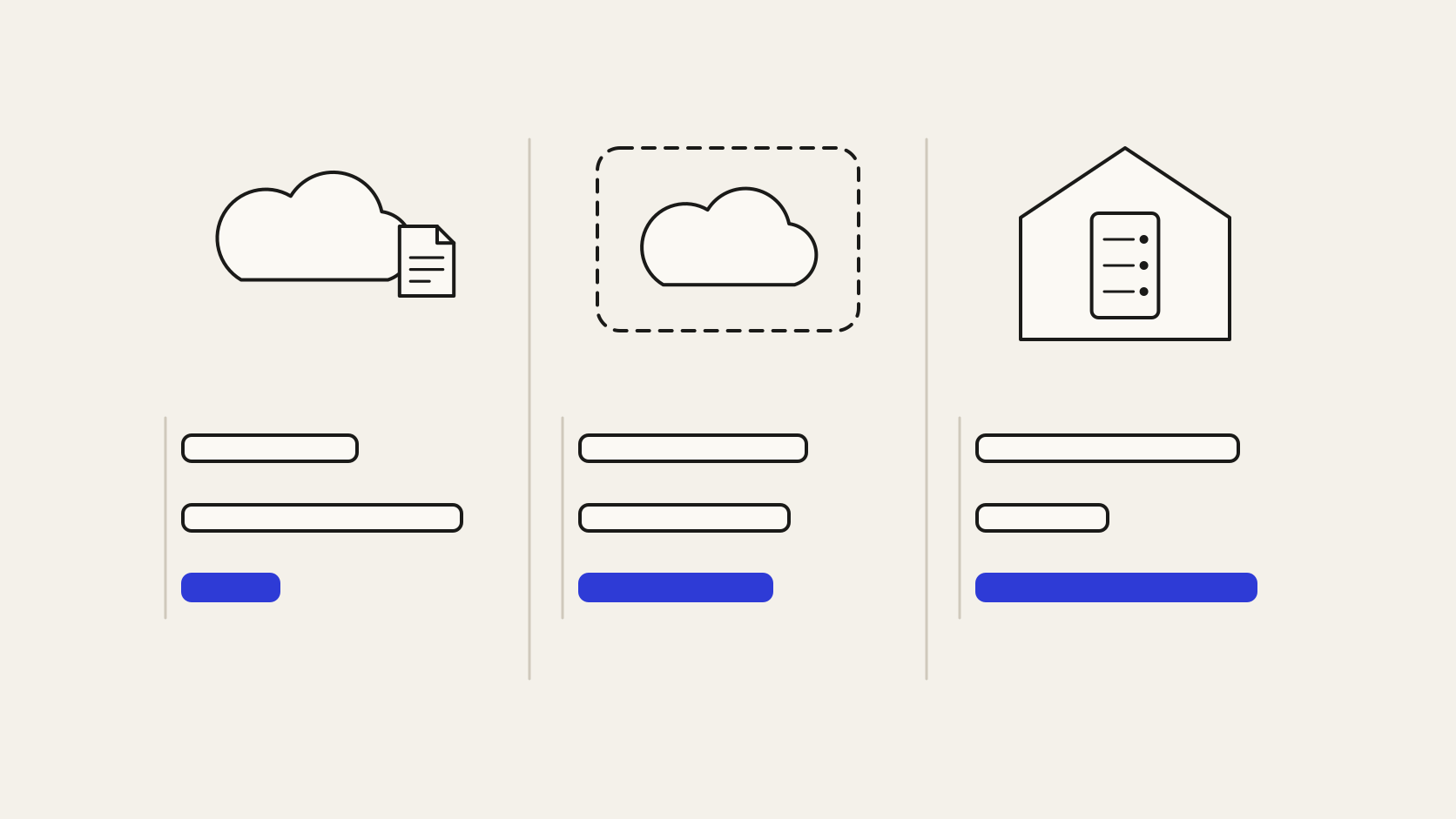
Where the model runs determines much of data sovereignty:
Many companies combine the options and choose the architecture by type of data.
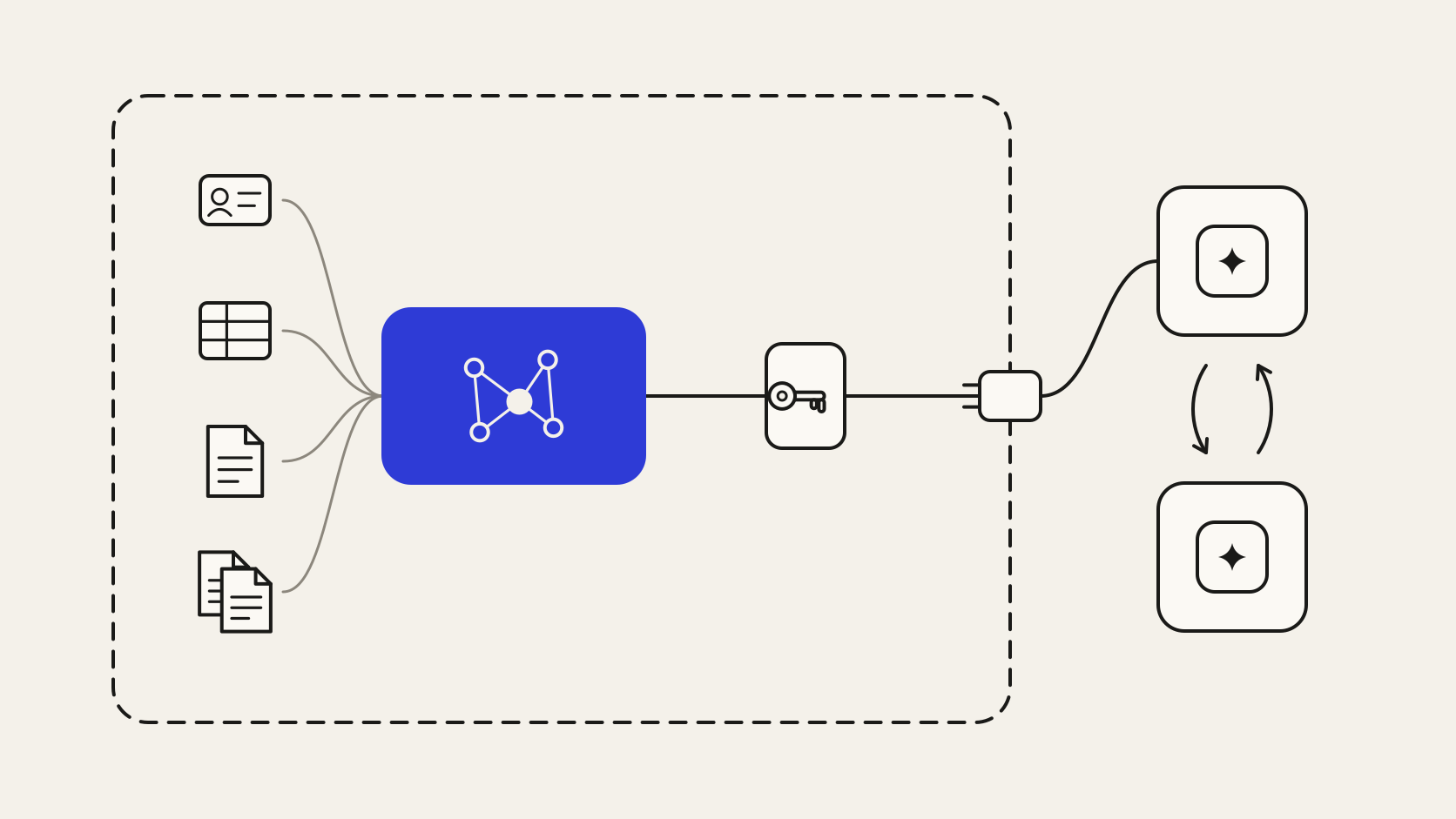
The Company Brain connects CRM, ERP, helpdesk, contracts and documents once and organises that data into a knowledge graph, a business ontology and a semantic layer. The data stays in the customer's systems and environment, with no copy of the data stores sent to the model provider.
For each question, the model receives over MCP, the open protocol that connects models to data sources, only the slice it needs, filtered by the permission inherited from the source. What leaves the environment depends on the chosen architecture: with an external service, the slice for that call leaves, under the contracted terms; with an own cloud or a local model, the slice also stays with the company.
The organised context, with entities, relationships and rules, belongs to the company. Because the model consumes it through an open protocol, switching models does not require rebuilding integrations, and every answer points to the source of each piece of information.
Architecture alone does not settle the question. A contract that allows training cancels out the care taken with the slice, and a misconfigured region sends processing to another country. Assessing terms and recording transfers is still the work of legal, security and the data protection officer. Restricting sensitive material to local models can also lower quality on complex tasks.
For each AI use in operation, the map records which data goes in, to which service, in which country it is processed, under which retention and training terms, and what it would take to switch vendors.
Flows with personal data or trade secrets and no exit plan are the first candidates for change. For them, connecting the sources to the Company Brain and choosing the model by type of data puts the decision about where context lives in the company's hands.