In short
A data engineer needs to build a returns report and finds four tables with similar names in the data warehouse: orders, orders_final, orders_new and orders_bkp. She does not know which one is kept up to date, who maintains each of them or whether any of them holds personal data. The data catalog exists to answer those questions. It is also a valuable source for AI projects and one of the starting points of the Company Brain, the layer that knows the company: what data exists, where it lives, how it connects and who may see what.
A data catalog lists the company's tables, views, reports, files and pipelines and records, for each asset, the information that lets people use it safely:
The structure follows an open standard. The W3C maintains DCAT, a vocabulary for describing datasets and services in catalogs published on the web, whose version 3 became a recommendation in 2024. Corporate catalogs apply the same logic inside the company.
The catalog was designed for people looking for the trusted table. An analyst searches for a term, reads the description, checks the date of the last refresh and, when in doubt, writes to the owner. The judgement on whether to use that asset stays with her.
That origin explains the format. The catalog describes datasets in text and in structured fields, for human reading and for search. Part of the content is collected automatically by connectors that read schemas, queries and execution logs. The other part, such as descriptions and business definitions, is written by people, and that is the part that ages fastest.
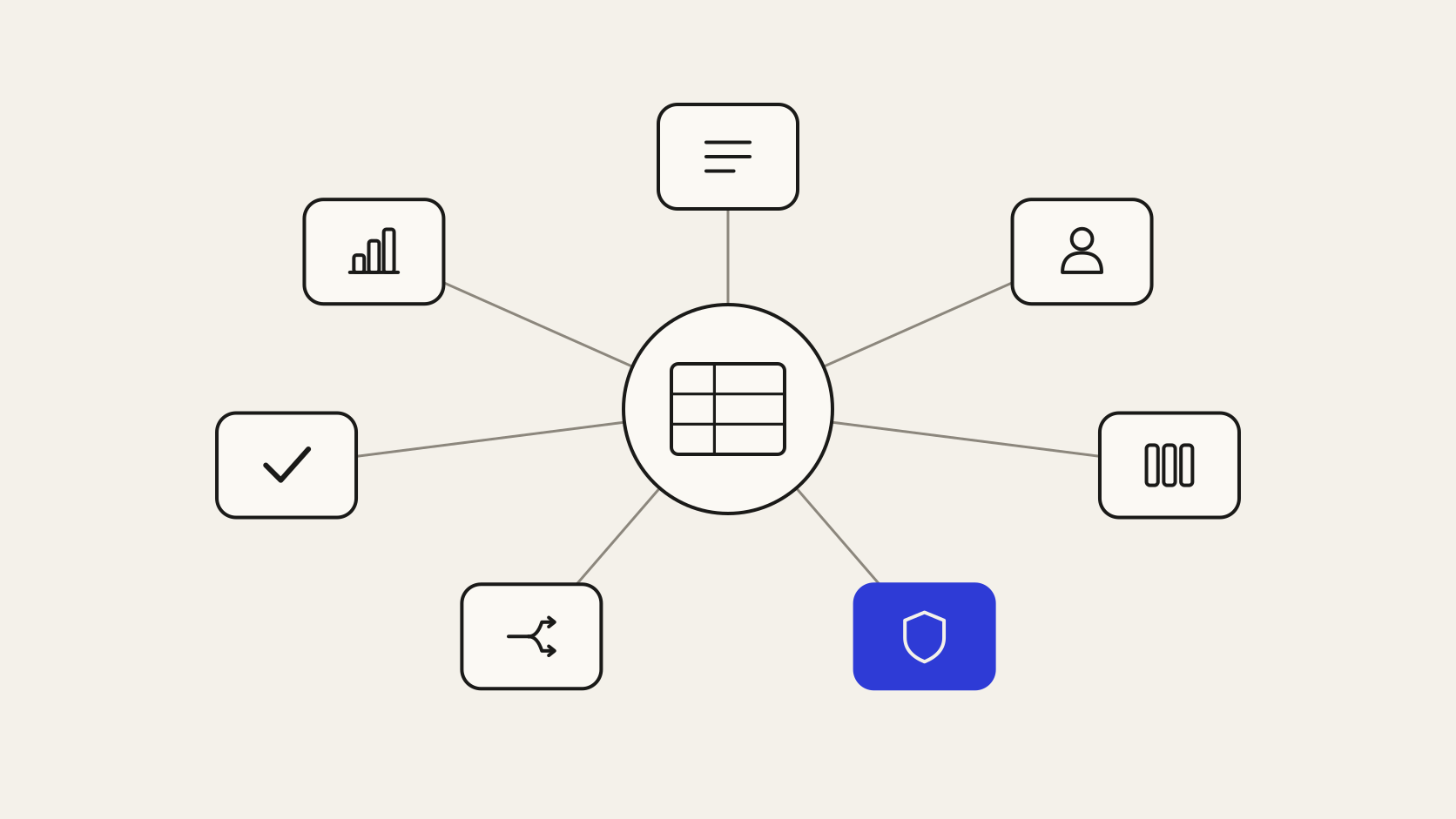
Part of what the catalog records is useful to AI agents without any adaptation. The owner shows who to turn to when an answer looks wrong. The sensitivity classification flags which columns need care before they reach a model. The glossary definitions guide how business terms are interpreted, and certification shows which of the four orders tables to use.
The catalog describes tables. An agent answering whether a customer's order was delivered has to work at the record level. To serve agents, the data catalog has to be complemented with four elements:
Catalog access policies usually work at the table level and define who can request access to a dataset. The agent needs a filter applied to every query, on behalf of whoever asked, with the same slice that person has in the source system.
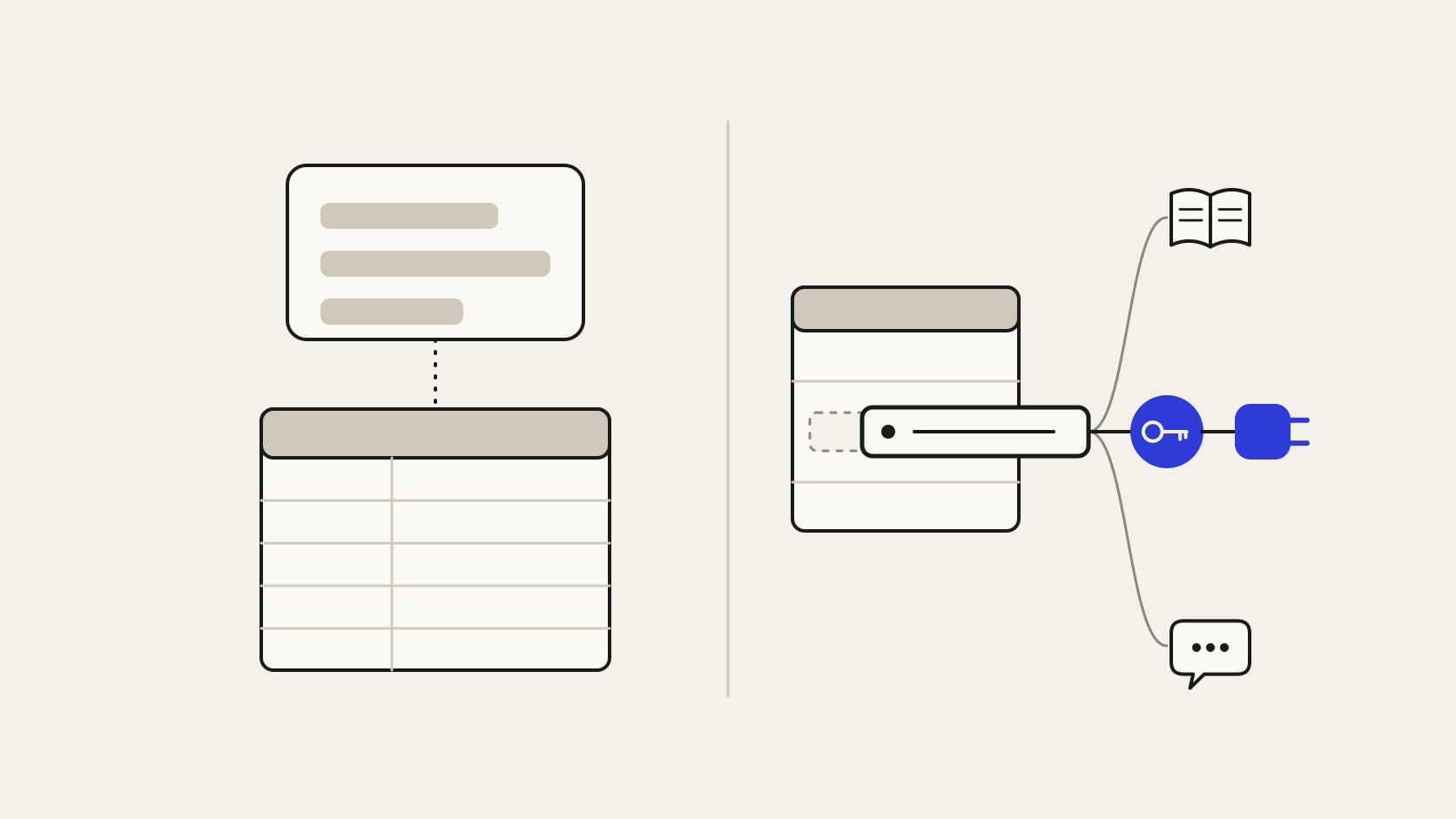
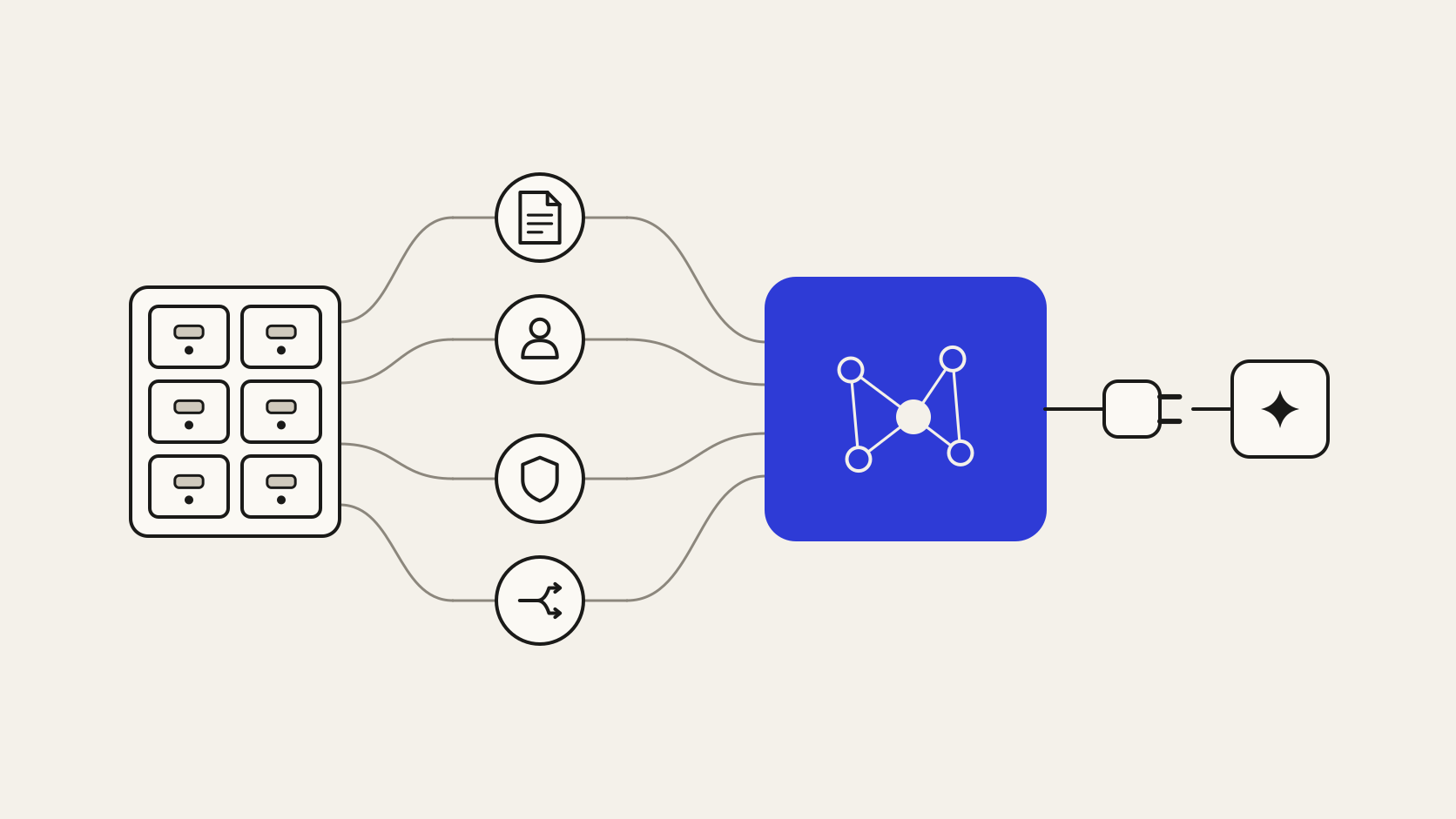
A company that already maintains a data catalog has part of the work done. The Company Brain imports descriptions, owners, classifications and glossary terms and uses them as a starting point. The glossary feeds the business ontology. Lineage strengthens the traceability of each answer. Classification complements the access rules, with permissions inherited from the source system.
From there, the knowledge graph links records across systems, the semantic layer translates the question into the right query and the slice is served to the model via MCP. The AI project starts from what the data team has already documented, and the first use case reaches production sooner.
When the description says the table is refreshed every day and the load process stopped months ago, an attentive analyst notices it from the date of the last record. An agent that consumes that metadata repeats it with the authority of an official source, and the error starts circulating in answers that cite the data catalog as their origin.
That is why reusing the catalog requires metadata with an owner and a review date, automatic collection of whatever can be collected, such as schema, lineage and usage, and human review of the business definitions.
The first step is to gather the questions of the first AI use case and list the tables and terms they touch. Next, check in the data catalog whether each asset has an owner, a current definition and a classification. The gaps show the work that comes first, and what is complete goes into the Company Brain as a foundation.