In short
A company with three AI projects under way usually has three integrations with the same CRM. The customer service assistant, the collections agent and the board's question dashboard were built by different teams, each with its own filters, its own access rules and its own hand-assembled text for the model. When the product catalogue changes, the three integrations break in different weeks. The context layer is the piece of architecture that avoids this repetition. At Strattum, it is called the Company Brain, the layer that knows the company: which data exists, where it lives, how it connects and who can see what.
A company's data lives in silos. Orders and invoices are in the ERP, opportunities in the CRM, tickets in the helpdesk and contracts in a management tool. Each system holds little about the records in the others.
Without a common base, every AI project connects the sources, resolves the differences between records, writes the access rules and assembles the context the model receives. That context is usually put together by hand, by someone who picks which columns go into the prompt.
By the third project, the same business rule exists in three versions, and every change at the source requires three fixes.
A context layer is the intermediate layer that organises what AI models receive about the company. It queries the source systems, which remain the source of the data. Five functions define it:
Each function depends on a technical component:
In practice, the question enters through the semantic layer, which interprets the terms through the ontology and walks the graph to the records. Permissions filter the result before it goes out. MCP handles delivery, and the protocol specification describes resources, tools and prompts as what a server offers to AI applications.
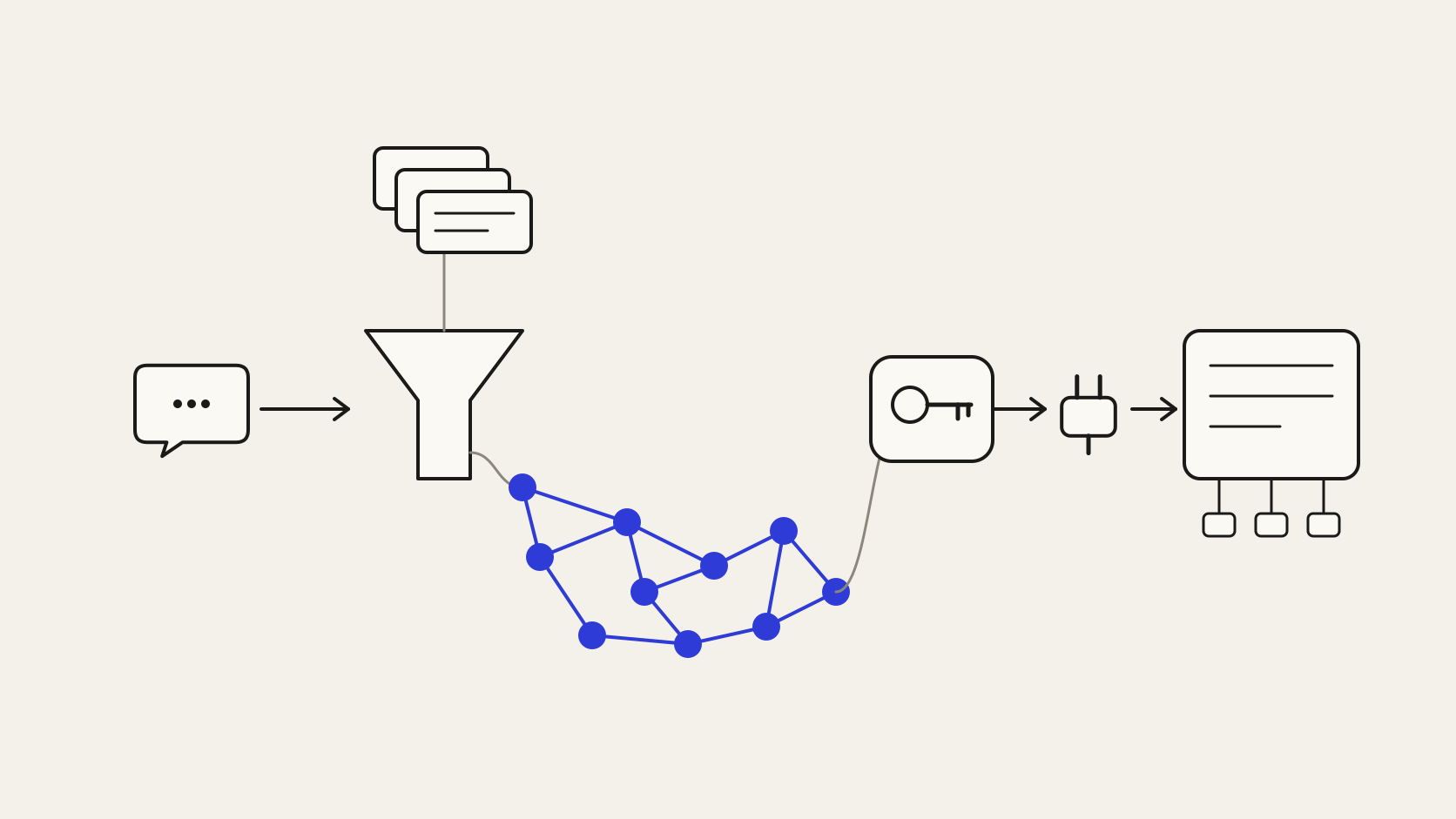
The market tends to start with the agent, because it demos well in a meeting, and the problem shows up when it acts on incomplete data. A collections agent that cannot see the helpdesk sends the dunning sequence to a client who opened a ticket disputing that same invoice.
The order that reaches production starts with the context layer. With the sources connected and the relationships resolved, the collections agent receives the invoice already linked to the open ticket. The next agent consumes the same layer and adds only the sources that are missing.
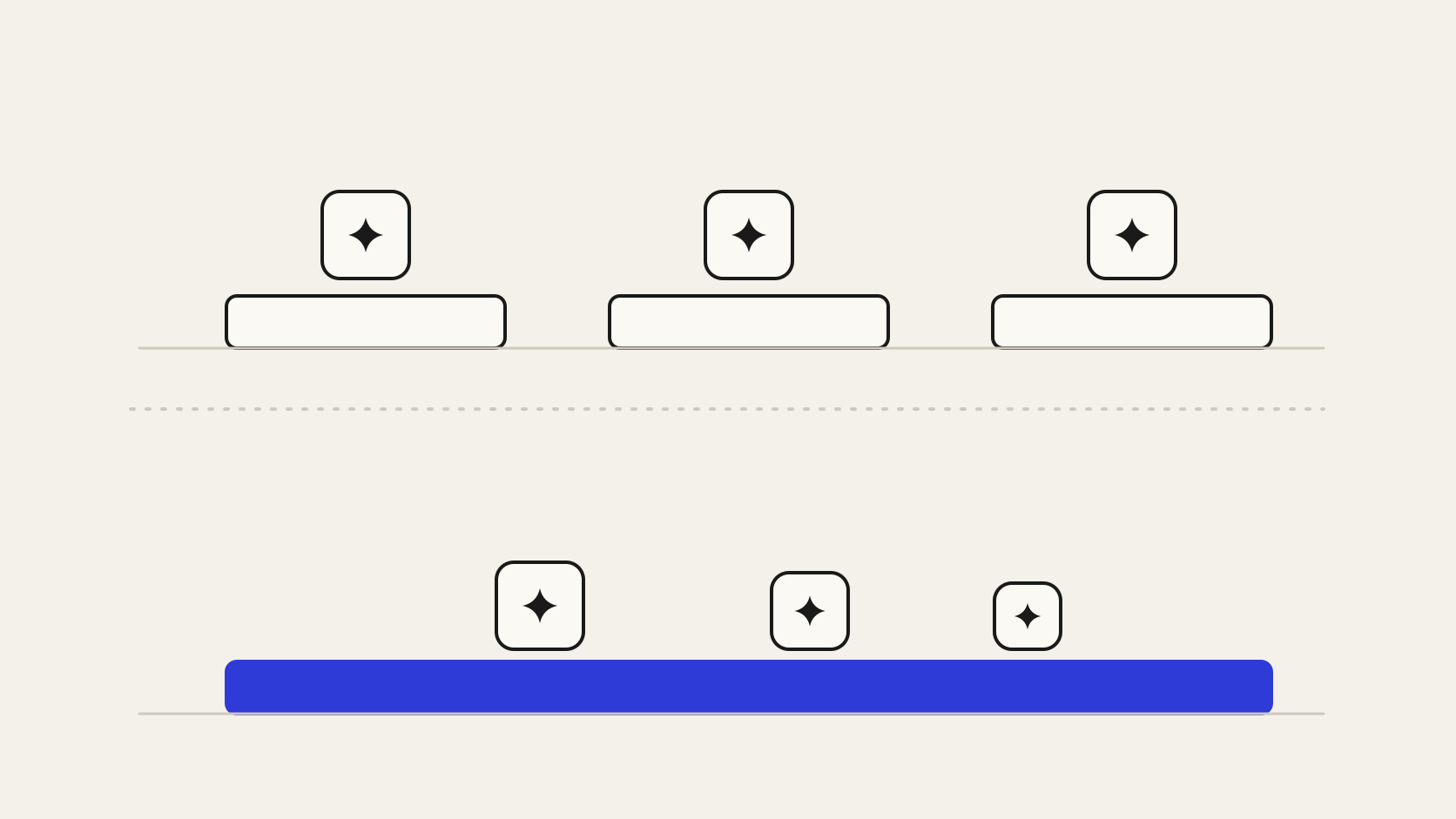
The first effect is on tokens. Without a context layer, projects make up for the lack of precision by sending whole tables or long documents to the model. With the slice resolved, the prompt carries only the records and definitions the question requires.
The second effect is on model choice. When context arrives organised, a good share of tasks runs on lower-cost models, because finding and linking the data was done before the call. Switching models also does not require rebuilding the integration.
The third effect is on reused integration. The second project starts from the sources connected, the entities resolved and the permissions already applied by the first.
A data warehouse consolidates historical data in tables modelled for reporting and BI, and handles aggregations over closed periods well. A data lake stores large volumes of raw data in its original format, for later processing. Standalone RAG indexes the documents of one repository for one project and retrieves passages similar to the question.
The context layer can use all three as sources. It adds the link between records in different systems, the agreed meaning of each term, per-person permissions at question time and delivery to agents over a protocol.
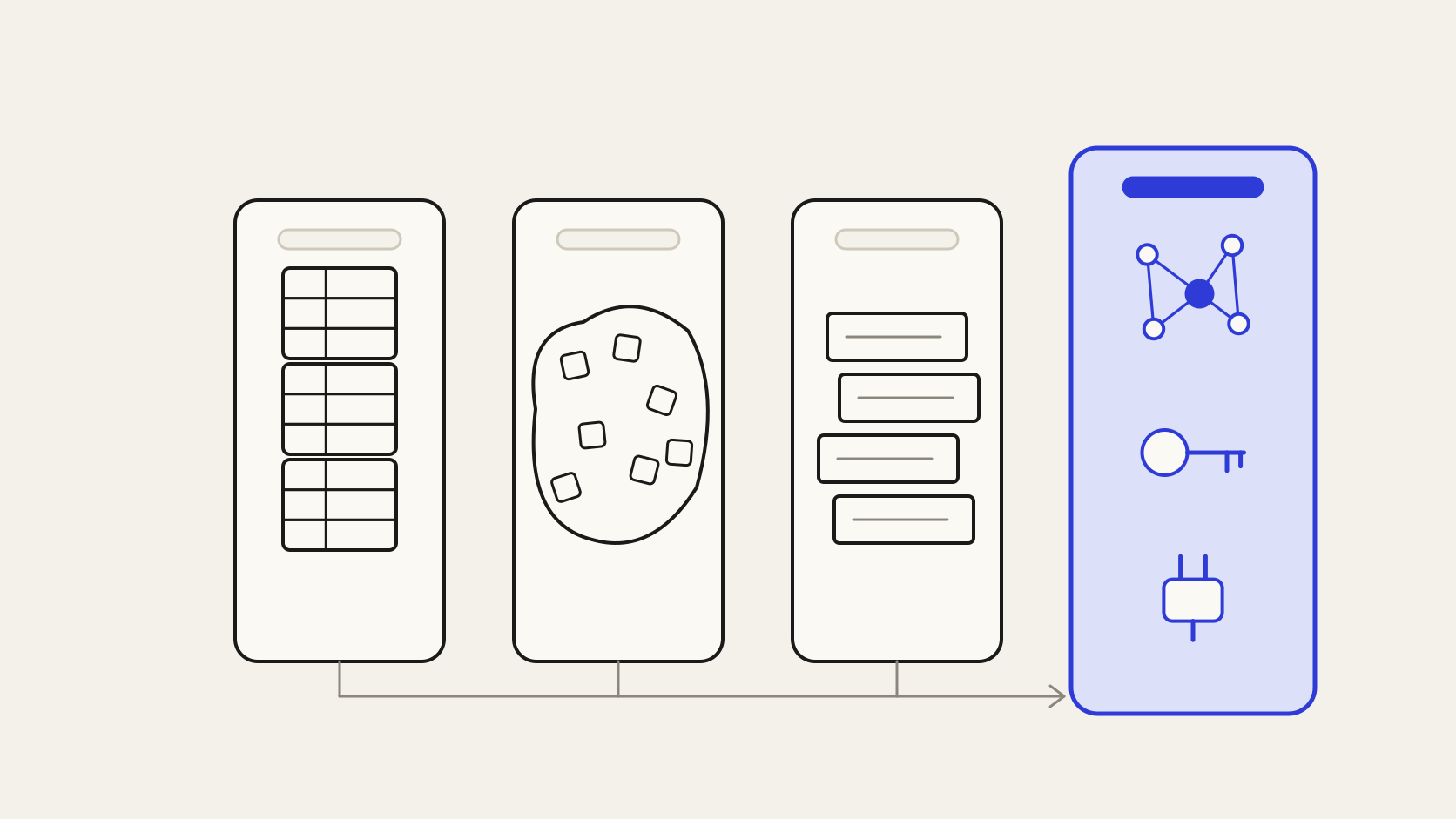
Company Brain is the name Strattum gives to the context layer built for a specific company, with that company's entities, terms and permissions. Two companies with the same ERP have different brains, because invoiced order follows its own rules in each of them.
The data stays in the client's systems and environment. At question time, the model receives the slice that the asker's permissions allow, under the terms of the contract with the provider.
The layer reduces wrong answers caused by missing context. Answer quality still depends on the quality of the data at the source.