In short
For years, a product manager has kept excerpts from user interviews, roadmap decisions and market references in a note-taking tool. When she moves to another company, that collection goes with her, and the team finds out that the reasoning behind three important decisions lived only there. The method she used has a name: second brain. It works well for one person. The company needs a different structure, the Company Brain, the layer that knows the company: which data exists, where it lives, how it connects and who can see what.
The term was popularised by Tiago Forte with the book Building a Second Brain, released in 2022. The book's official page describes the method as a trusted place outside your head to gather and organise your most important ideas.
The method has four steps: capture what is worth keeping, organise it by projects and areas of responsibility, distil the essence of each note and express that material in new work. The notes live in note-taking tools, organised in folders and connected by links the person creates.
The method serves three uses well: individual productivity, because the person finds in seconds what they read months ago; personal memory, recorded outside what they happen to remember; and creation, because a proposal starts from notes that are already distilled.
The Company Brain is the context layer built for a specific company. It connects CRM, ERP, helpdesk, databases and documents and organises that data with three technical components.
This context is served to AI models and agents over MCP, the open protocol that connects AI applications to data sources. The data stays in the source systems.
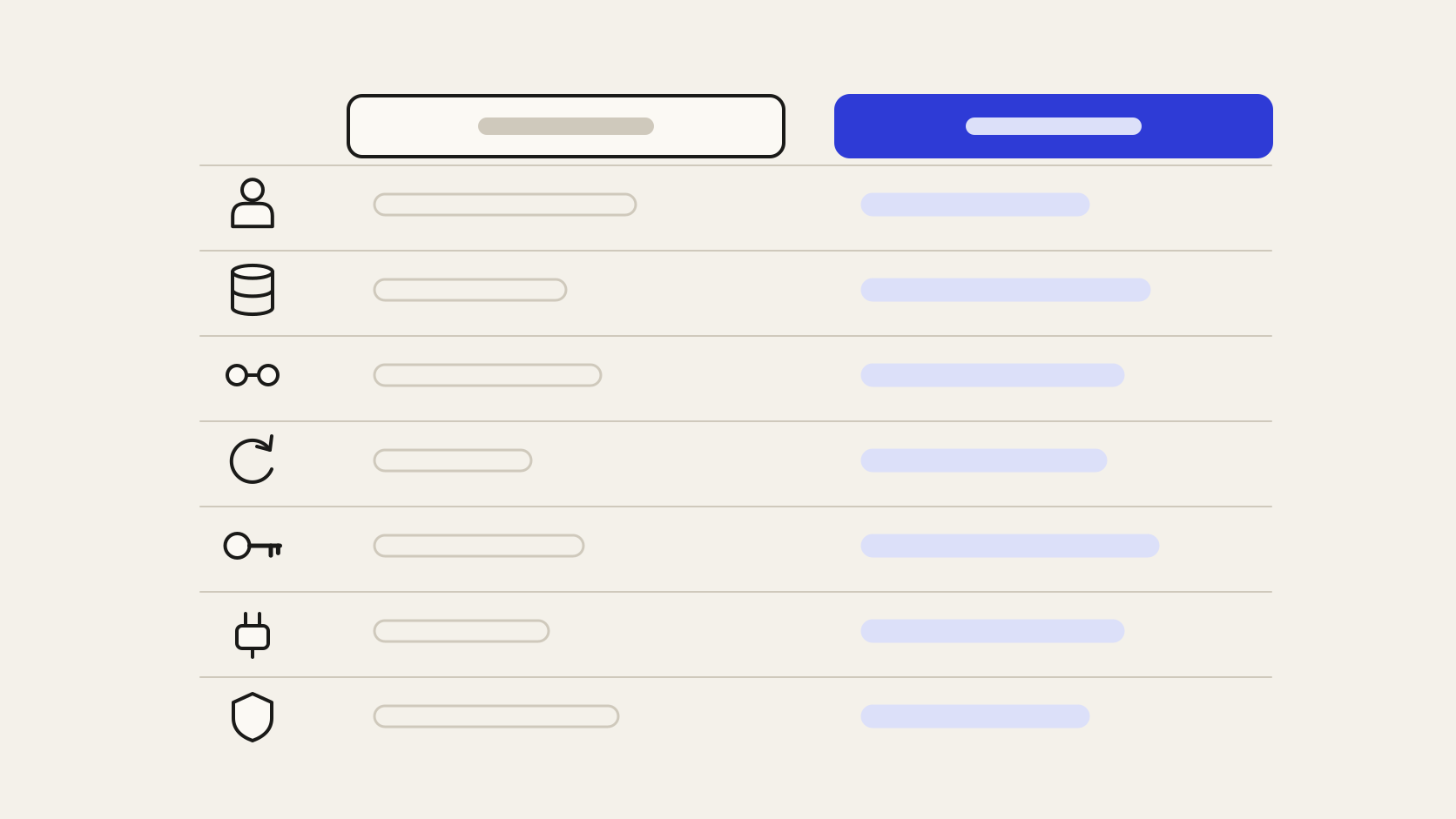
The two concepts solve different problems, and the comparison becomes clear on seven axes:
Many companies try to scale the method by building a collective second brain in a wiki or a shared note-taking tool.
The first limit is the static document. A page with commercial terms by segment was updated in March. In June, the discount table changed in the ERP, and the page stayed the same. An agent that queries the wiki answers with the old rule, citing a source that looks official.
The second limit is the lack of a link to live data. A strategic client's page describes the account's history and knows nothing about the overdue invoice in the ERP or the critical ticket opened yesterday in the helpdesk. Links between pages depend on someone remembering to create them.
The third limit is permissions. Wikis usually control access by space or by whole page. A salesperson who should see only their own accounts gets the entire sales space, or no access at all.
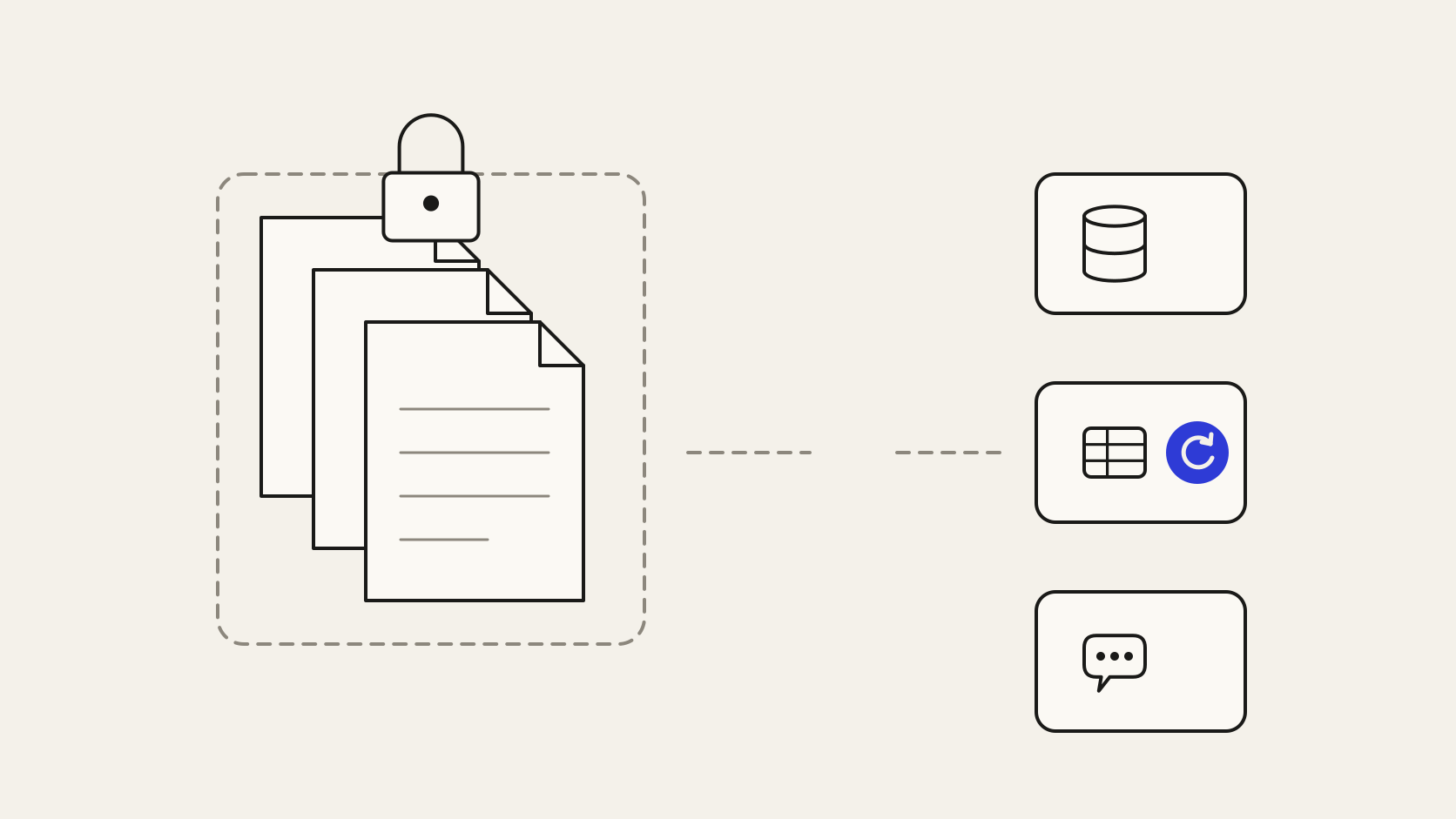
Meeting notes, decision records and tacit knowledge hold the why behind things, and systems of record rarely keep that. The ERP shows that a client has two-step order approval. The implementation engineer's note explains that the second step exists because that client's internal audit requires it.
This material can become a source for the Company Brain when it moves from the personal tool to a shared company repository, with an owner, a date and readable permissions. From then on, the graph links the note to the client, the contract and the related tickets, and the semantic layer finds it when someone asks about that approval.
Private notes stay private. Only what the person or the team decides to publish to a company source enters the company layer.
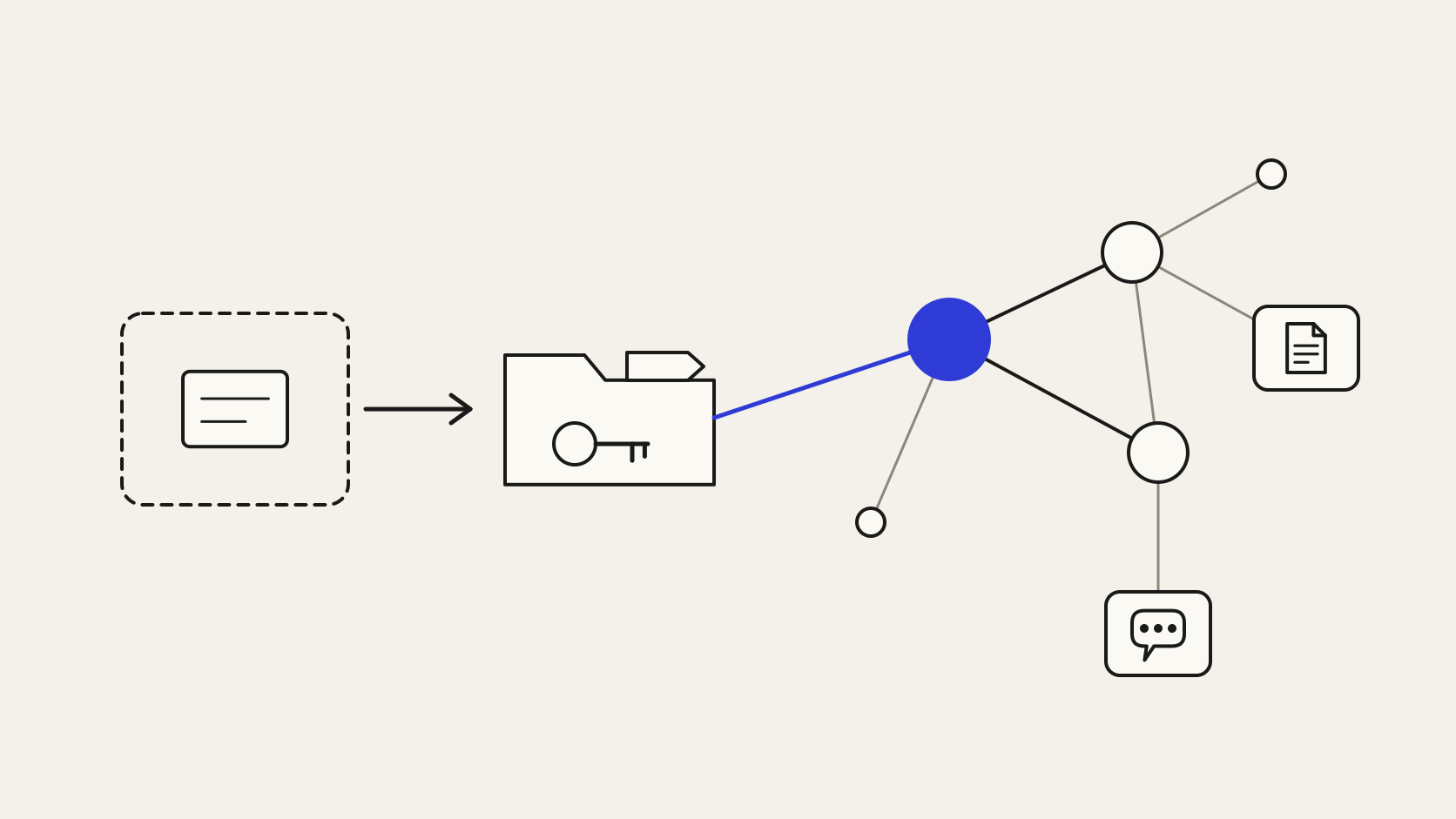
Permissions follow the rule of the source repository. Minutes from a pricing committee published in a space restricted to sales leadership reach, through AI, only the people who already have access to that space.
Every answer points to the document, the author and the date the information came from. When the engineer leaves the company, the explanation of the two-step approval stays linked to the client, with authorship recorded.
The first step is to choose a process where the reasoning behind decisions is often lost, such as client implementation or price reviews. Then map where those decisions are: personal notes, loose minutes, comments on tickets. With a shared repository defined, with an owner and permissions, those notes enter the Company Brain alongside CRM and helpdesk, and questions about that process reach both the record and the explanation at the same time.