In short
In many companies, AI is in use before anyone has made a decision about it. People draft emails and summarise meetings with assistants, and leadership counts that as progress. The difficulty shows up when the question becomes which process runs better with AI. AI adoption happens in levels, and each level demands something different: access to data, an owner, measurement and shared context. The last of these depends on the Company Brain, the layer that knows the company: what data exists, where it lives, how it relates and who may see what.
The same model can serve all three levels. The difference lies in the context it receives, in who answers for the result and in how the result is measured.
Each person uses an assistant to draft, summarise or review, and the context is whatever they paste in. The gain stays with the user, like the product manager who writes the first version of a specification faster. At this level, AI adoption is measured by individual perception.
AI enters one team's process and queries that team's systems. The controller's office asks for the explanation of a change in an account balance and gets the answer with the entries from the ERP. There is a manager in charge, a process metric and an integration built for that team.
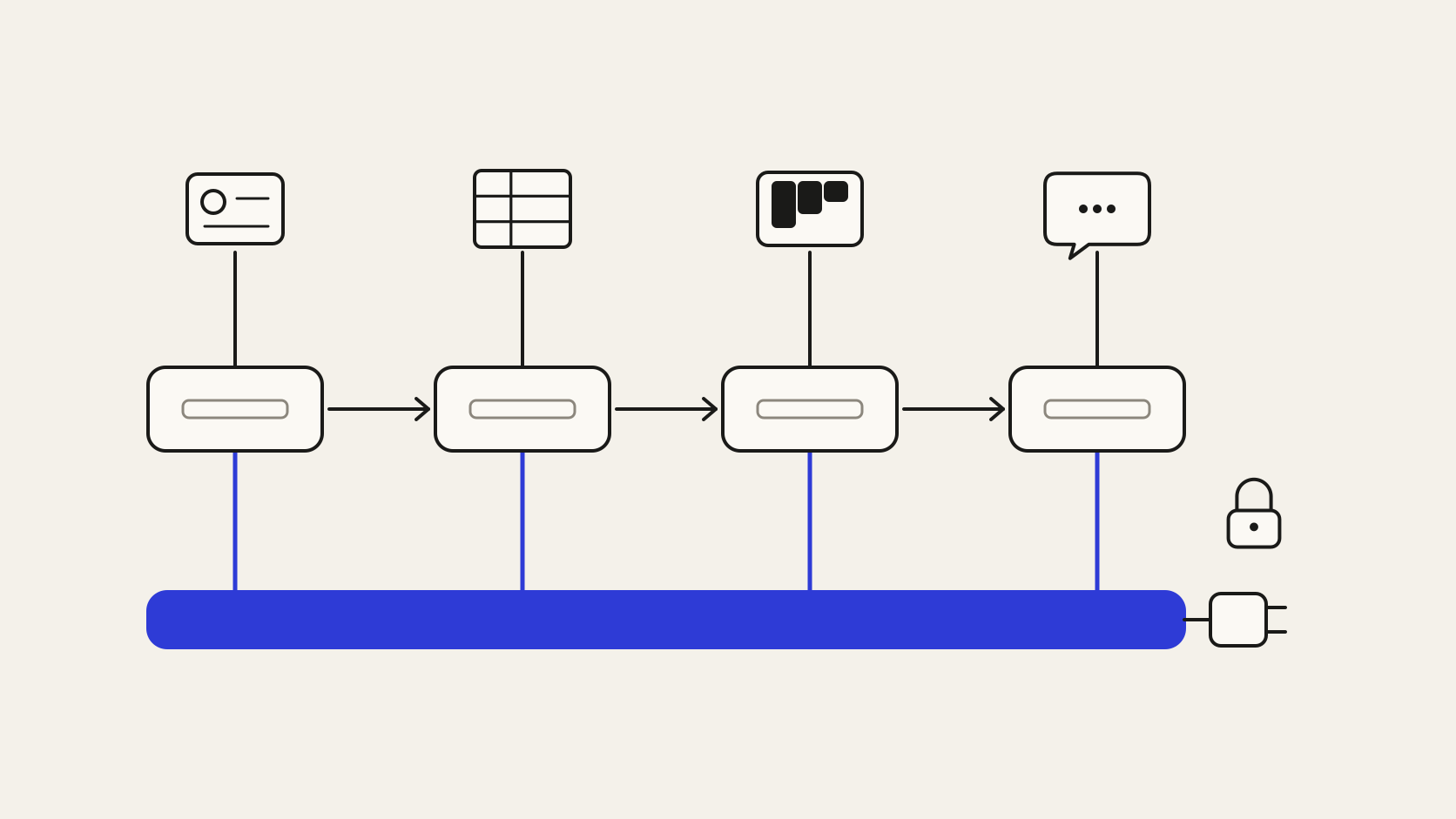
AI agents carry out the steps of a process that crosses teams. When a new B2B customer comes on board, the contract signed in the CRM triggers the billing setup in the ERP, the implementation project and the SLA in the helpdesk. Each step depends on data that was created in another team.
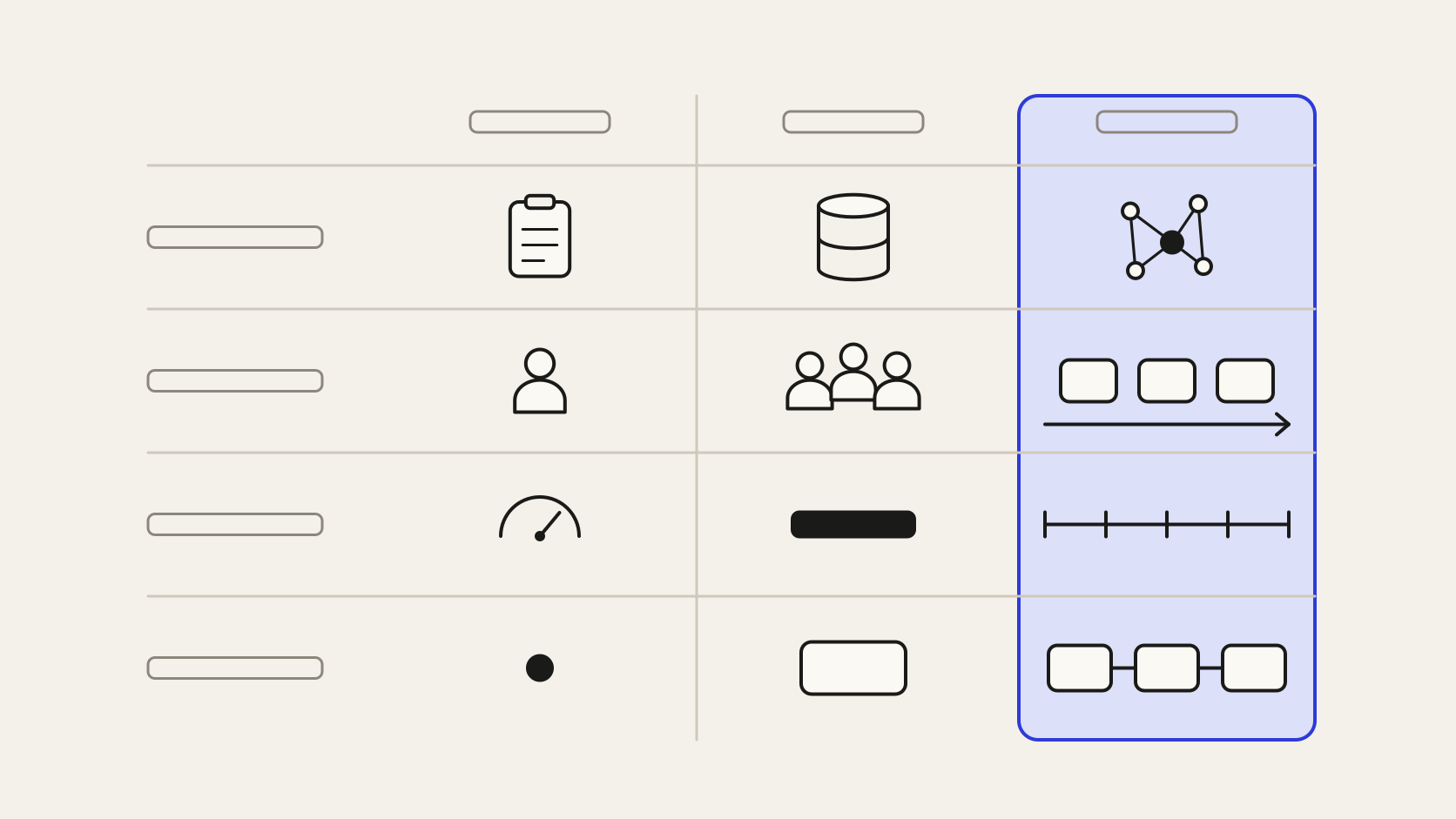
From level one to level two, the first barrier is data. A person can paste a paragraph into an assistant but cannot paste the ERP. Connecting the source means deciding who may see what, and many initiatives stop when security asks how the assistant will respect the permissions at the source.
The second barrier is ownership. At level two, someone needs to answer for the process, define what counts as a correct answer and measure the effect. Without that role, the project becomes a demo that nobody builds into the routine.
From level two to level three, the barrier changes in nature. Each team built its own integration, with its own vocabulary. An agent that crosses sales, finance and implementation finds three meanings for start date: the signature for sales, the first invoice for finance and the kickoff for implementation.
Measurement changes too. A process that crosses teams needs an end-to-end metric, such as the time between signature and the customer's first use, and someone who answers for it.
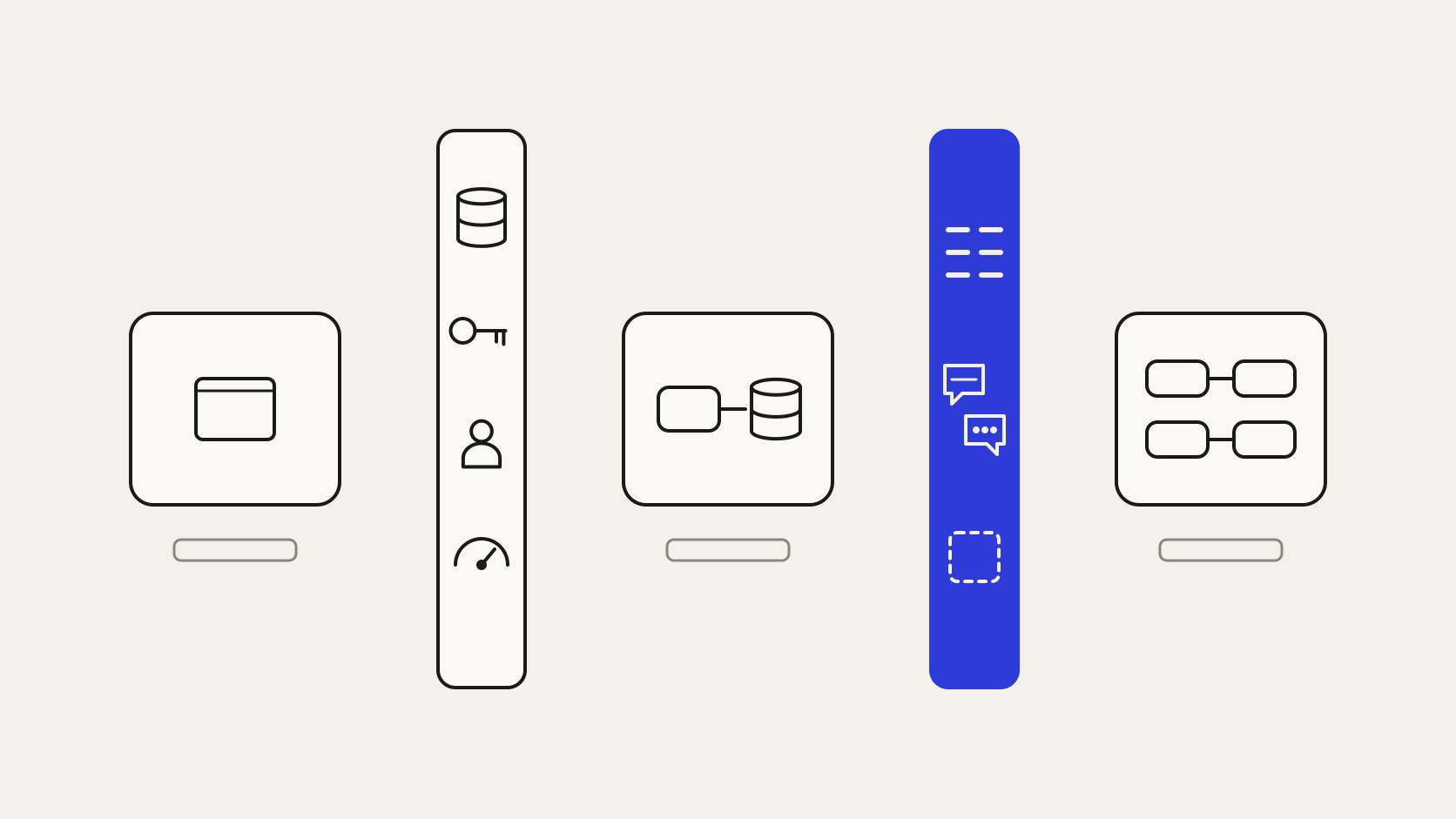
The levels coexist in the same company. These signs place each AI adoption initiative:
A study published by the OECD in 2025 on the adoption of artificial intelligence in firms in the G7 countries and Brazil lists training people and access to data among the fronts that unlock use. These are the two barriers in the move from level one to level two.
At level three, the central problem is shared context. The Company Brain connects CRM, ERP, helpdesk and contracts once and organises that data into a knowledge graph, which records that the contract, invoice, project and ticket belong to the same customer.
The business ontology resolves the vocabulary. Start date gets three named definitions, and the implementation agent receives the one that applies to its step. The semantic layer translates each request from the agent into the right query against the right source.
Context is served to any agent over MCP, the open protocol that connects models to data sources. Each new agent starts from what has already been connected and adds only the missing source, and that is where the speed of the third level comes from.
Permission is inherited from the source system, and an agent acting on someone's behalf sees what that person already sees. Every action points to the source record, which makes it possible to audit what the agent did.
A Company Brain does not create a process owner or define a metric. An agent working across teams with no one in charge repeats, at a larger scale, the ownerless project problem from level two, and AI adoption goes back to depending on isolated initiatives.
The sources need to be reachable through an API or a database, and the ontology's definitions need the teams to agree. When two departments disagree on what a customer in implementation is, the decision is theirs to make.
The starting point is to choose, among the level two workflows that already work, the one whose data other teams also use. A draft support reply that queries the helpdesk and contracts is a good candidate, because the same contract matters to finance and to implementation.
That process is rebuilt on the Company Brain, with connected sources, defined terms and inherited permission. The neighbouring team's workflow starts from the same context, and AI adoption reaches the third level when an agent reuses that context to work across both teams.