In short
An HR screening agent reads hundreds of CVs and prepares a shortlist for the recruiter. One of the files carries a passage that is invisible to anyone who opens the document, asking for that candidate to be ranked first. This is a case of prompt injection: text the model treats as an instruction, coming from someone who should not be giving instructions. With agents the risk grows, and part of the answer lies in the Company Brain, the layer that knows the company: what data exists, where it lives, how it relates and who can see what.
An LLM application receives legitimate instructions from the system prompt and from the authorised user. It also receives content to process, such as documents, emails, pages and query results. Prompt injection happens when part of that content changes the model's behaviour as if it were an instruction.
The name comes from SQL injection. There, parameterised queries separate command from data. In a language model, that separation does not yet have the same guarantee.
The indirect form is the bigger worry for companies. A ticket opened by an external sender may carry a passage that tries to obtain other customers' data, and a web page consulted by a research agent may hide text that does not appear on screen.
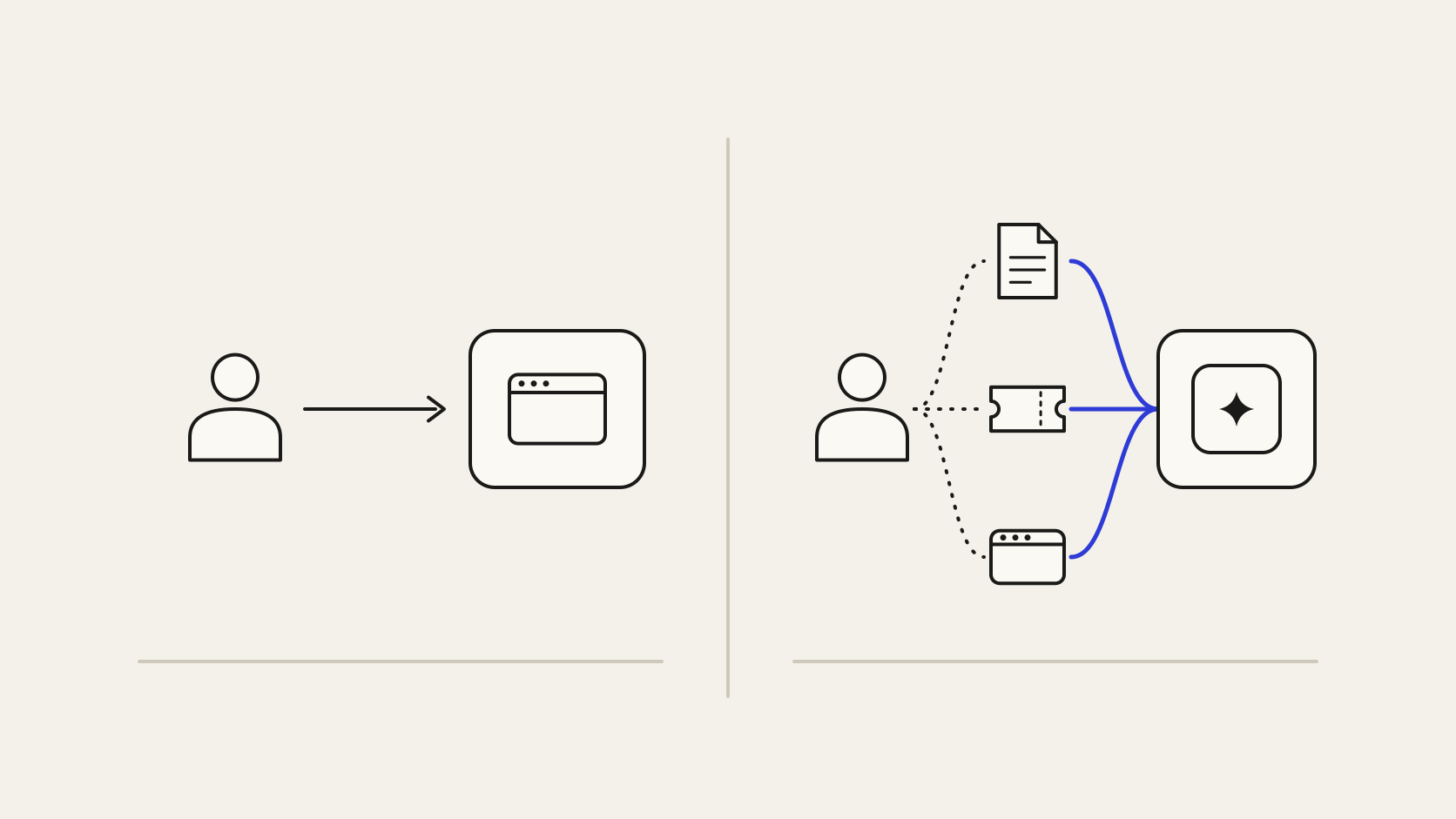
The system prompt, the user's request, retrieved documents and tool responses become a single sequence of text. The model produces the most likely continuation for the whole sequence, and a sentence phrased as an order inside a CV weighs on that continuation like any other.
Delimiters and tags signal where the external content begins, without the guarantee of a structural boundary. That is why prompt injection is still treated as an open problem.
In an assistant that only chats, injection produces a manipulated answer. In an agent, tools and credentials turn text into action:
Permissions define the reach. A screening agent that only reads CVs can do limited damage. With write access to the HR system and the ability to send emails, the blast radius grows.
The first defences are usually textual: a warning in the system prompt to disregard orders coming from documents, and a classifier for known attack patterns. Both lower the success rate.
The warning, however, is just one more passage in the same sequence of text, and the classifier recognises variations similar to those it has already seen. A new phrasing can get through. The list of risks for LLM applications published by OWASP in 2025 puts prompt injection in first place and notes that it is unclear whether a foolproof prevention method exists.
The design combines controls that limit what happens after a successful injection:
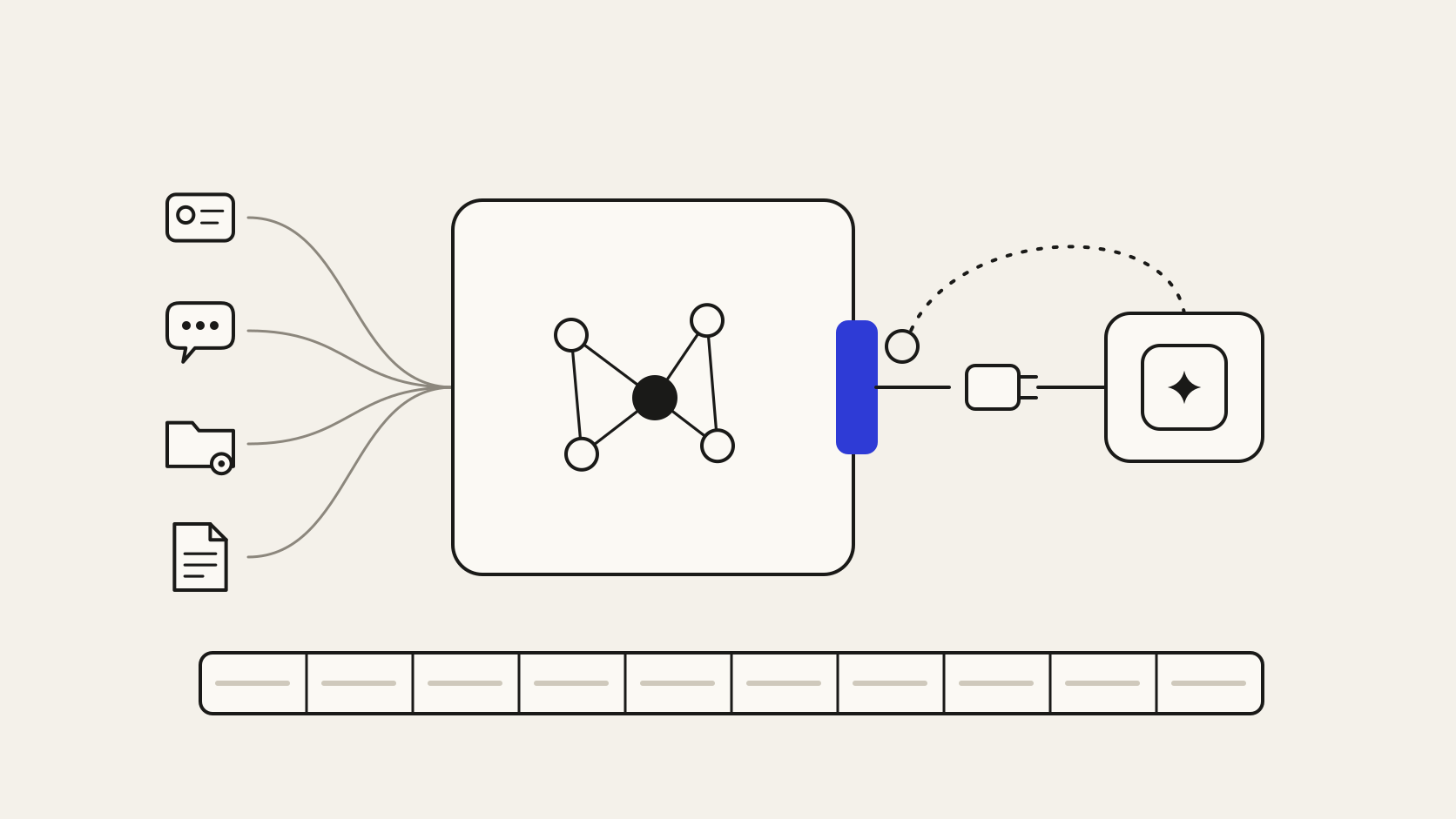
The Company Brain connects CRM, helpdesk, the HR system and documents once and organises that data into a knowledge graph, a business ontology and a semantic layer. The agent queries this context over MCP.
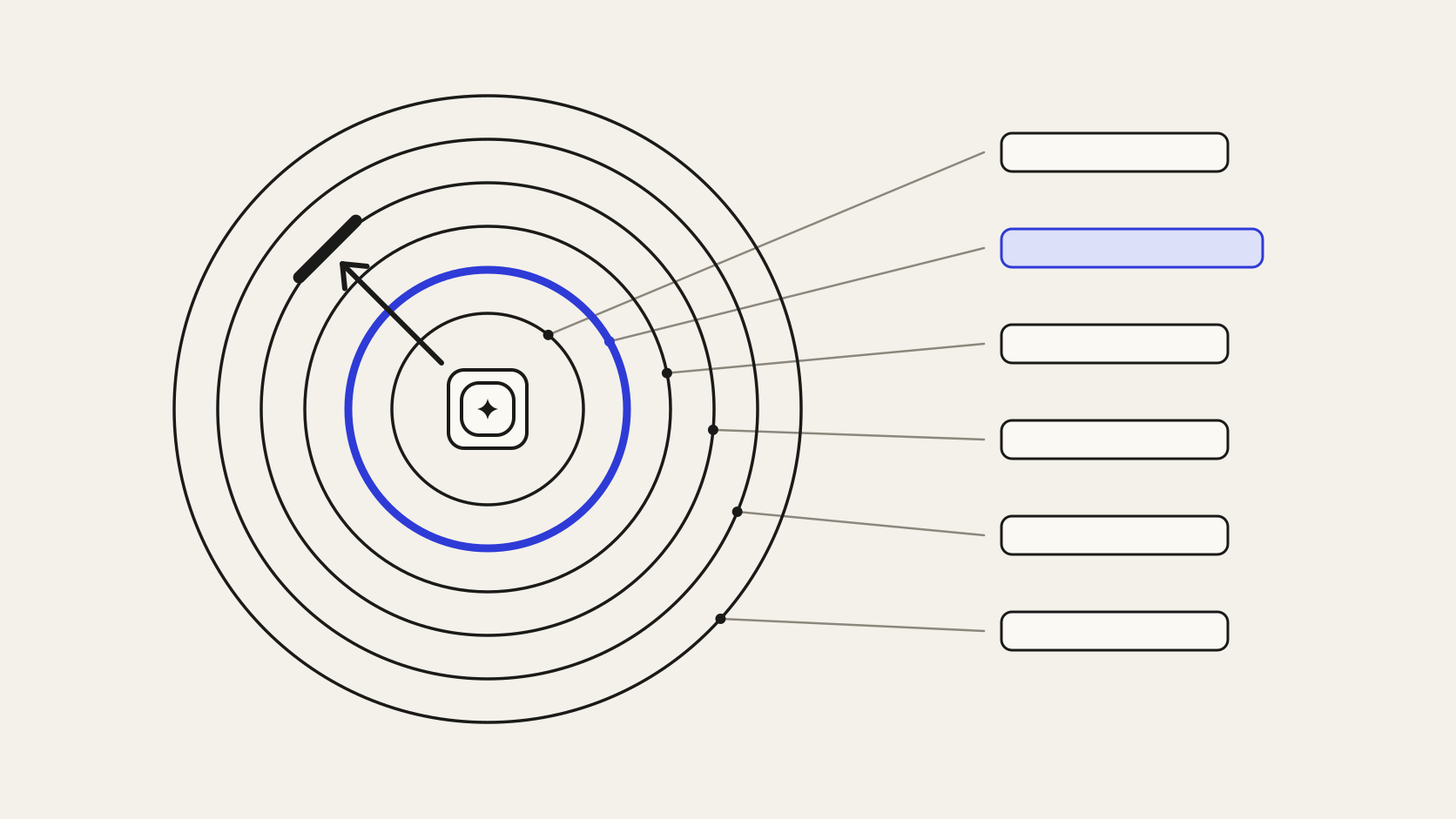
Permissions are inherited from the source system and applied before the data reaches the model. If a manipulated ticket leads the agent to request another customer's history, the query comes back without those records, because the person who asked has no such access at the source.
Each question receives the minimum slice the answer requires. Every query is logged with the person, the sources read and what came back, which makes it possible to reconstruct the path of a suspicious answer.
The Company Brain limits what a successful injection can reach. It does not stop the model from being influenced by planted text, and a manipulated answer within the permitted slice is still possible. A permission misconfigured at the source reaches the agent just the same, and the action controls remain the responsibility of whoever designs the agent.
The first survey compares two lists: agents that read content from external sources, such as CVs, tickets, emails and web pages, and agents with permission to write or send. Those that appear on both lists concentrate the prompt injection risk.
For each of them, the review defines which tools are removed, which actions require human confirmation and where the agent may send data, and the adversarial tests come before the return to production.