In short
A customer asks to return a defective product. Customer service opens a ticket in the helpdesk, logistics schedules the pickup in the warehouse system, the tax team issues the return invoice and finance processes the refund in the ERP. Each team records its own step under its own number, and nobody can say where the return stands without checking with the other three. That is the practical effect of data silos. They follow the org chart, and the processes worth automating with AI cut across the org chart. Linking these pieces is the job of the Company Brain, the layer that knows the company: what data exists, where it lives, how it connects and who can see what.
The term describes data held by one team or one system that the rest of the company cannot reach reliably. The isolation has two layers. The technical one is missing integration: the tax system does not read the helpdesk ticket. The semantic one is a difference in meaning: the same term describes different things in each team.
In data silos, the two kinds of isolation usually show up together. Integrating the systems solves the first and leaves the second intact, because records start flowing with labels that each team reads its own way.
The company assigns budget, targets and accountability by team. Each team picks the system that serves its own work, and each system brings its own master data, its own identifier and its own rules. In 1968, Melvin Conway observed that organizations produce systems that copy their own communication structure. Data silos are that copy applied to information.
In the return example, the question of when it was completed has four answers. For logistics, when the item reached the warehouse. For the tax team, when the invoice was authorized. For finance, when the refund went out. For customer service, when the ticket was closed.
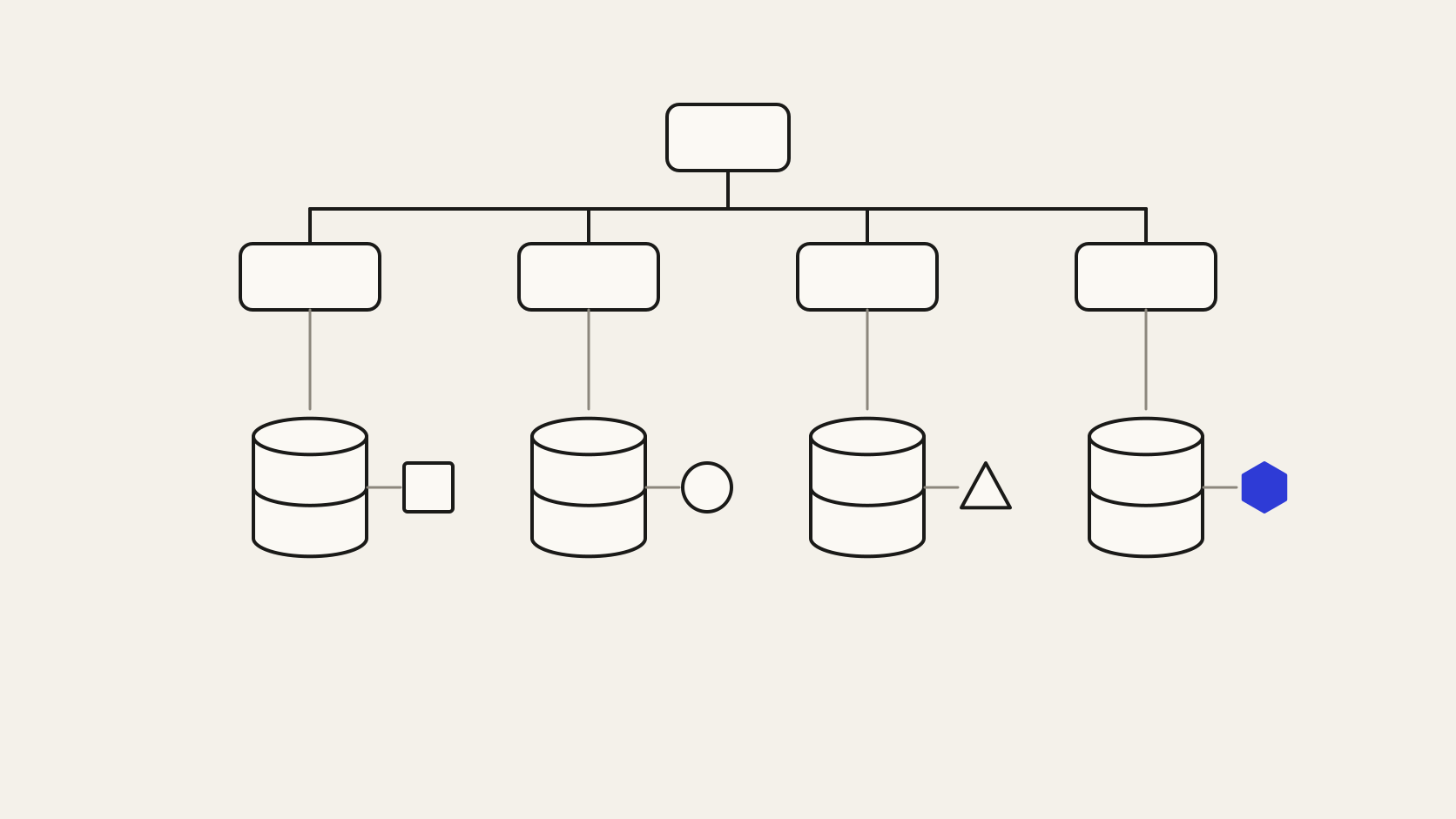
An agent that tracks returns needs to read the four sources in sequence:
Without any one of these sources, the answer to the customer is incomplete. The same goes for onboarding a B2B customer, which passes through sales, legal, implementation and billing, and for almost any process that generates recurring complaints.
Customer service buys an assistant connected to the helpdesk. It answers that the return is under review, because it cannot see that the pickup has already happened. Finance builds an agent on top of the ERP, which reports the refund without knowing that the inspection rejected the item. Each project sees one piece of the process.
The cost of these new data silos shows up on three fronts. Answers conflict, and the customer gets different versions depending on the channel. Integration with the ERP and the customer master data is rebuilt in every project. And each agent carries its own copy of the access rules, which has to be updated separately.
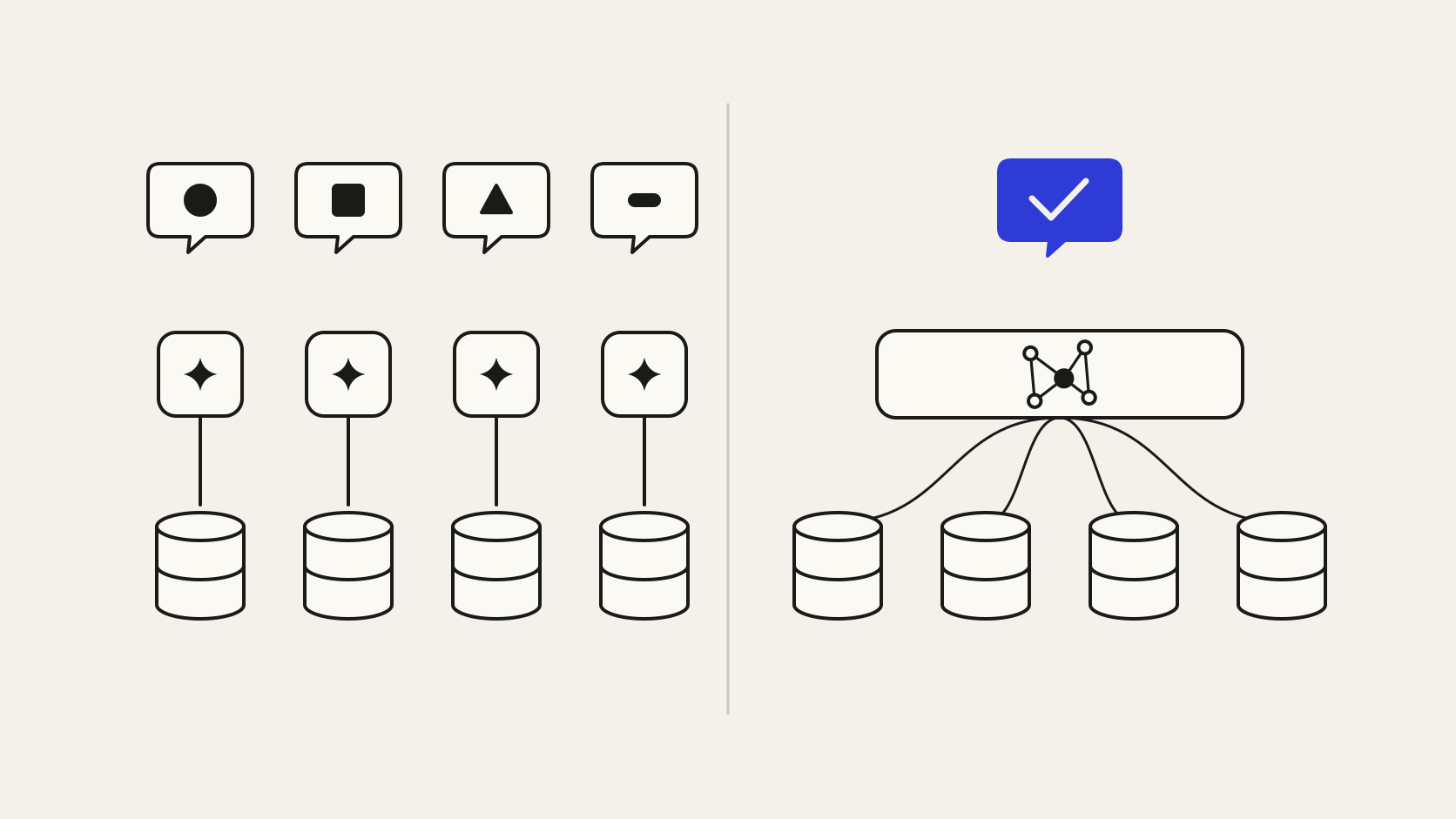
Reorganizing the company around each process is expensive and lasts until the next process, which cuts across the teams along a different path. The alternative is to leave the team structure as it is and link the data in another layer. The context layer recognizes that the ticket, the pickup order, the invoice and the refund belong to the same return and the same customer.
Each team still owns its own system. What appears is a shared map of the entities and the steps that link those teams' records.
Context is served through MCP, the open protocol that connects models to data sources, and every answer points to its source system. The customer service AI agent and the tax team's AI agent use the same base. The second project starts from what the first left connected, and integration with each source happens once.
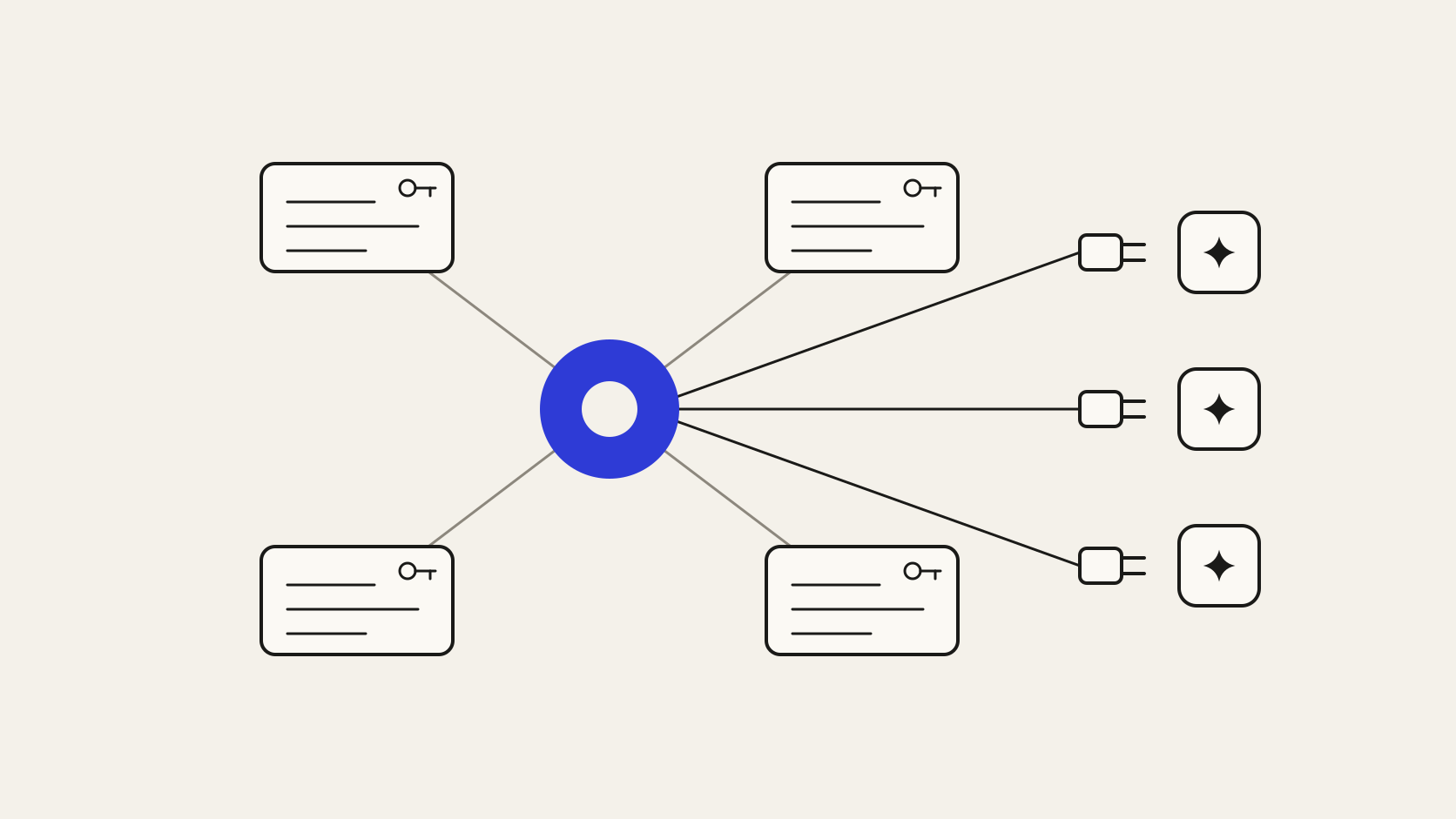
The starting point is a process that generates recurring complaints and cuts across two or three teams. Mapping the systems involved, the identifiers each one uses and the terms with different definitions shows which entities to model first. The next process reuses the customer, the order and the permissions already linked, and the map of data silos shrinks with each project.