
One of the first moves teams make when they start using generative AI at work is to write a standard description of the company and attach it automatically to the assistant’s instructions. That text states what the company sells, what the tone of voice is, what the products are called and which commercial rules apply, and it then rides along on every conversation. The move solves part of the problem and creates another one, because the assistant comes to know the company’s general rules without knowing any single customer’s situation. The Company Brain answers that gap. It is the layer that knows the company: what data exists, where it lives, how it relates and who is allowed to see what.
The standard company description does one job well. Positioning, product naming, tone of voice and brand guidelines change a few times a year, and keeping them in one place stops everyone from writing their own version. When that material is attached automatically to the models’ instructions, teams stop repeating guidance and get copy that sits closer to the brand.
That kind of context, however, describes the company in general terms. It states that a distributor discount policy exists, but not which discount was granted to the distributor who just called, nor whether that distributor has an invoice outstanding.
Most of the work companies intend to delegate to AI agents involves one specific record: a customer, an order, a contract, a ticket. To answer whether a given customer is entitled to a deadline, the agent has to consult that customer’s contract in force, the type of request and the support history. None of that fits in a standard text, because each piece belongs to a different system and changes over the course of the day.
When the available context is limited to the general description of the company, the model tends to apply the default rule to the specific case. The answer comes out right in form and wrong in substance, and the error only surfaces when somebody checks the contract.
The effect worsens as the company widens its use of AI. Each new team adds its own area’s rules to the instructions, and the text comes to hold exceptions that contradict one another. With no structure saying which customer, contract or product each rule applies to, the model receives a growing volume of general guidance and still has no access to the record that would answer the question. At that stage, the Company Brain becomes the condition for AI to operate on real cases.
The Company Brain handles both kinds of context together. The stable definitions go on existing, now organised in the business ontology, which records what each term means inside the company. Beside them, the knowledge graph models the operational entities and the relationships between them: the customer who signed the contract, the order tied to that contract and the ticket opened by the same customer.
With that structure, the discount policy becomes tied to the contracts where it was applied and to the accounts that fall under it. When somebody asks about the distributor who just called, the semantic layer turns the question into a query against that distributor’s record, under the permissions of whoever asked.
Attaching the full company description to every conversation also affects cost. All text sent to the model is billed in tokens, and fixed instructions ride along on every call, including the ones that do not need them. As the text grows to cover more situations, the cost of each interaction grows with it.
The alternative is to send only the slice the question needs. In the Company Brain, context is served to the models over MCP, an open protocol that connects models to data sources, and each call receives the entities and definitions relevant to that question. The prompt gets smaller, and tasks that used to need a more expensive model to compensate for the excess text come to fit in cheaper ones.
A standard text is identical for everyone who receives it. That works for brand guidelines and stops working once the context includes restricted information. A contract’s margin, a customer’s financial standing or a team’s compensation cannot circulate in the same text sent to any employee.
In the Company Brain, permissions are inherited from the source system. Each person receives, through the agent, only what they can already see in the CRM, the ERP or contract management. The data stays inside the customer’s perimeter, and at the moment of the question the model receives the slice authorised for that person.
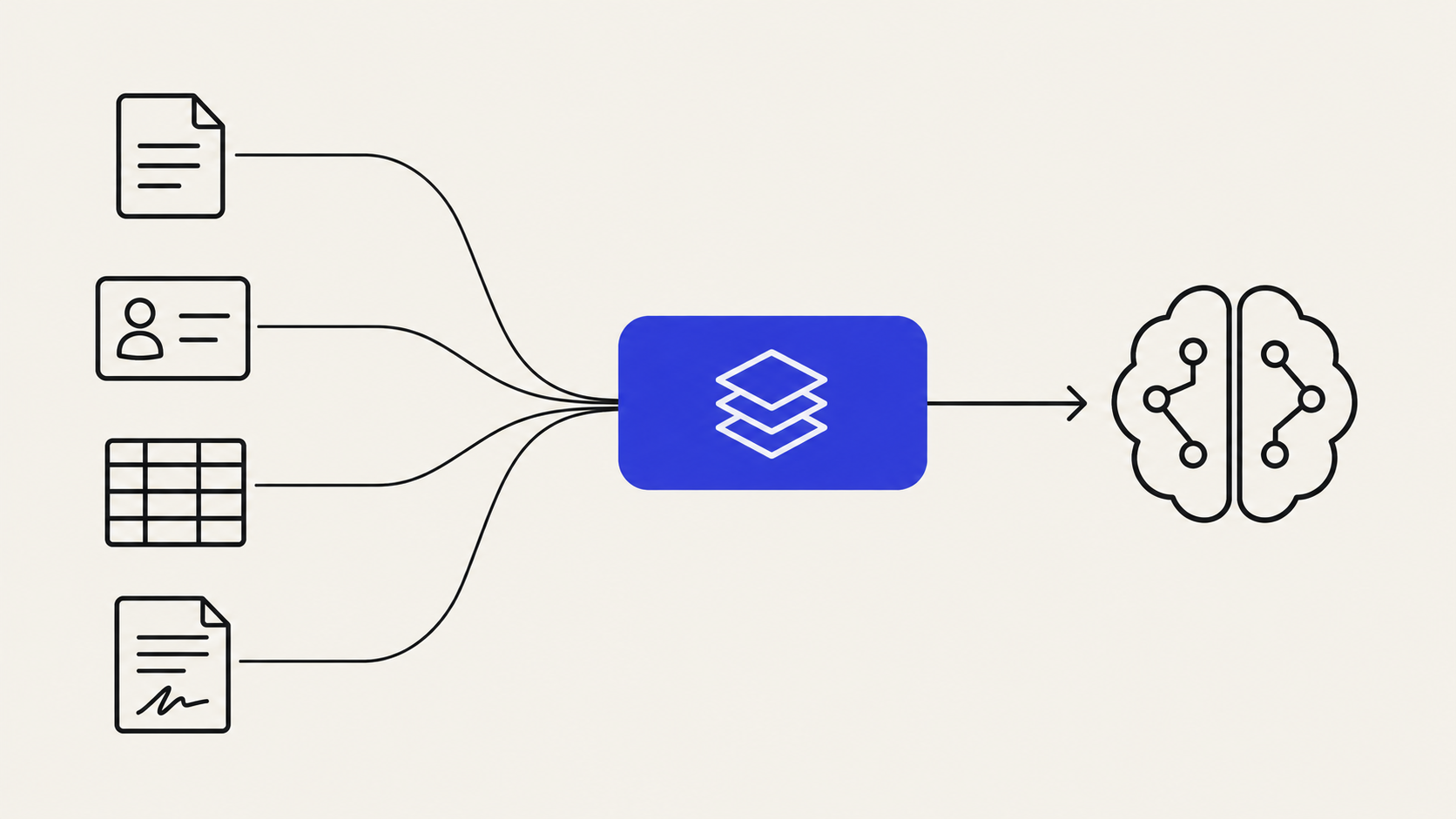
The institutional description does not have to be discarded. It becomes one of the Company Brain’s sources, alongside the transactional systems, and goes on being the reference for tone of voice, naming and positioning. What changes is its role: it stops being all the context available and becomes a part of it.
The prerequisite is keeping that material with an owner and a review date. An out-of-date guideline that enters the Company Brain reaches the model looking like an official source, and the error extends to every answer that uses it.
As a starting point, split the questions your team asks AI into two groups: the ones that depend only on institutional information, and the ones that depend on a specific record. The second group shows where fixed instructions stopped being enough, and where the first slice of the Company Brain should begin.
Talk to a Strattum expert about the Company Brain, business ontology and the context your agents consume on every question.