In short
A customer service team wants to switch on an assistant that drafts replies from the history of each ticket. The vendor asks for administrative access to the helpdesk and the CRM. With every call, the customer's history, with name, contract and complaint, goes to the vendor's service and, from there, to a third party's model. Assessing AI vendors calls for questions that the review of an ordinary SaaS does not ask. Part of the answers depends on the context architecture, the role of the Company Brain, the layer that knows the company: what data exists, where it lives, how it relates and who can see what.
An ordinary SaaS stores the data the company puts into it. AI vendors receive new data with every call, in the context assembled for that question. Four characteristics change the assessment:
The topic belongs to supply chain risk management. NIST covers it in its guide to cybersecurity supply chain risk management, updated in 2024, which describes the loss of visibility into how acquired technology is developed, integrated and operated. With AI, that loss extends to the data that flows in every question.
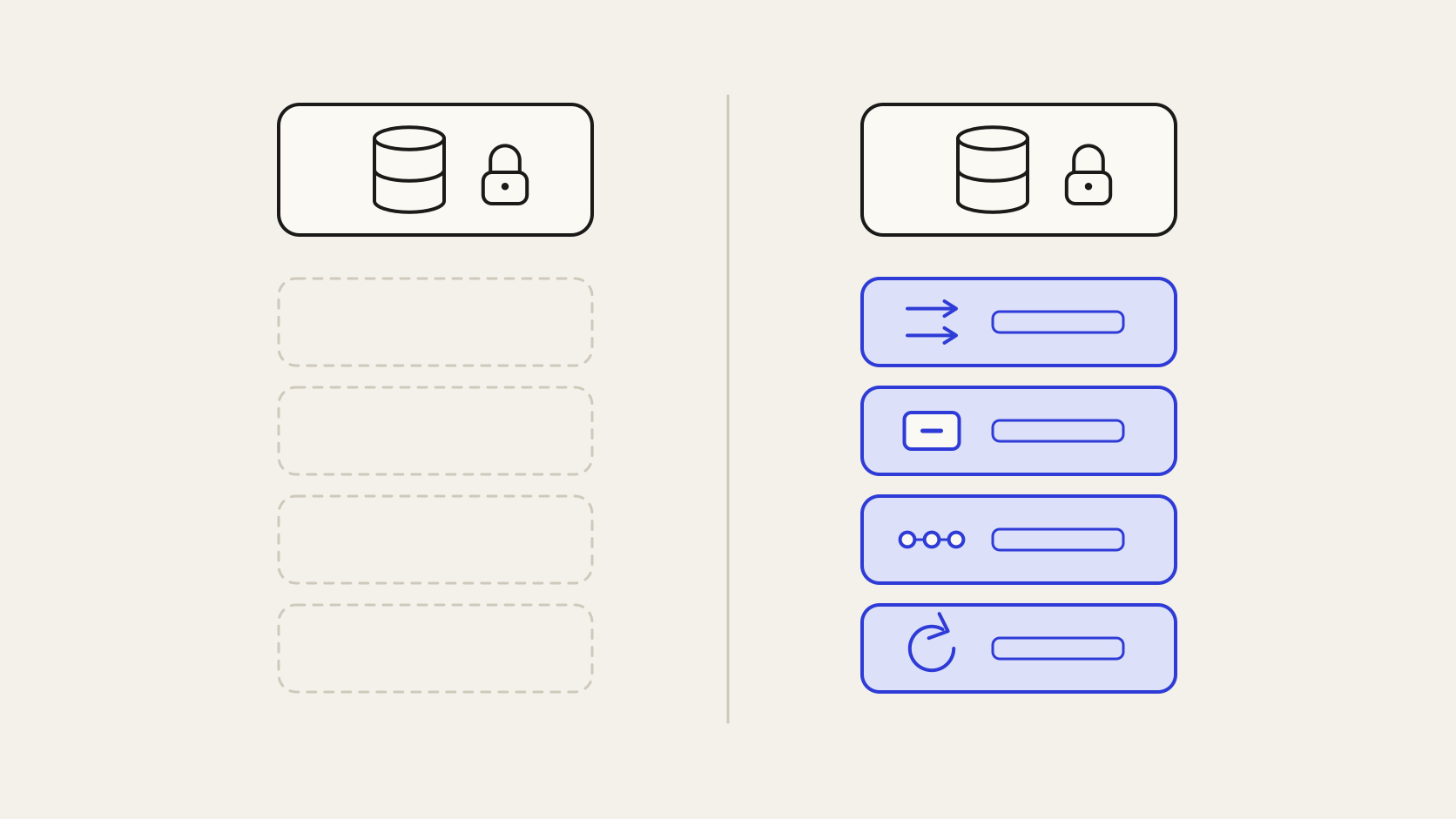
A useful questionnaire organises the questions by topic, and each area knows which part is its own:
The integration block usually gets less attention than the data block and accounts for a large share of the exposure. An assistant connected to the CRM with an administrative account answers any user with everything that account can reach. The permissions the company has configured over years in the source system are left out of the answer.
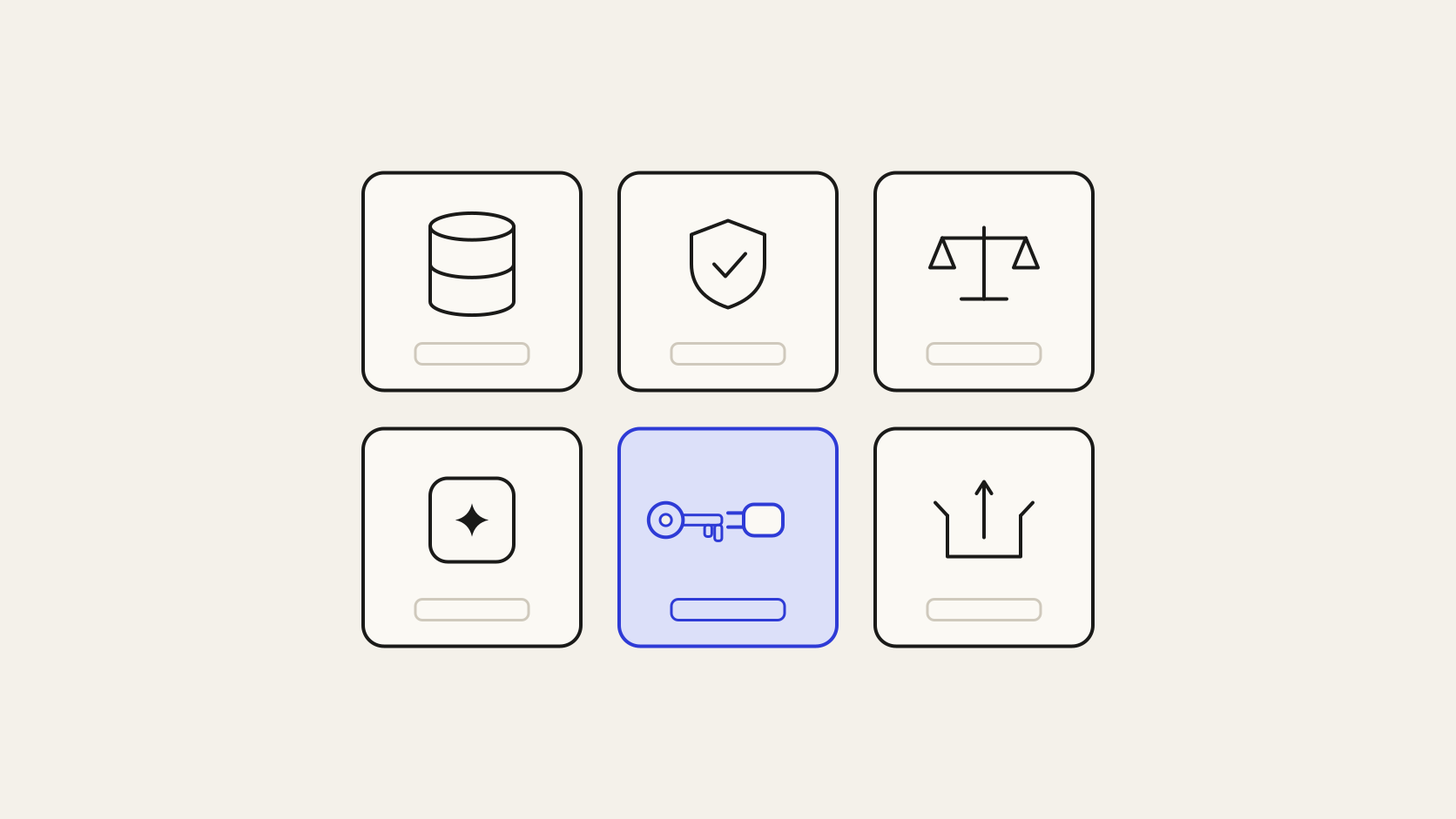
Any one of the three justifies a round of negotiation before signing.
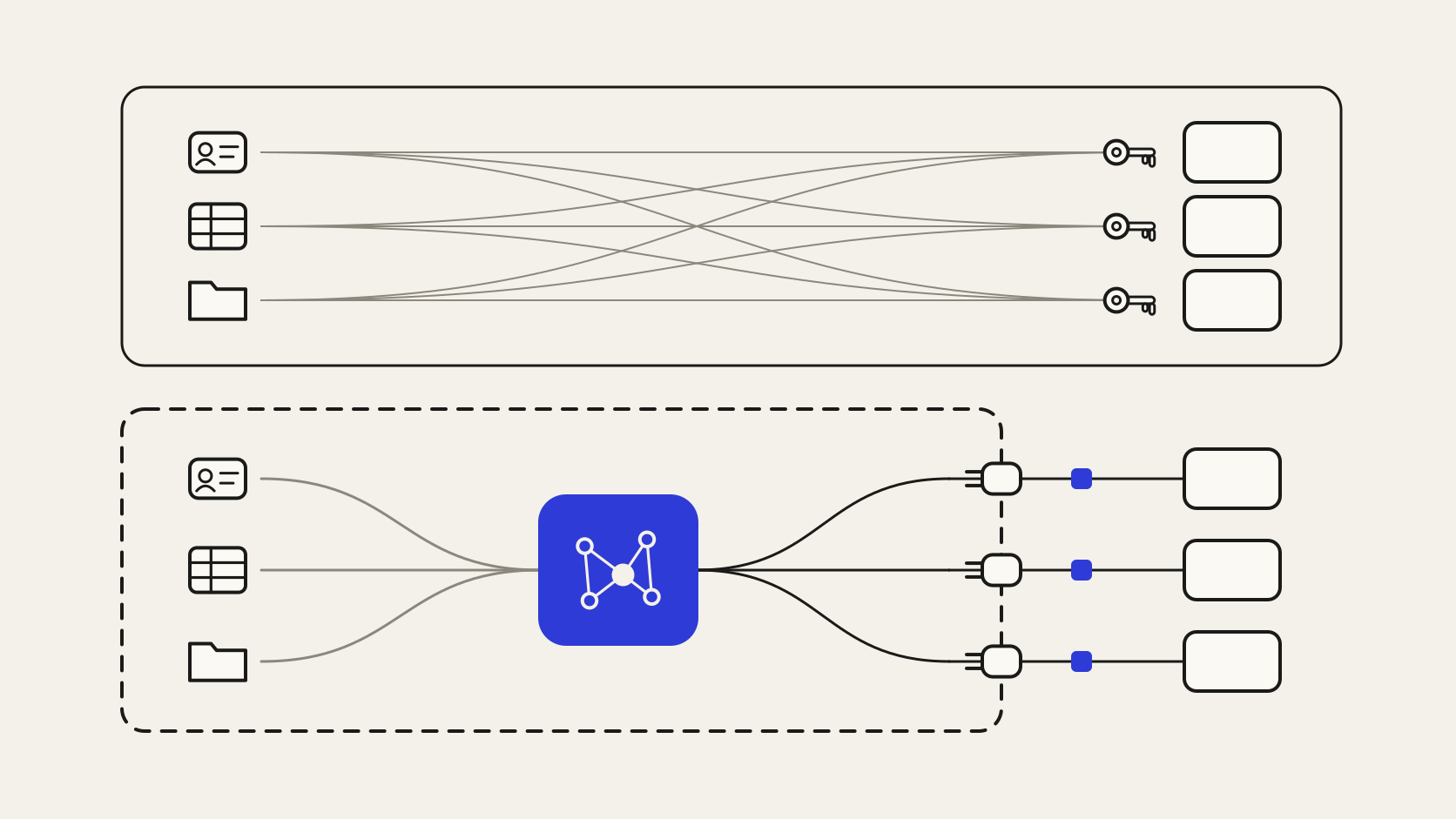
Each new service arrives with its own integration to the CRM, the helpdesk and the drive and with its own credential. Over time, the company ends up with several parallel chains of data leaving its systems, each with different terms and permissions.
The due diligence done at contracting describes that moment. Switching vendors means redoing connections, filters and access rules, and that exit cost weakens the company in renegotiation.
In the Company Brain, the connection to CRM, ERP, helpdesk and documents is made once, in the customer's environment, and organised into a knowledge graph, a business ontology and a semantic layer. The AI vendors' models and tools receive context through this layer, without their own credential in each source system.
For each question, the minimum slice the answer requires is served over MCP, already filtered by the inherited permissions of the person who asked. When the model runs as an external service, what leaves the perimeter in that call is that slice, subject to the negotiated terms. When it runs on the company's infrastructure, the slice stays inside too.
Because the integration belongs to the company, switching models or vendors does not require redoing connections, definitions and permissions. Each query is logged with source and identity, which answers the third warning sign without depending on the log kept by the vendor.
The slice sent to the model still contains customer information, and the terms on retention, use for training and location still apply to it. The security assessment, the contract with LGPD clauses and the periodic review of AI vendors remain work for procurement, legal and security, with less data at stake.
The practical starting point is a short questionnaire, with one or two questions per block, applied to the AI vendors the company already uses. The order follows the sensitivity of the data: first the services that receive customer data or personal data, then the ones that read internal documents.
The answers show where there are broad credentials, retention with no time limit or vague terms about training. Those cases go first to renegotiation or to migration to a path in which context comes from the layer the company controls, with inherited permissions and a log of every query.