In short: Seven platforms are competing today to be the context layer for AI agents in large companies: Strattum, Glean, Atlan, DataHub, ServiceNow, Microsoft and Atlassian Rovo. We compared the seven on five criteria: where the platform runs, what kind of context it delivers, how it applies permissions, what audit trail it leaves and how agents reach the context. The biggest difference shows up in the first criterion. Of the seven, three run inside the customer's cloud, and only Strattum delivers the complete platform, with governance and audit, in the company's tenant on AWS, Azure, GCP, OCI or on-premises. Strattum publishes this comparison and appears first on the list. The information about the other platforms comes from each vendor's public documentation, consulted in October 2026.
An AI agent answers and acts well when it receives the right context about the company: who the customer is, which contract is in force, which policy applies and who may see each piece of information. The context platform is the layer that connects the internal systems, organises that content and delivers it to the agent at query time, respecting each person's permissions.
Context platforms reached this layer by different routes. Some come from enterprise search, some from the data catalogue and some from a software vendor's suite. Each platform's origin explains much of the strengths and limitations described below.
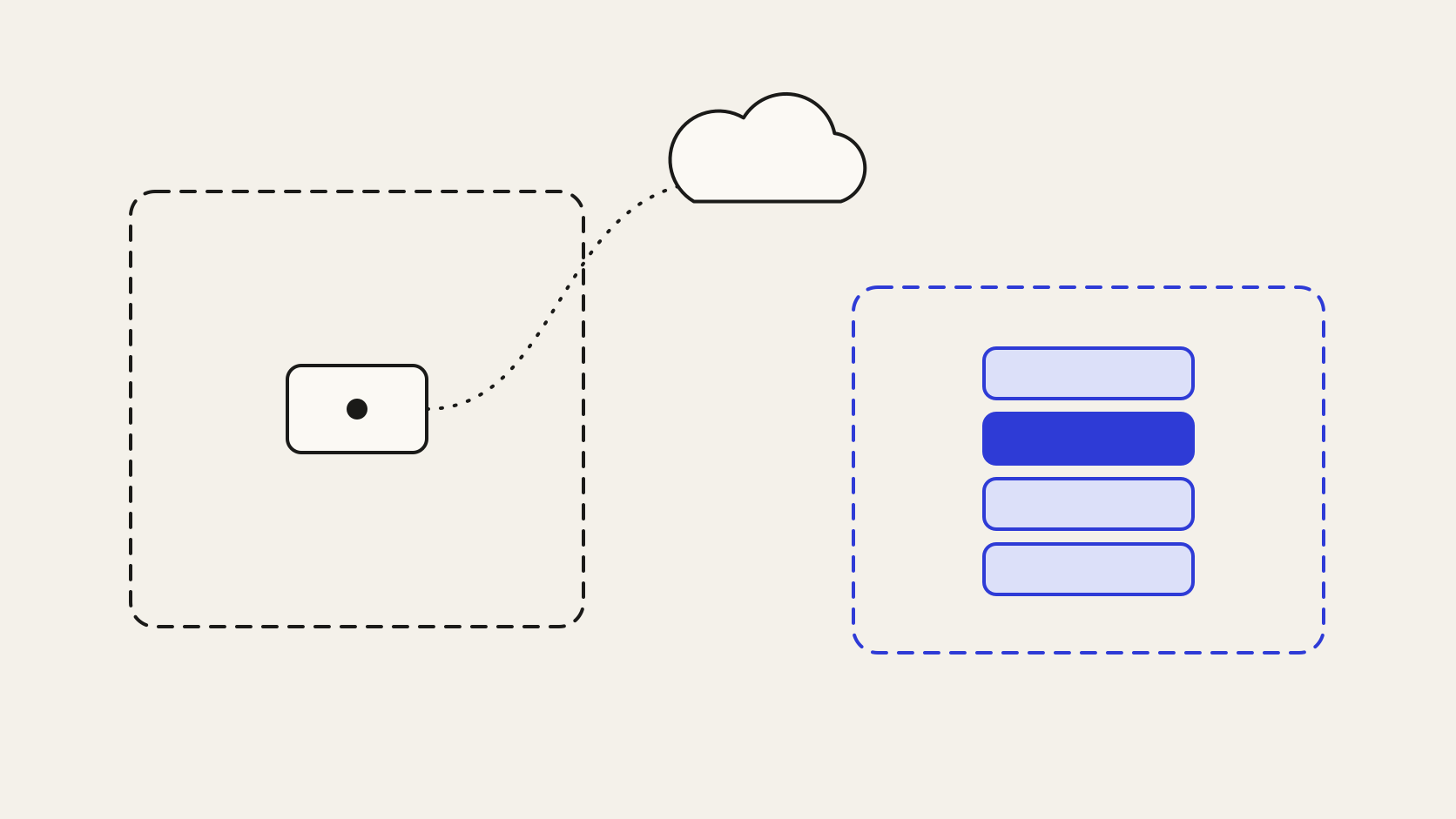
Where it runs. In regulated sectors, the first question from legal and information security is whether the data leaves the company's environment. Running in the customer's cloud changes the risk analysis, the data processing agreement and the conversation with the auditor.
What context it delivers. Some platforms deliver documents. Others deliver metadata, such as glossary, lineage and table quality. Few deliver business records from CRM, ERP and warehouse resolved into entities such as Customer, Contract and Ticket.
How it applies permissions. They all say they respect permissions. The difference lies in inheriting access control straight from the source system and in applying the filter before retrieval, so that a forbidden passage never reaches the model.
What audit trail it leaves. A log of every query, a source citation in every answer and lineage from the data back to its source.
How the agent reaches it. MCP server, APIs and independence from the AI model and from the vendor's ecosystem.
| Platform | Where it runs | Context delivered | MCP access |
|---|---|---|---|
| Strattum Company Brain | Whole platform in the customer's cloud (AWS, Azure, GCP, OCI) or on-premises | Documents, CRM, ERP and warehouse records, graph of business entities | MCP server and APIs |
| Glean | Glean SaaS, or a Glean-managed environment in the customer's cloud, GCP or AWS only | Documents and a graph of people, projects and customers | Official remote MCP server |
| Atlan | Single-tenant SaaS hosted by Atlan | Data metadata | MCP hosted by Atlan, metadata only |
| DataHub | Self-hosted open source or DataHub Cloud | Warehouse and BI metadata, some documents | Managed or open source MCP |
| ServiceNow | ServiceNow cloud | CMDB, workflows and external data without copying | MCP Server on the Action Fabric |
| Microsoft 365 Copilot and Work IQ | Microsoft 365 tenant | Microsoft 365 files, emails, meetings and chats | Work IQ MCP in preview |
| Atlassian Rovo | Atlassian cloud only | Jira, Confluence, connectors and the Teamwork Graph | Official Rovo MCP Server |
Company Brain (the business's operational brain): the layer that connects a company's systems once, organises data, memory and knowledge, and delivers that context to any AI agent with each person's permissions.
Strattum's Company Brain has three parts. The Data Foundation connects CRM and ERP (Salesforce, HubSpot, TOTVS, SAP), customer service (Zendesk, Intercom, Freshdesk), databases and warehouses (PostgreSQL, MongoDB, Snowflake, Databricks) and documents (SharePoint, Google Drive, Notion, Confluence, Slack). The Memory Graph resolves the business entities across systems from an ontology written in YAML and versioned in Git. Knowledge keeps documents, decisions and runbooks with per-document versioning.
Agents reach the context over MCP, with the search_entity, get_entity_context and run_cypher tools, and over APIs. The connection to the sources uses the OAuth of the customer's tenant, with no permission mirroring, and the permission filter is applied before ranking. Every answer carries a citation anchored to the source document, version and paragraph, every attribute has lineage back to its source and every query is logged.
The whole platform runs in the customer's cloud, on AWS, Azure, GCP, OCI or on-premises, in the region the customer chooses. Records, credentials, encryption keys and network access stay in the company's environment, and customer data is never used to train models. Because the context reaches the agent already organised, the company can use smaller models for most tasks and switch models without redoing the integration.
What to consider: deployment starts with modelling the business ontology, done with Strattum engineers (FDE) inside the customer's operation at the start of the project. It is work that asks for time from the customer's data team early in the project.
Glean started as enterprise search and now positions itself as a Work AI and agent context platform, with an assistant, agents and an Enterprise Graph that links people, projects, customers and products. It has more than 275 connectors and an official remote MCP server, where every call runs as the user and is checked against the indexed permissions.
Weak points: the default model is SaaS in Glean's cloud. The Customer Hosted option runs in the customer's cloud on GCP or AWS only and is operated as a service managed by Glean itself, which its deployment documentation describes as different from a traditional self-hosted model. No on-premises, Azure or OCI option is documented. Pricing combines seats and consumption credits, and MCP and API usage is billed in credits. The documentation also does not explain whether CRM and warehouse records enter the graph as structured data, nor does it describe lineage from the data to its source.
How Strattum compares: the Company Brain runs entirely in the customer's tenant on four clouds or on-premises, resolves CRM, ERP and warehouse records into business entities and keeps per-attribute lineage from the source to the answer.
Atlan comes from data cataloguing and governance and repositioned itself in 2026 as a context platform for agents, with versioned and certified context repositories, a context engineering studio and an enterprise data graph. Its asset lineage and metadata governance are mature.
Weak points: Atlan itself states that its MCP server delivers metadata only. Descriptions, glossary, tags and lineage reach the agent, but document content and business records stay out. The platform is SaaS hosted by Atlan, with the vector database in Atlan's cloud account and the AI gateway operating in the United States, Europe and Asia-Pacific, with Brazil not on the list. Prompts and answers are retained for 30 days, and the documentation does not say whether the source systems' permissions are inherited.
How Strattum compares: the Company Brain delivers the content of documents and business records to the agent, with source citations, and processes everything inside the customer's cloud.
DataHub is an open source metadata catalogue evolving into a context platform, with the Context Platform product. Its dataset and column lineage is among the most complete on the market, and its MCP server has an open source version the company can host.
Weak points: the Context Platform is in private beta and only exists in the Cloud version. Enterprise-level role-based access control and shared audit logs are also Cloud-only, which leaves the self-hosted version with less governance. The focus is metadata and SQL for analytical agents, and the documentation does not describe handling CRM and ERP records as business entities.
How Strattum compares: the Company Brain offers full governance running in the customer's cloud and models operational entities, such as customer, contract and ticket, that sales, service and finance agents query every day.
At Knowledge 2026, ServiceNow entered the context platform race with the Context Engine, which maps people, roles, assets, services and policies from the CMDB and workflows, and opened the Action Fabric to external agents through an MCP server. The AI Control Tower verifies identity, limits permissions and logs the actions executed over MCP.
Weak points: the platform runs in ServiceNow's cloud, with no documented on-premises option. The MCP server requires a base ServiceNow licence and consumes AI credits. The context revolves around the platform's own CMDB and workflows, and autonomous data governance is only planned for the second half of 2026. The documentation does not describe a permission filter before retrieval or per-attribute lineage.
How Strattum compares: the Company Brain treats ServiceNow, CRM, ERP and documents as sources of equal weight, without depending on any one system's licence, and applies permissions before any passage reaches the model.
Work IQ is the intelligence layer that gives organisational context to Microsoft 365 Copilot and to Copilot Studio agents, unifying files, emails, meetings and chats. Copilot only shows data the user already has permission to see, and interactions are auditable through Purview.
Weak points: the solution runs in the Microsoft 365 tenant, with no option to run in the company's own cloud. The Work IQ MCP server is in preview, and Microsoft warns that it is not intended for production use. Copilot is sold as a per-user add-on on top of an eligible base licence. For Microsoft 365 Copilot, the data residency documentation makes no commitment to processing in Brazil. The graph is centred on Microsoft 365, and systems such as other vendors' ERP and CRM come in through connectors.
How Strattum compares: the Company Brain already runs MCP in production, processes context in the region the customer chooses and treats the ERP, the CRM and documents outside Microsoft 365 as a central part of the graph.
Rovo is Atlassian's AI, with search, chat and agents on top of the Teamwork Graph, which links issues, pages, people, teams and goals. It respects existing permissions, including on third-party connectors, and has an official MCP server.
Weak points: Rovo exists only in Atlassian's cloud, and Brazil is not among its data residency locations. For Jira and Confluence, AI data cannot be pinned to a region. Rovo Chat is limited to the Premium and Enterprise plans. The graph models work entities, and CRM, ERP and warehouse records stay outside the model.
How Strattum compares: the Company Brain covers Jira and Confluence as sources and adds the company's operational and financial systems, with processing inside the customer's cloud.
When almost all the relevant context lives in a single ecosystem, such as Microsoft 365, Atlassian or ServiceNow, the vendor's own AI layer does the job with less integration. When the goal is to govern metadata for analytical agents, Atlan and DataHub are the most mature options.
When agents need to cross CRM, ERP, warehouse and documents, and the data has to stay inside the company's cloud, the list of context platforms gets shorter. In that scenario, the decision comes down to three questions: does the whole platform run in the tenant, or only one component? Does the context include business records, or only documents and metadata? Is the permission applied before retrieval, with a citation and lineage in every answer? Strattum's Company Brain was designed to answer yes to all three. The criteria are covered in detail in the guide BYOC or hosted: where the company's AI context layer runs and in Source citation and audit are an architecture requirement.
To see the Company Brain running with your company's systems, talk to the Strattum team at strattum.ai/contato.